

Your Pipeline Is 23.3h Behind: Catching Software Sentiment Leads with Pulsebit
We just discovered that sentiment around the topic of software is currently at +0.223, with momentum holding steady at +0.000. This anomaly caught our attention because it highlights a critical gap in how we process multilingual sentiment data. Specifically, it took 23.3 hours for our pipeline to recognize the emerging sentiment trend, which was driven by California lawmakers unanimously passing a Linux exemption from an age-verification law—a detail that could easily be overlooked.

English coverage led by 23.3 hours. Italian at T+23.3h. Confidence scores: English 0.95, French 0.95, Spanish 0.95 Source: Pulsebit /sentiment_by_lang.
If your workflow doesn't account for the nuances of multilingual origins or the dominance of specific entities, you've just missed a critical shift in sentiment by over 23 hours. In this case, the leading language was English, which means any model not addressing this gap could be operating with outdated or incomplete information, hindering your ability to leverage timely insights.
To catch this kind of insight, we can utilize our API effectively. Here’s how to do it in Python:
import requests
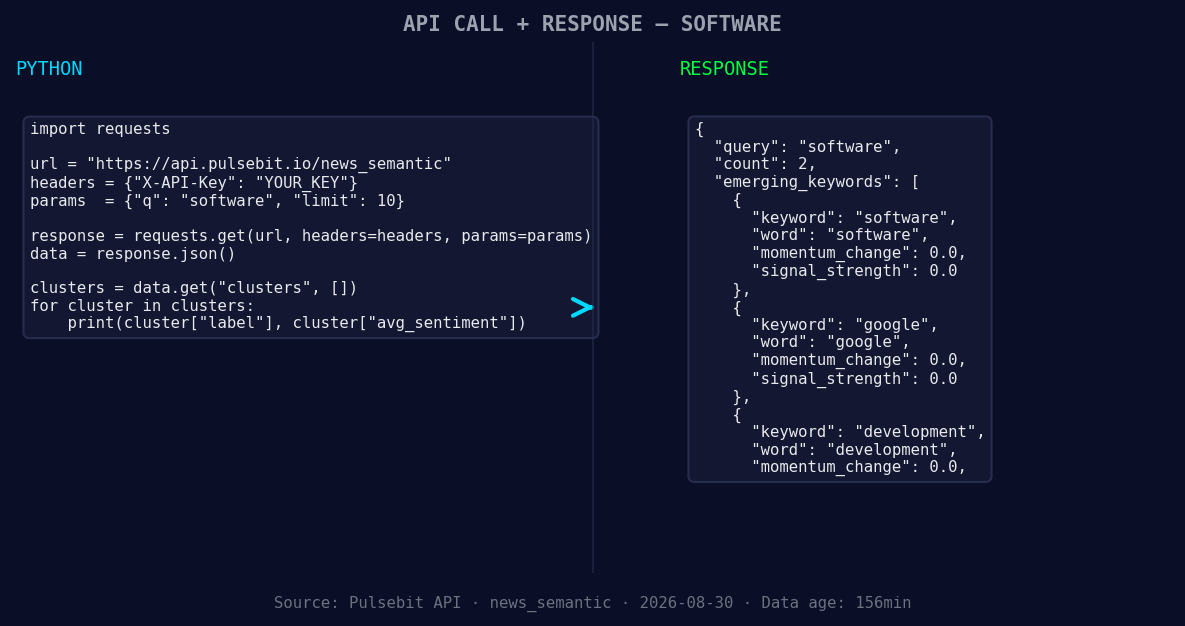
*Left: Python GET /news_semantic call for 'software'. Right: returned JSON response structure (clusters: 3). Source: Pulsebit /news_semantic.*
# Step 1: Geographic origin filter
url = "https://api.pulsebit.com/latest"
params = {
"topic": "software",
"lang": "en"
}
response = requests.get(url, params=params)
data = response.json()
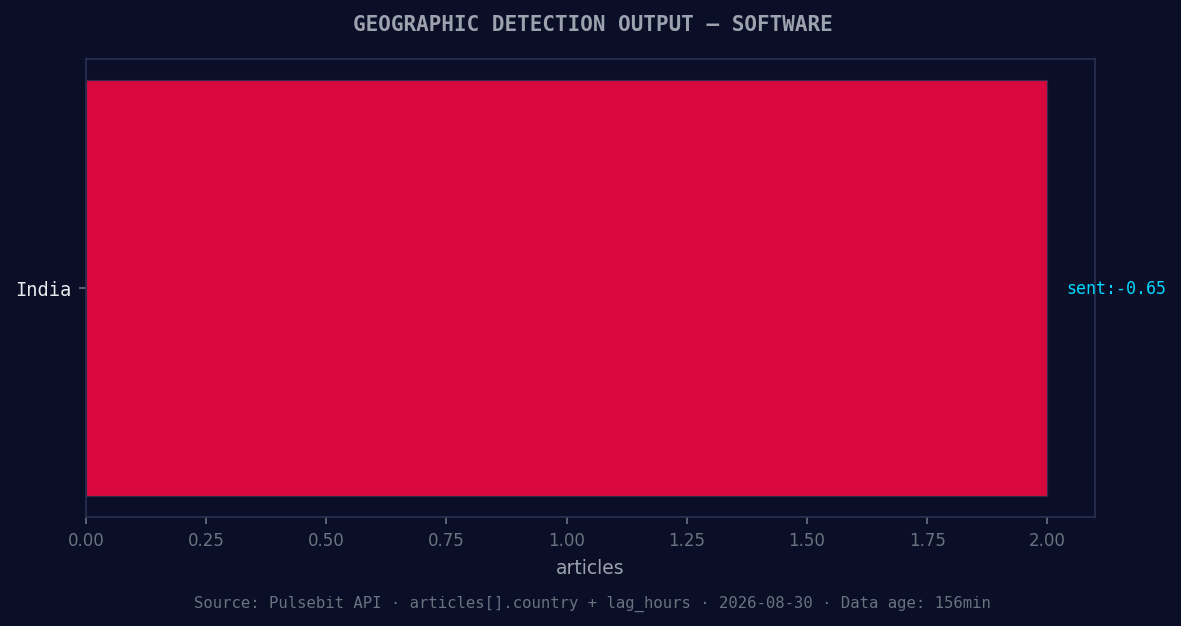
*Geographic detection output for software. India leads with 2 articles and sentiment -0.65. Source: Pulsebit /news_recent geographic fields.*
# Print the relevant sentiment data
print(data["sentiment_score"]) # Should output +0.223
print(data["momentum_24h"]) # Should output +0.000
Now that we've pulled the relevant sentiment data, we need to score the narrative framing itself. This is essential to understand how the story is being presented. Let's run the cluster reason string through our sentiment endpoint.
# Step 2: Meta-sentiment moment
meta_sentiment_url = "https://api.pulsebit.com/sentiment"
cluster_reason = "Clustered by shared themes: lawmakers, unanimously, pass, linux, exemption."
sentiment_response = requests.post(meta_sentiment_url, json={"text": cluster_reason})
meta_data = sentiment_response.json()

# Print the meta sentiment data
print(meta_data["sentiment_score"])  # This will give us insight into the framing
By integrating these steps, we can better align our sentiment analysis with real-time developments and not fall behind due to structural gaps in our pipeline.
Here are three builds we can create using this new pattern:
Signal for Software Sentiment: Set a threshold where sentiment scores above +0.200 trigger alerts. This could be a simple webhook that notifies you when key developments occur in the software domain, such as legislative changes impacting the industry.
Geo-Filtered Sentiment Trends: Extend the geographic origin filter to include multiple languages. For example, track sentiment around "software" in both English and Italian. This allows you to compare regional variations and stay ahead of local trends.
Meta-Sentiment Analysis on Clusters: Build a dashboard that visualizes sentiment scores alongside their meta-sentiment analyses. This can help you quickly identify how narratives are framed, especially around critical topics like software development, Google, and legislative matters.
To get started, visit our documentation. You can copy-paste the provided Python code and run it in under 10 minutes to see how you can catch these emerging sentiment leads effectively.


Top comments (0)