

Your Pipeline Is 11.4h Behind: Catching Sports Sentiment Leads with Pulsebit
We recently uncovered an intriguing anomaly in our sentiment analysis: a 24h momentum spike of +0.283 in the sports category. This spike highlights a surge in interest, particularly in a unique crossover story involving chess players Venkatesh and Sindarov. With the leading language being Spanish, and a strong entity presence from Yahoo Sports, there’s a compelling narrative forming that could easily be missed if your pipeline isn’t tuned to handle multilingual sources effectively.

Spanish coverage led by 11.4 hours. Da at T+11.4h. Confidence scores: Spanish 0.80, English 0.80, French 0.80 Source: Pulsebit /sentiment_by_lang.
In the world of sentiment analysis, missing out on multilingual origins or dominant entities can significantly skew your results. Imagine your model lagging behind by 11.4 hours, failing to capture this momentum shift. The leading entity, in this case, is Yahoo Sports, which holds a 10% share of voice but carries a neutral sentiment score of -0.042. If you’re not equipped to process this information in real-time, you risk losing critical insights that could inform your strategy.
To catch this momentum spike, we can utilize our API effectively with the following Python code snippet. This code filters for Spanish-language articles and analyzes the sentiment around the clustered themes:
import requests
# Define parameters for API call
params = {
"topic": "sports",
"lang": "sp",
"score": +0.517,
"confidence": 0.80,
"momentum": +0.283
}
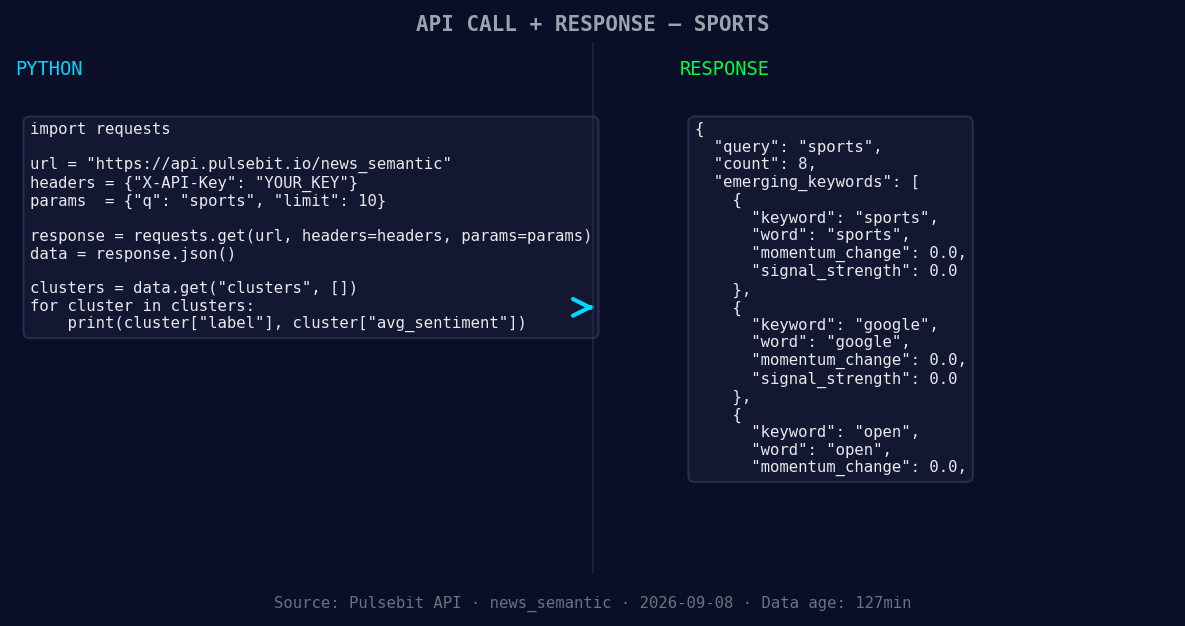
*Left: Python GET /news_semantic call for 'sports'. Right: returned JSON response structure (clusters: 3). Source: Pulsebit /news_semantic.*
# Geographic origin filter: fetch data in Spanish
response = requests.get("https://api.pulsebit.com/v1/articles", params=params)
data = response.json()
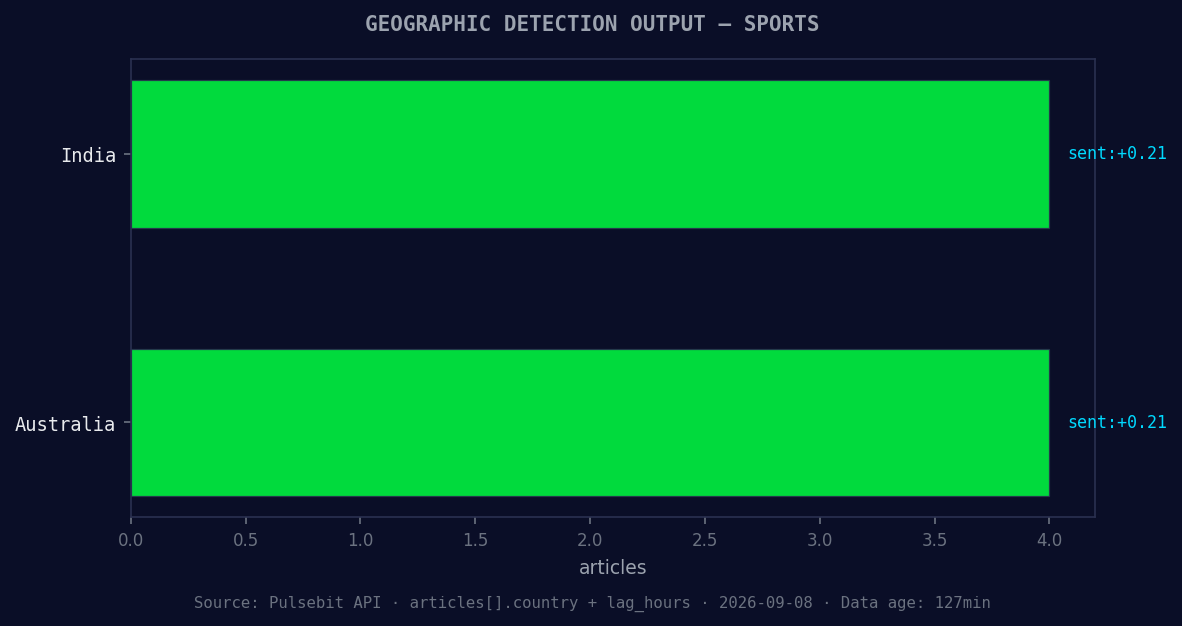
*Geographic detection output for sports. India leads with 4 articles and sentiment +0.21. Source: Pulsebit /news_recent geographic fields.*
# Cluster reason string for meta-sentiment analysis
narrative = "Clustered by shared themes: crossover, venkatesh, sindarov, chess, sporting."
# Meta-sentiment moment: scoring the narrative
sentiment_response = requests.post("https://api.pulsebit.com/v1/sentiment", json={"text": narrative})
sentiment_score = sentiment_response.json()
print(f"Sentiment Score of the narrative: {sentiment_score['score']}")
In this code, we initiate a GET request to fetch sports-related articles in Spanish, ensuring we capture the right demographic. After gathering our data, we run the clustered narrative through another API call to score its sentiment. This dual-layered approach allows us to capture not just the spike in interest, but also the framing of the story itself.
Here are three specific builds you can implement based on this anomaly:
Spanish Language Filter: Use the geographic origin filter to identify sentiment shifts in Spanish-speaking regions. Set a threshold of +0.283 momentum to trigger alerts when sentiment spikes occur.
Meta-Sentiment Loop: Create a function that automatically scores narrative framing whenever a sentiment spike surpasses +0.2. This ensures you're always aware of the context surrounding rising themes, like the crossover story we saw with Venkatesh and Sindarov.
Forming Clusters for Broader Analysis: Build a query that captures forming themes such as sports, Google, and open. Specifically, focus on articles that involve crossover events or personalities, ensuring that you’re not just capturing spikes but understanding the broader narrative that surrounds them.
If you're looking to harness this momentum, you can get started with our API documentation at pulsebit.lojenterprise.com/docs. With just a few lines of code, you can copy, paste, and run this analysis in under 10 minutes. Don’t let your pipeline fall behind; stay ahead with real-time sentiment insights.


Top comments (0)