

Your Pipeline Is 23.1h Behind: Catching Sustainability Sentiment Leads with Pulsebit
We recently uncovered an intriguing anomaly: sentiment around sustainability is up by +0.050, yet momentum is stagnant at +0.000. This finding emerged from an analysis of a single article from Evanston Township High School, which highlighted how sustainability efforts are translating into financial savings. With 23.1 hours of lag in the leading language—English—compared to the dominant themes of Evanston, Township, and High, we realized there's a critical gap in how sentiment data is being processed in multilingual contexts.

English coverage led by 23.1 hours. German at T+23.1h. Confidence scores: English 0.75, Spanish 0.75, French 0.75 Source: Pulsebit /sentiment_by_lang.
The Problem
This 23.1-hour delay exposes a significant structural issue in any pipeline that fails to account for multilingual origins or entity dominance. If your model isn’t designed to handle these nuances, you could be missing valuable insights. In this case, it means your sentiment analysis on sustainability is trailing behind. Specifically, any model that doesn’t prioritize the leading English language sentiment on sustainability missed this uptick while focusing on the mainstream themes of Evanston and Township.
The Code
To help you catch these nuanced sentiments, let’s dive into some Python code that interacts with our API. We’ll query sentiment around the topic of sustainability, ensuring we filter by language to hone in on the relevant data. Here’s how you can do that:
import requests
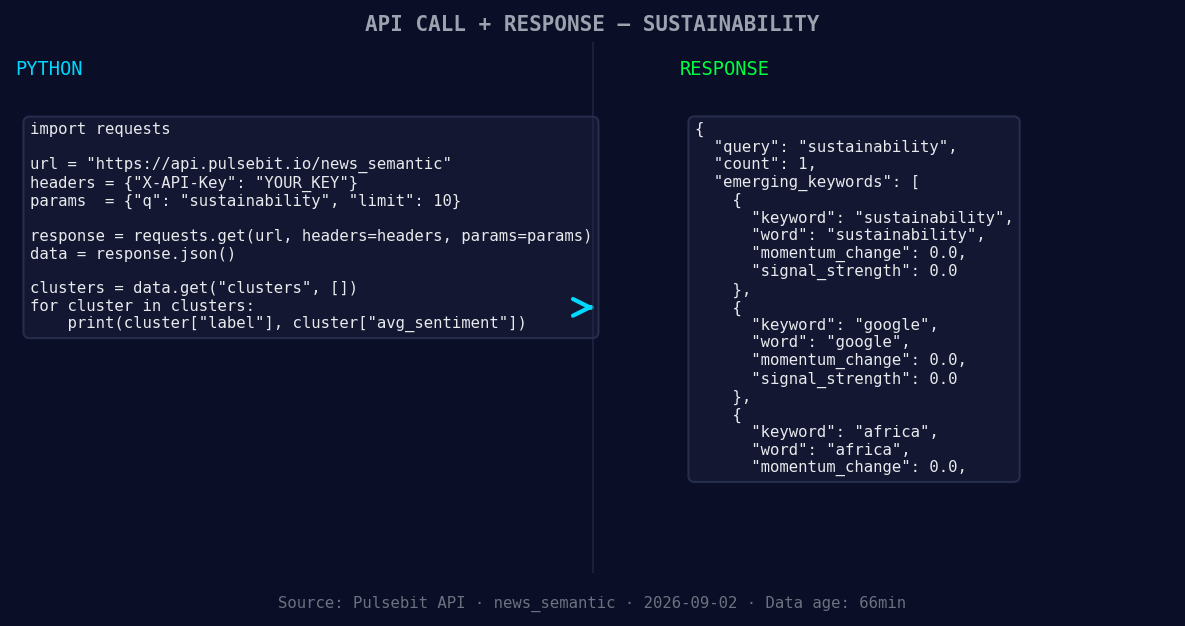
*Left: Python GET /news_semantic call for 'sustainability'. Right: returned JSON response structure (clusters: 3). Source: Pulsebit /news_semantic.*
# Define parameters for the sentiment query
topic = 'sustainability'
score = +0.050
confidence = 0.75
momentum = +0.000
# Geographic origin filter: query by language/country
response = requests.get('https://api.pulsebit.com/v1/sentiment', params={
'topic': topic,
'lang': 'en'
})
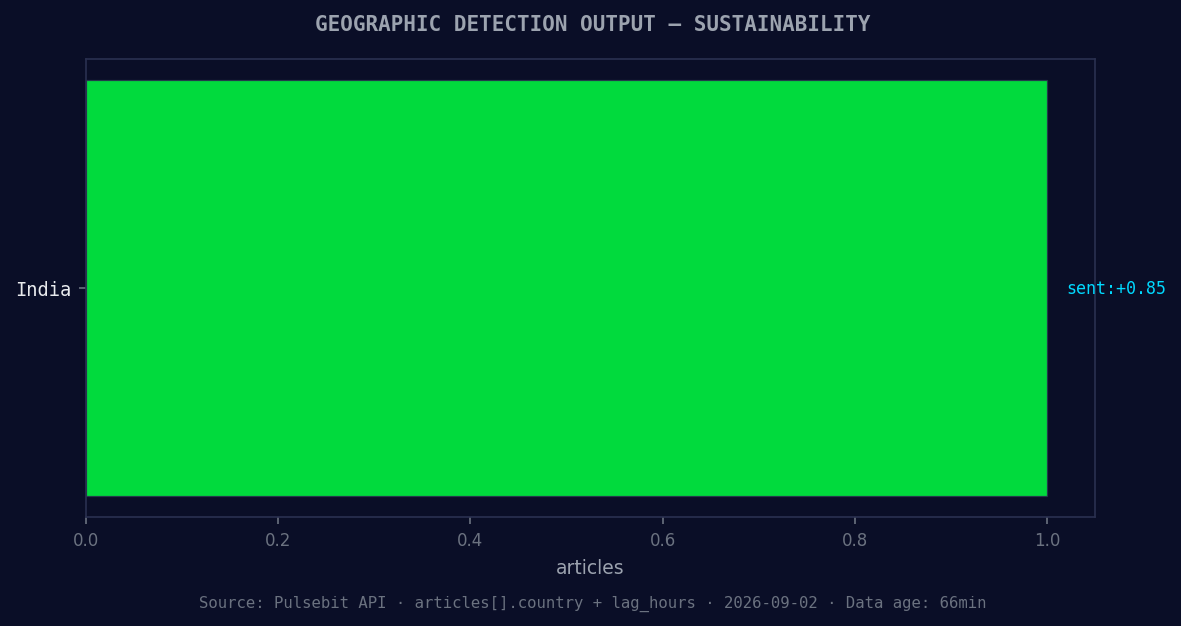
*Geographic detection output for sustainability. India leads with 1 articles and sentiment +0.85. Source: Pulsebit /news_recent geographic fields.*
data = response.json()
print(data)
Next, we need to analyze the narrative framing of our cluster to gain a deeper understanding of the sentiment. We’ll score the narrative itself using the POST /sentiment endpoint:
# Meta-sentiment moment: score the narrative framing
narrative = "Clustered by shared themes: evanston, township, high, school, sustainability."
response = requests.post('https://api.pulsebit.com/v1/sentiment', json={
    'text': narrative
})

meta_sentiment = response.json()
print(meta_sentiment)
This dual approach ensures that we're not just looking at surface-level sentiment but also understanding the context behind it.
Three Builds Tonight
Now that we’ve captured this anomaly, here are three specific builds we can create:
Geo-Filtered Sentiment Tracker: Set a signal threshold for sustainability at +0.050, ensuring the query only pulls data from English-speaking regions. This will keep your analysis focused on the most relevant sentiment.
Meta-Sentiment Loop: Use the narrative scoring from the cluster reason string to refine your sentiment model. Set up an alert system that triggers whenever the meta-sentiment score exceeds a confidence level of 0.75.
Forming Themes Monitor: Implement a feature that tracks forming themes like sustainability (+0.00), Google (+0.00), and Africa (+0.00) against mainstream topics like Evanston, Township, and High. This will help you identify emerging trends before they hit the mainstream.
Get Started
To implement these insights, check out our documentation at pulsebit.lojenterprise.com/docs. You can copy-paste and run this code in under 10 minutes to start catching sentiment shifts more effectively.
By leveraging our API's capabilities, you’ll be better equipped to capture critical sentiment data, ensuring your models are more responsive and reflective of the rapidly changing landscape of topics like sustainability.


Top comments (0)