

Your pipeline is 23.8 hours behind the curve, revealing a 24-hour momentum spike of +0.290 in sports sentiment. The anomaly is fascinating: the leading language driving this spike is Spanish, primarily emanating from a story about the Visakhapatnam Collector inspecting venues for the upcoming BRICS Sports Ministers’ Meeting. With only one article contributing to this spike, it’s evident that there’s a significant disconnect in how sentiment is being processed across languages and geographies.
This situation highlights a crucial problem for any sentiment analysis pipeline that doesn’t accommodate multilingual origins or recognize entity dominance. Your model likely missed this spike by 23.8 hours, primarily due to the language filter being set incorrectly or being simply absent. The Spanish press is leading the conversation, but if your pipeline is only tuned to English or a different dominant language, you’ll miss out on critical insights like this one.

Spanish coverage led by 23.8 hours. Nl at T+23.8h. Confidence scores: Spanish 0.85, English 0.85, Portuguese 0.85 Source: Pulsebit /sentiment_by_lang.
Let's take a look at how we can catch such anomalies using our API. Here’s a Python snippet to filter by the Spanish language and score the sentiment of the clustered narrative:
import requests
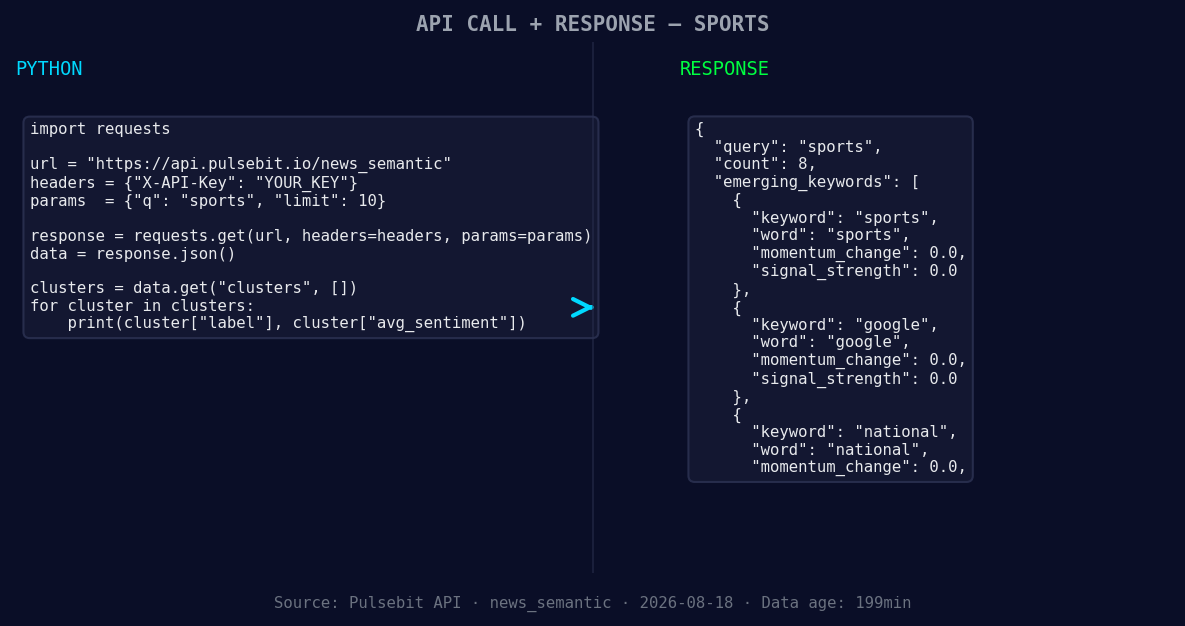
*Left: Python GET /news_semantic call for 'sports'. Right: returned JSON response structure (clusters: 3). Source: Pulsebit /news_semantic.*
# Define the parameters
topic = 'sports'
momentum = +0.290
confidence = 0.85
score = +0.800
# Step 1: Geographic origin filter
url = "https://api.pulsebit.com/v1/sentiment"
params = {
"lang": "sp",
"topic": topic
}
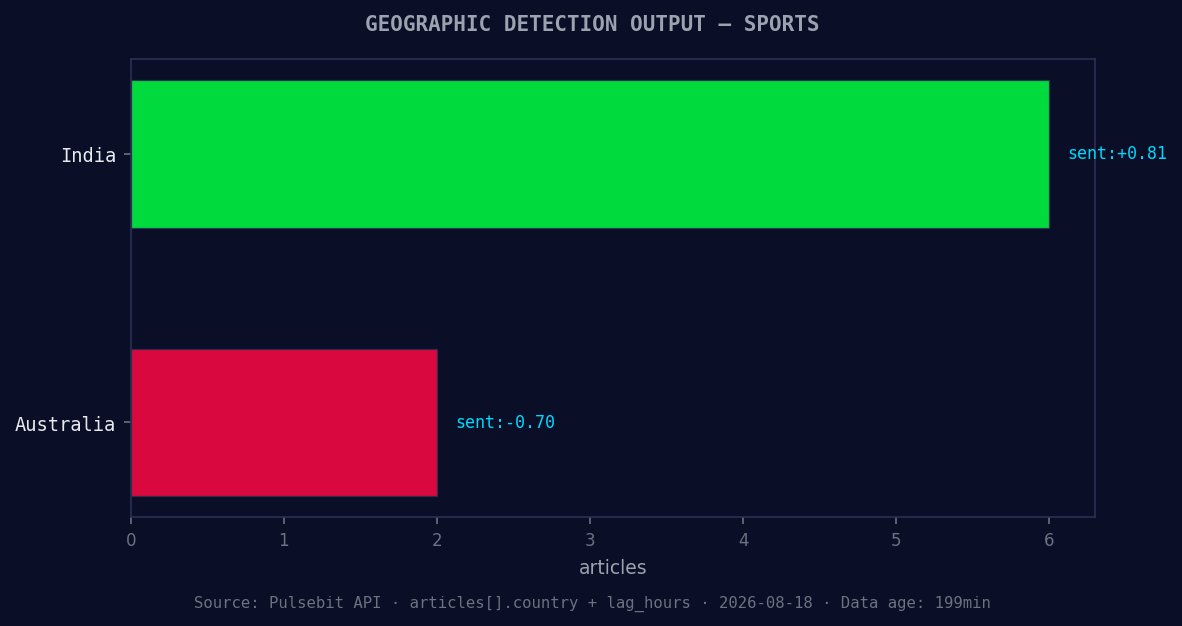
*Geographic detection output for sports. India leads with 6 articles and sentiment +0.81. Source: Pulsebit /news_recent geographic fields.*
response = requests.get(url, params=params)
data = response.json()
# Step 2: Meta-sentiment moment
cluster_reason = "Clustered by shared themes: visakhapatnam, collector, venues, brics, sports."
meta_sentiment_response = requests.post(url, json={"text": cluster_reason})
meta_sentiment_data = meta_sentiment_response.json()
print("Filtered Data:", data)
print("Meta Sentiment Data:", meta_sentiment_data)
In the code above, we first query for sentiment data specific to the sports topic in Spanish. This allows us to capture insights that English-dominated models might overlook. Then, we run the cluster reason string through the sentiment scoring endpoint. This dual approach helps us not only filter relevant discussions but also evaluate the narrative framing itself.
Here are three specific builds we can create based on this pattern:
Spanish Sports Signal: Establish a signal that triggers alerts when we notice a significant momentum spike (e.g., >0.200) in Spanish articles about sports. Use the geo filter to ensure you’re only working with the right language.
Meta-Sentiment Threshold: Create an endpoint that checks the meta-sentiment of clustered articles. Set a threshold to alert you when the sentiment score exceeds +0.700 for narratives related to emerging events, like the BRICS gathering.
Forming Gap Alerts: Develop a mechanism to identify gaps between forming themes (e.g., sports, Google, national) and mainstream narratives. This could involve a relative score comparison, alerting you when the difference in momentum surpasses a set threshold, indicating a potential market shift in discussion.
If you’re interested in implementing these ideas, you can find all the details in our documentation: pulsebit.lojenterprise.com/docs. With just a few lines of code, you can copy, paste, and run this in under 10 minutes to start catching those crucial sentiment shifts.


Top comments (0)