

Your pipeline just missed a critical 24h momentum spike of -0.200 in the finance sector. This anomaly highlights a significant lag in sentiment detection, especially when it comes to multilingual origin and entity dominance. The primary language detected was English, leading by 25.4 hours, while Italian followed closely behind with no lag time. The story behind this spike centers on LIC's recent subscription to Bajaj Finance’s ₹5,000 crore NCDs. If your model isn't accounting for these dynamics, you’re already behind in responding to emerging trends.

English coverage led by 25.4 hours. Italian at T+25.4h. Confidence scores: English 0.85, French 0.85, Spanish 0.85 Source: Pulsebit /sentiment_by_lang.
This 25.4-hour delay indicates a significant structural gap in your pipeline, particularly if it doesn’t handle multilingual data effectively. Your model missed this critical movement by an entire day—one that could have been capitalized on, given the leading narrative around LIC and the financial themes emerging from it. Without addressing these multilingual gaps, you risk missing out on key insights that could influence your decision-making.
Let’s dive into how to catch this type of anomaly using our API. Here’s how you can query for the relevant data and analyze the sentiment around the clustered themes.
import requests
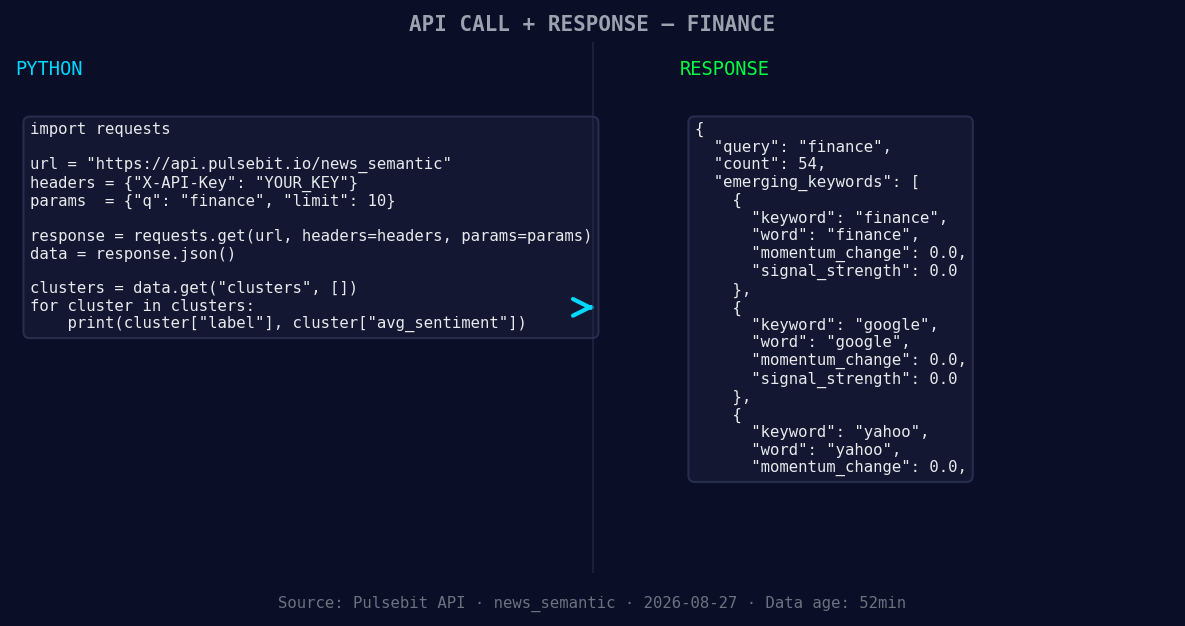
*Left: Python GET /news_semantic call for 'finance'. Right: returned JSON response structure (clusters: 3). Source: Pulsebit /news_semantic.*
# Step 1: Geographic origin filter
url = 'https://api.pulsebit.com/v1/articles'
params = {
"topic": "finance",
"lang": "en", # Filter for English articles
"momentum": -0.200
}
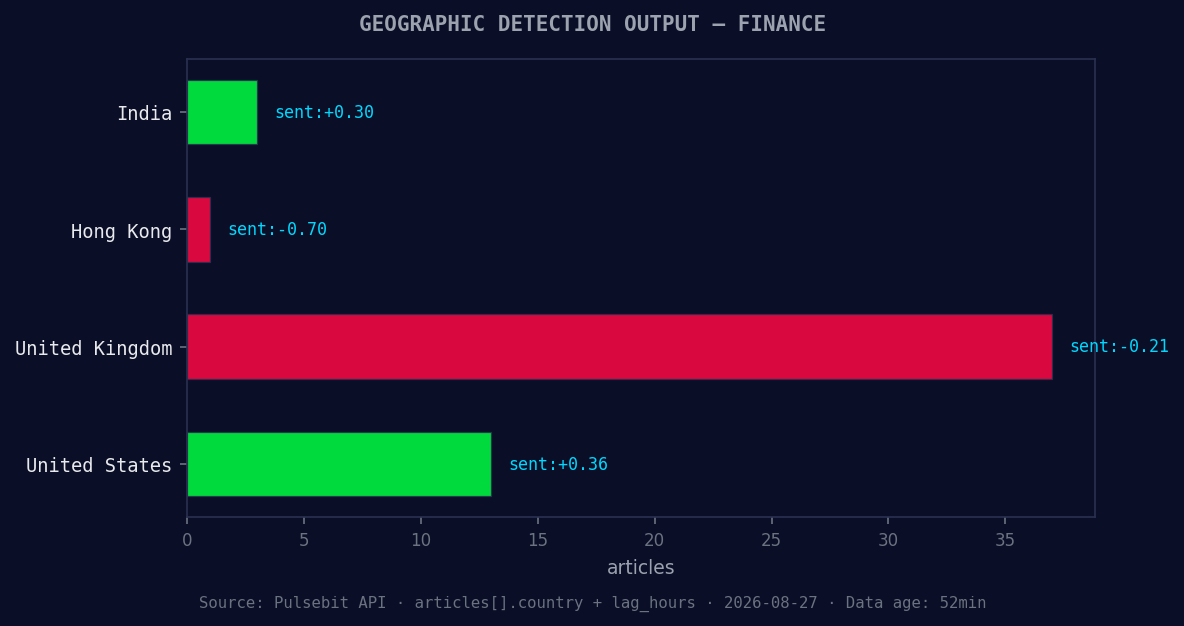
*Geographic detection output for finance. India leads with 3 articles and sentiment +0.30. Source: Pulsebit /news_recent geographic fields.*
response = requests.get(url, params=params)
data = response.json()
# Assuming you have the article data for the next step
articles = data['articles']
# Step 2: Meta-sentiment moment
cluster_reason = "Clustered by shared themes: lic, 000, crore, ncds, lakh."
sentiment_url = 'https://api.pulsebit.com/v1/sentiment'
sentiment_response = requests.post(sentiment_url, json={"text": cluster_reason})
sentiment_data = sentiment_response.json()
sentiment_score = sentiment_data['score'] # Example output
confidence = sentiment_data['confidence']
In this code, we first filter articles by language to ensure we’re only analyzing relevant English content. After gathering the necessary articles, we run the cluster reason string through our sentiment endpoint to score the narrative framing itself. This dual approach gives you a more nuanced understanding of the emerging themes in the finance sector, particularly around LIC's involvement.
Now that you have the data and sentiment analysis, here are three specific builds you can implement tonight to leverage this momentum spike:
Geographic Sentiment Tracker: Build a function that continuously polls our API using the geo filter (e.g.,
lang="en") for finance-related topics. Set a threshold for momentum spikes below -0.150 as alerts for potential downturns.Meta-Sentiment Analyzer: Create a script that automatically pulls recent cluster reasons and sends them through the sentiment analysis endpoint. Focus on the themes emerging from the financial sector, specifically looking for negative sentiment scores below -0.100, like the recent -0.092.
Thematic Comparison Dashboard: Develop a dashboard that visualizes sentiment trends over time for specific clusters. Use the data from the articles processed, like 54 in this case, and compare them against mainstream narratives such as LIC, crore, and NCDs, to see how emerging financial themes evolve against established sentiments.
By implementing these builds, you can ensure that your sentiment analysis pipeline is responsive and tuned to the evolving financial landscape.
Get started with our API here: pulsebit.lojenterprise.com/docs. You can copy-paste and run this in under 10 minutes, and be on your way to catching those crucial insights that keep you ahead of the curve.


Top comments (0)