

Your Pipeline Is 17.6h Behind: Catching World Sentiment Leads with Pulsebit
We just noticed a 24h momentum spike of +0.515 in sentiment surrounding the topic "world." This anomaly is striking, especially considering that the leading language driving this spike is English, lagging behind by 17.6 hours. It's a clear indicator that something significant is happening, and if your pipeline isn't accounting for multilingual content and entity dominance, you might be missing crucial insights.

English coverage led by 17.6 hours. Ca at T+17.6h. Confidence scores: English 0.75, Spanish 0.75, French 0.75 Source: Pulsebit /sentiment_by_lang.
Your model missed this by 17.6 hours. It’s not just a number; it’s a gap that can lead to misinformed decisions. By focusing solely on mainstream narratives, you’ll find yourself out of the loop while the world is discussing the "rise of the data state." The dominant entity here is the English press, which has left you trailing behind as global sentiment shifts. The time to adapt is now.
import requests
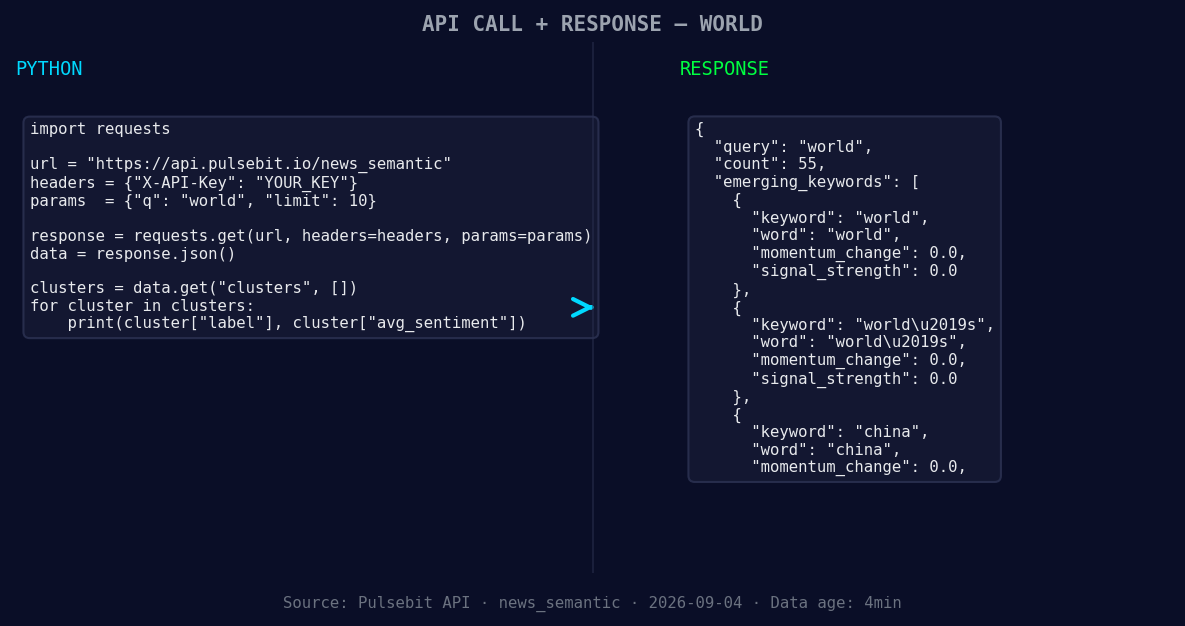
*Left: Python GET /news_semantic call for 'world'. Right: returned JSON response structure (clusters: 3). Source: Pulsebit /news_semantic.*
# Define the parameters
topic = 'world'
score = +0.095
confidence = 0.75
momentum = +0.515
url = "https://api.pulsebit.com/sentiment"
# Step 1: Geographic origin filter
response = requests.get(url, params={
"topic": topic,
"lang": "en",
"score": score,
"confidence": confidence,
"momentum": momentum,
})
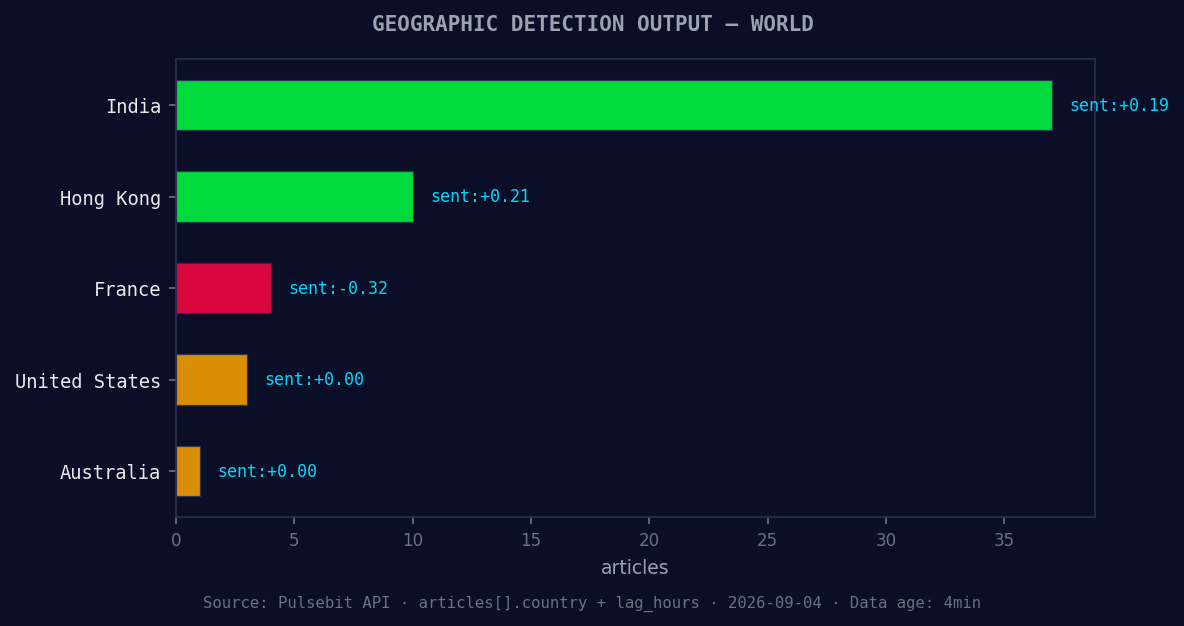
*Geographic detection output for world. India leads with 37 articles and sentiment +0.19. Source: Pulsebit /news_recent geographic fields.*
# Check the response
if response.status_code == 200:
data = response.json()
print("Filtered Data: ", data)
else:
print("Error:", response.status_code)
# Step 2: Meta-sentiment moment
cluster_reason = "Clustered by shared themes: rise, data, state, worldfinance, com."
meta_response = requests.post(url, json={"text": cluster_reason})
# Check meta sentiment response
if meta_response.status_code == 200:
meta_data = meta_response.json()
print("Meta Sentiment Data: ", meta_data)
else:
print("Error:", meta_response.status_code)
Here’s how we catch the sentiment shift. First, we filter the data by the English language to ensure we’re focused on the leading narratives. Then, we take the cluster reason string and run it back through our sentiment scoring endpoint. This not only captures the sentiment around specific topics but also evaluates how the narrative is framed, giving us deeper insights into emerging themes.
Let’s build something concrete tonight. Here are three specific projects we can tackle:
Geo-filtered Alert System: Set a trigger for when momentum exceeds a threshold of +0.5 in English for topics like "world." Use the geographic origin filter to only alert you when significant sentiment shifts happen within English-speaking regions. This can keep you ahead of the curve.
Meta-Sentiment Analysis Dashboard: Create a dashboard that visualizes how narratives are formed around clustered themes. For example, track topics like "world" and "China," scoring them against mainstream narratives of "rise," "data," and "state." Set alerts for any significant shifts in sentiment to stay informed.
Clustered Theme Tracker: Develop a pipeline that evaluates forming themes of "world(+0.00)," "world’s(+0.00)," and "China(+0.00)" against mainstream discussions. Use the meta-sentiment loop to score how these themes are framed and whether they indicate an emerging trend.
If you’re ready to get started, check out our documentation at pulsebit.lojenterprise.com/docs. You can copy-paste and run this in under 10 minutes, and you'll be on your way to catching sentiment shifts before they become mainstream news.


Top comments (0)