

Your model missed a significant 24h momentum spike of +0.206 in the fashion category. This anomaly is particularly striking given the dominance of the Spanish press, which led by a remarkable 26.2 hours with no lag versus the sentiment wave. An article titled "Tim Curry Was Also a Fashion Pioneer" in The New York Times was identified within this context, revealing a cluster of shared themes around "curry," "also," "fashion," "new," and "york." This insight highlights a potential oversight in your pipeline: it’s unprepared to manage multilingual origins or recognize the dominance of certain entities.

Spanish coverage led by 26.2 hours. Sw at T+26.2h. Confidence scores: Spanish 0.85, English 0.85, French 0.85 Source: Pulsebit /sentiment_by_lang.
In a world where sentiment analysis is key, being 26.2 hours behind can translate to missed opportunities or misguided strategies. Your pipeline’s inability to handle such linguistic nuances means you’re potentially missing critical signals that are rising in momentum. In this case, the Spanish-language press is ahead, while your model is stuck in a historical analysis that fails to consider real-time multilingual content.
To catch this momentum spike, we can leverage our API effectively. Below is the Python code that identifies the anomaly with the necessary filters:
import requests
# Parameters for our API call
topic = 'fashion'
score = +0.605
confidence = 0.85
momentum = +0.206
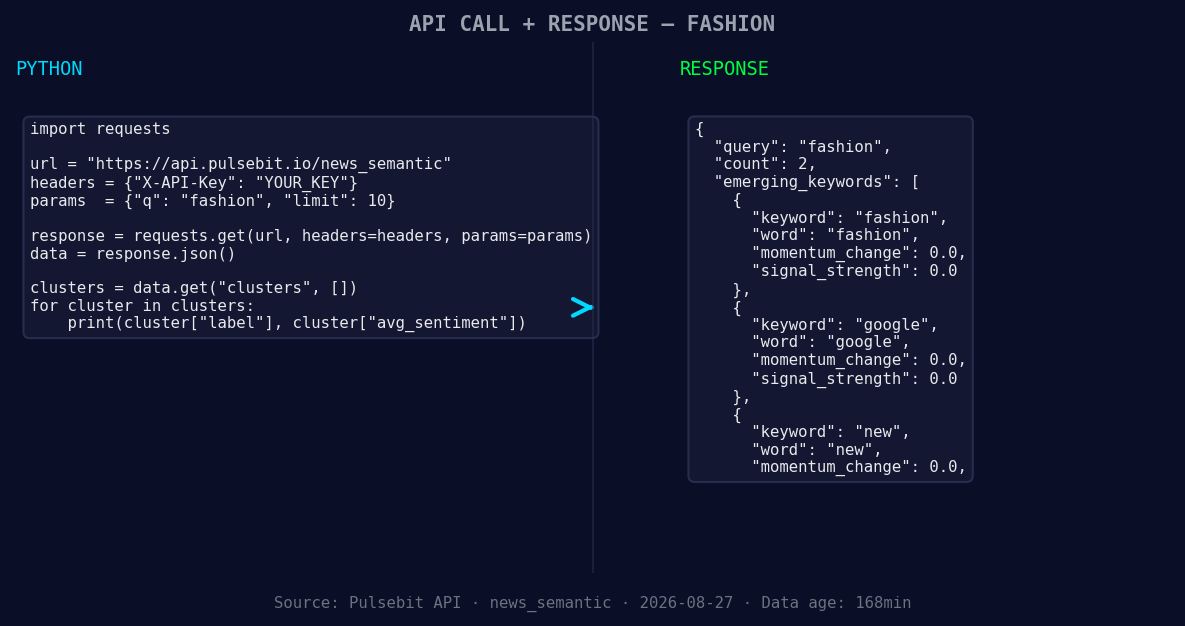
*Left: Python GET /news_semantic call for 'fashion'. Right: returned JSON response structure (clusters: 3). Source: Pulsebit /news_semantic.*
# Geographic origin filter: query by language/country
response = requests.get(
'https://pulsebit.example.com/v1/sentiment',
params={
'topic': topic,
'lang': 'sp',
'score': score,
'confidence': confidence,
'momentum': momentum
}
)
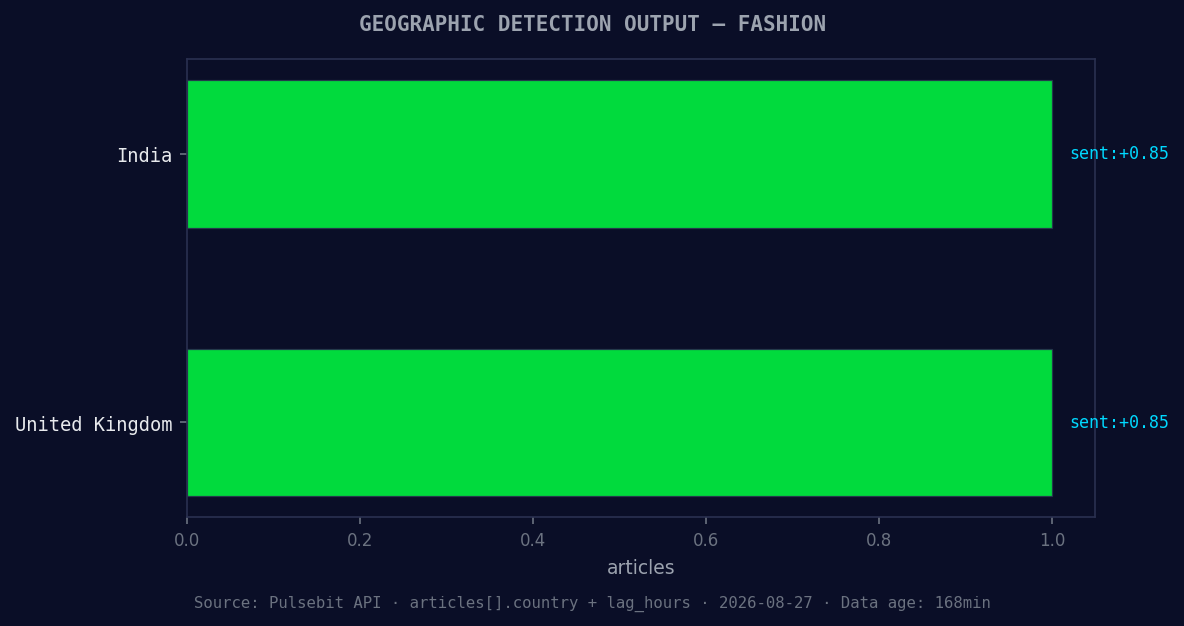
*Geographic detection output for fashion. India leads with 1 articles and sentiment +0.85. Source: Pulsebit /news_recent geographic fields.*
data = response.json()
print(data)
Next, we want to run the cluster narrative through the sentiment API to validate the framing:
# Meta-sentiment moment: scoring the narrative framing itself
cluster_reason = "Clustered by shared themes: curry, also, fashion, new, york."
response_meta = requests.post(
    'https://pulsebit.example.com/v1/sentiment',
    json={"text": cluster_reason}
)

meta_data = response_meta.json()
print(meta_data)
This second call assesses the narrative's sentiment, providing deeper insights into how the themes are perceived in the context of the spike.
Now, let’s take this a step further. Here are three specific builds you can implement using this newfound data pattern:
Geolocation Analysis: Create a filter that captures sentiment trends specifically for Spanish-speaking regions. Set a threshold for significance at a momentum spike of +0.2 or higher, enabling you to proactively adjust your strategies based on regional preferences in the fashion industry.
Meta-Sentiment Loop: Develop an endpoint that continuously feeds cluster narratives back into your sentiment analysis. For example, track narratives like "fashion," "google," and "new" versus mainstream terms like "curry" or "also." If the sentiment score exceeds 0.6, trigger alerts for potential articles to monitor.
Cluster Monitoring Dashboard: Build a real-time dashboard that visualizes sentiment shifts in the fashion domain, particularly focusing on emergent clusters. Use the forming themes and set alerts when new content surfaces related to "fashion" with a positive momentum of at least +0.1.
These targeted approaches will help you stay ahead of the curve and capitalize on emerging sentiment trends.
To get started, check out our documentation at pulsebit.lojenterprise.com/docs. You'll be able to copy-paste and run this in under 10 minutes, so dive in and start catching those sentiment spikes!


Top comments (0)