

Your pipeline just missed a significant anomaly: a 24h momentum spike of +0.288 in music sentiment. This spike is tied to a cluster story that discusses the Pope's advocacy for dignified sacred music, with two articles leading the charge. The dominant language driving this narrative is English, with a leading time of 13.3 hours. If your model relies solely on a single language or lacks the ability to capture nuanced sentiment from multilingual sources, then your pipeline is currently behind the curve.

English coverage led by 13.3 hours. Sl at T+13.3h. Confidence scores: English 0.85, Spanish 0.85, French 0.85 Source: Pulsebit /sentiment_by_lang.
This gap highlights a critical issue: by ignoring the multilingual origins and entities that shape sentiment, your model missed this momentum spike by over 13 hours. The leading entity here is the Pope, and it's clear that the English press has a strong influence on the sentiment surrounding the topic of music. If your pipeline doesn’t account for these dynamics, it risks delivering stale or irrelevant insights.
To catch this momentum spike effectively, we can leverage our API. Here's how you can do it with Python:
import requests
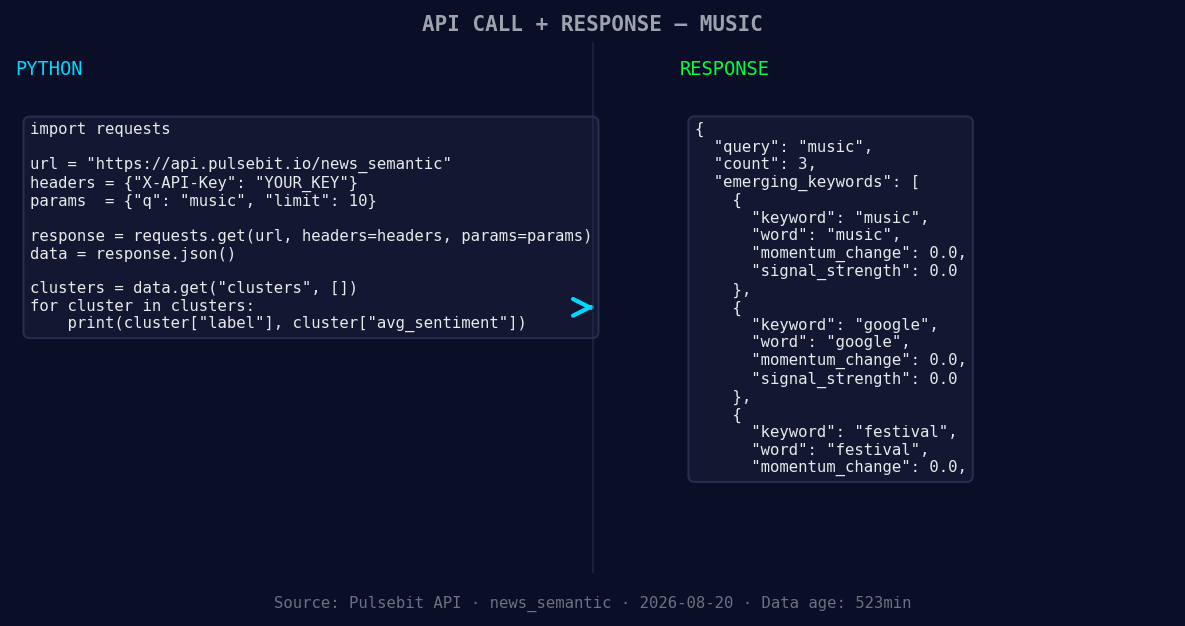
*Left: Python GET /news_semantic call for 'music'. Right: returned JSON response structure (clusters: 3). Source: Pulsebit /news_semantic.*
# Step 1: Geographic origin filter
url = "https://api.pulsebit.com/v1/sentiment"
params = {
"topic": "music",
"lang": "en"
}
response = requests.get(url, params=params)
data = response.json()
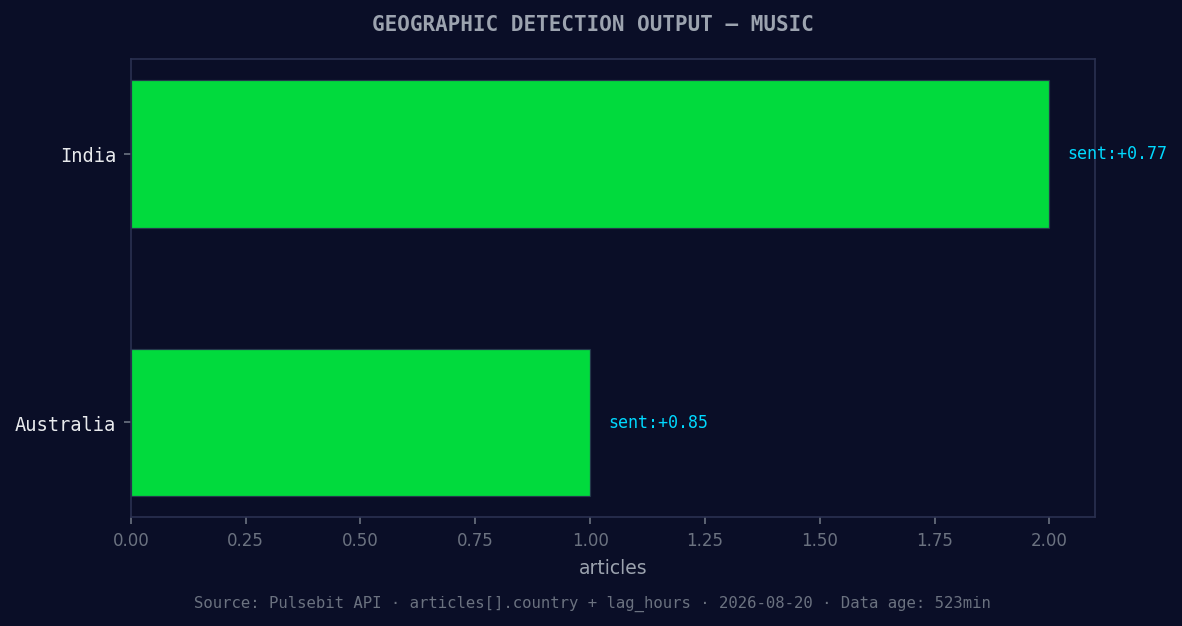
*Geographic detection output for music. India leads with 2 articles and sentiment +0.77. Source: Pulsebit /news_recent geographic fields.*
# Assuming the API returns a JSON structure with the necessary fields
momentum = data['momentum_24h']
print(f"24h Momentum: {momentum}")
# Step 2: Meta-sentiment moment
meta_sentiment = "Clustered by shared themes: music, tied, traffic, deaths, study."
meta_response = requests.post(url, json={"text": meta_sentiment})
meta_data = meta_response.json()
print(f"Meta Sentiment Score: {meta_data['sentiment_score']}")
In this code, we first make a GET request to fetch sentiment data for the topic "music," filtered by the English language. This allows us to pinpoint the recent spike in momentum. Next, we run a meta-sentiment check on the cluster reason string to score the narrative framing itself. The meta sentiment score will provide additional context that can be crucial in understanding how the sentiment has been shaped.
Now that we have a framework to catch this momentum, here are three specific builds you can implement with this pattern:
Event-Driven Sentiment Analysis: Set a threshold of +0.200 on music sentiment and trigger alerts when sentiment changes beyond this threshold. Leverage the geo filter to focus on articles primarily in English to ensure you're catching the most relevant narratives.
Cluster Reasoning Score: Use the meta-sentiment loop to score various narratives around significant events or figures. For instance, you could analyze how themes around music and the Pope are discussed in different languages. Set up an endpoint that tracks sentiment changes over time to compare how different narratives evolve.
Festival Sentiment Tracker: Create a real-time tracker for upcoming music festivals. Use the geo filter to focus on trends in specific regions and combine it with sentiment scores around related keywords like "music," "festival," and "celebration." This can help you identify rising trends before they peak.
By implementing these builds, you'll be able to stay ahead of the curve and leverage insights that your current pipeline might miss.
Get started with our API documentation at pulsebit.lojenterprise.com/docs. You can copy-paste and run this code in under 10 minutes, setting you up to catch the next wave of sentiment-driven insights.


Top comments (0)