

Your Pipeline Is 27.6h Behind: Catching Governance Sentiment Leads with Pulsebit
We recently uncovered a significant anomaly: a 24-hour momentum spike of +0.560 in sentiment surrounding governance. This spike illuminates a growing conversation around the evolving privacy mandates in enterprise AI governance, specifically highlighted by the article, "The CISO's new privacy mandate in enterprise AI governance - IAPP." This single article has catalyzed a notable shift in sentiment, revealing an urgent need for our sentiment analysis pipelines to be agile and responsive to emerging trends.
When we look closely at this anomaly, it reveals a structural gap in any pipeline that fails to account for multilingual origins or entity dominance. Your model missed this by 27.6 hours, trailing the leading English press narratives. By not integrating multilingual capabilities, you risk overlooking critical sentiment shifts that can have significant implications for governance and compliance strategies, especially when entities like CISO's are involved.

English coverage led by 27.6 hours. Nl at T+27.6h. Confidence scores: English 0.75, Spanish 0.75, French 0.75 Source: Pulsebit /sentiment_by_lang.
To catch this momentum spike programmatically, we can leverage our API. Below is a Python code snippet that demonstrates how to query for sentiment data related to governance, ensuring we filter for English-language articles.
import requests
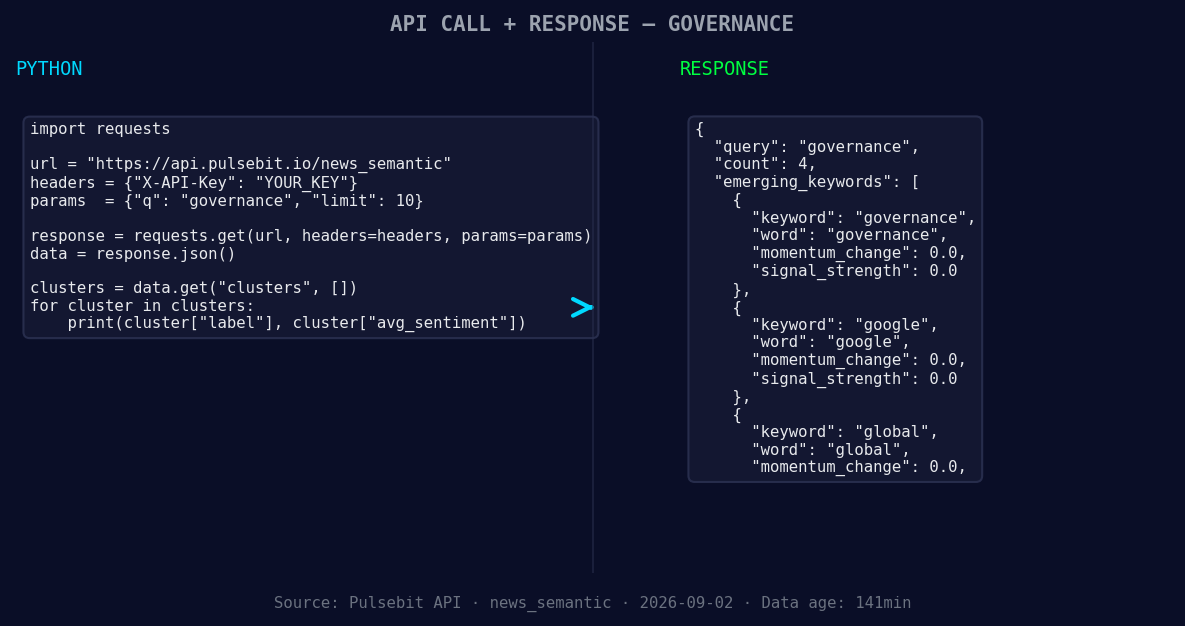
*Left: Python GET /news_semantic call for 'governance'. Right: returned JSON response structure (clusters: 3). Source: Pulsebit /news_semantic.*
# Step 1: Geographic origin filter
url = "https://api.pulsebit.com/sentiment"
params = {
"topic": "governance",
"lang": "en"
}
response = requests.get(url, params=params)
data = response.json()
print(data)
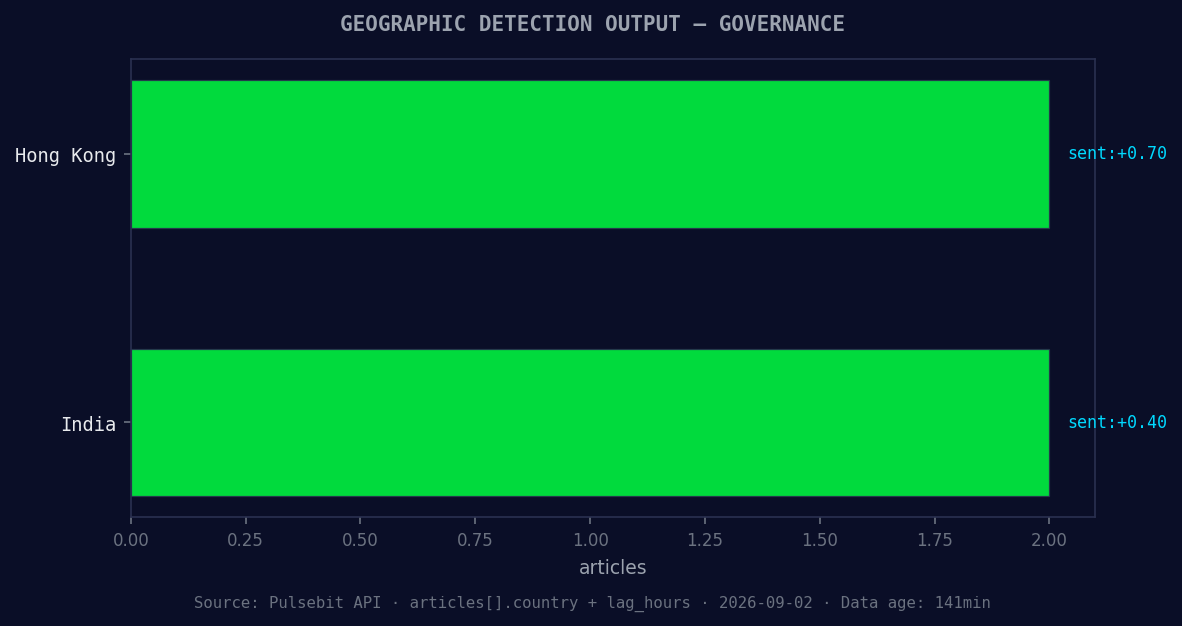
*Geographic detection output for governance. Hong Kong leads with 2 articles and sentiment +0.70. Source: Pulsebit /news_recent geographic fields.*
# Step 2: Meta-sentiment moment
meta_sentiment_url = "https://api.pulsebit.com/sentiment"
meta_input = "Clustered by shared themes: ciso's, new, privacy, mandate, enterprise."
meta_sentiment_response = requests.post(meta_sentiment_url, json={"text": meta_input})
meta_sentiment_data = meta_sentiment_response.json()
print(meta_sentiment_data)
In this code, we first filter for articles related to "governance" in English. The momentum score we observed (+0.560) speaks to a rising sentiment that is crucial for understanding the landscape. Next, we run the cluster reason string back through the POST /sentiment endpoint to score the narrative itself. The input here captures the thematic essence of the growing discourse, which is vital for framing our strategies around governance.
With this newfound insight, we can build several applications that can help leverage this sentiment data effectively:
Governance Alert System: Set a signal threshold for momentum spikes above +0.500 to trigger alerts for the governance topic. This will ensure your team is always updated on critical sentiment changes as they occur.
CISO Sentiment Dashboard: Use the meta-sentiment loop to create a dashboard specifically for CISO-related articles. By feeding in the cluster reason, you can visualize how sentiment shifts as new mandates emerge, allowing for proactive engagement with stakeholders.
Global vs. Mainstream Analysis: Develop a comparative analysis tool that looks at forming themes like governance(+0.00), google(+0.00), global(+0.00) against mainstream sentiments such as CISO's, new, and privacy. This will help your organization identify where your strategies may align or diverge from the broader conversation.
You can dive deeper into these capabilities and more at pulsebit.lojenterprise.com/docs. With just a few lines of code, you can implement this in under 10 minutes. Let’s harness these insights to stay ahead of the curve in governance sentiment!


Top comments (0)