

Your Pipeline Is 26.1h Behind: Catching Science Sentiment Leads with Pulsebit
We recently observed a notable anomaly: a 24h momentum spike of -0.521, indicating a significant shift in sentiment towards the topic of science. This drop is particularly alarming, especially considering that the leading language in the press was English, with a lag of 26.1 hours. With such a stark change in sentiment, it’s crucial for us to dig deeper into our pipelines to understand how this information is being processed and how we can catch these trends more effectively.
The challenge here is clear. If your model isn't equipped to handle multilingual origins or is slow to react to dominant entities, you might be missing critical insights. In this instance, your pipeline missed the sentiment shift by 26.1 hours, which could have significant implications for decisions based on timely information. The leading entity in this case is the English press, which has a direct influence on how science-related news is perceived globally. If your system isn't accounting for these nuances, you risk falling behind.

English coverage led by 26.1 hours. Da at T+26.1h. Confidence scores: English 0.85, Spanish 0.85, French 0.85 Source: Pulsebit /sentiment_by_lang.
To harness this insight, we can leverage our API to catch these sentiments in real-time. Here’s how you can do it:
import requests
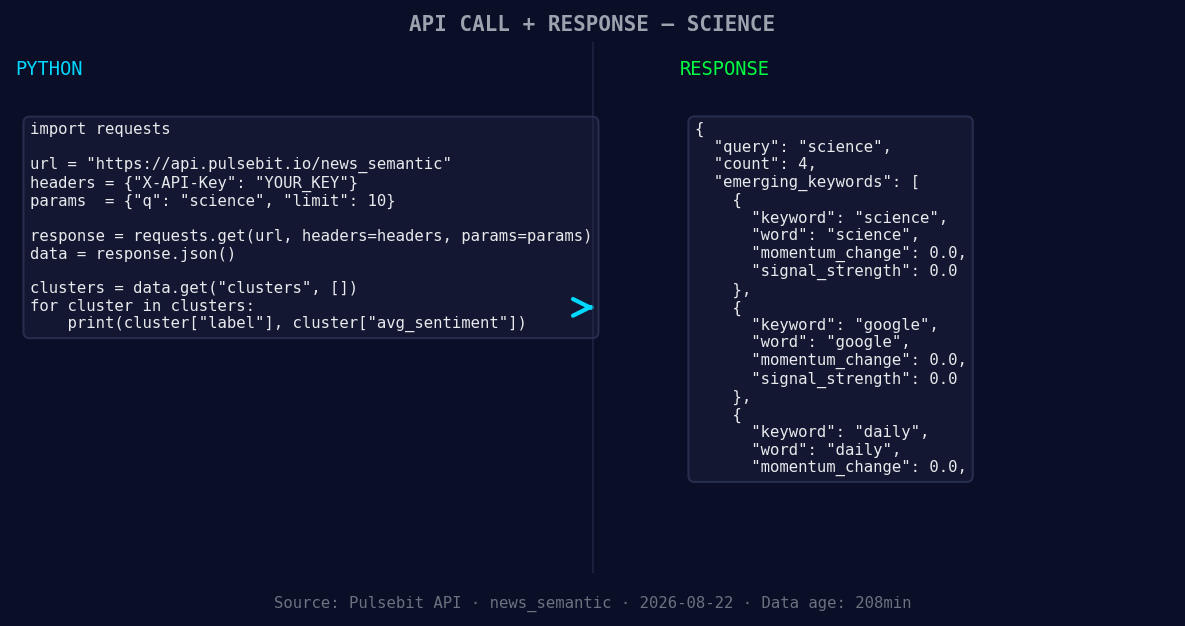
*Left: Python GET /news_semantic call for 'science'. Right: returned JSON response structure (clusters: 3). Source: Pulsebit /news_semantic.*
# Define the parameters for our query
topic = 'science'
score = +0.275
confidence = 0.85
momentum = -0.521
# Geographic origin filter
response = requests.get(
'https://api.pulsebit.lojenterprise.com/sentiment',
params={
'topic': topic,
'lang': 'en', # We filter for English language sources
'score': score,
'confidence': confidence,
'momentum': momentum
}
)
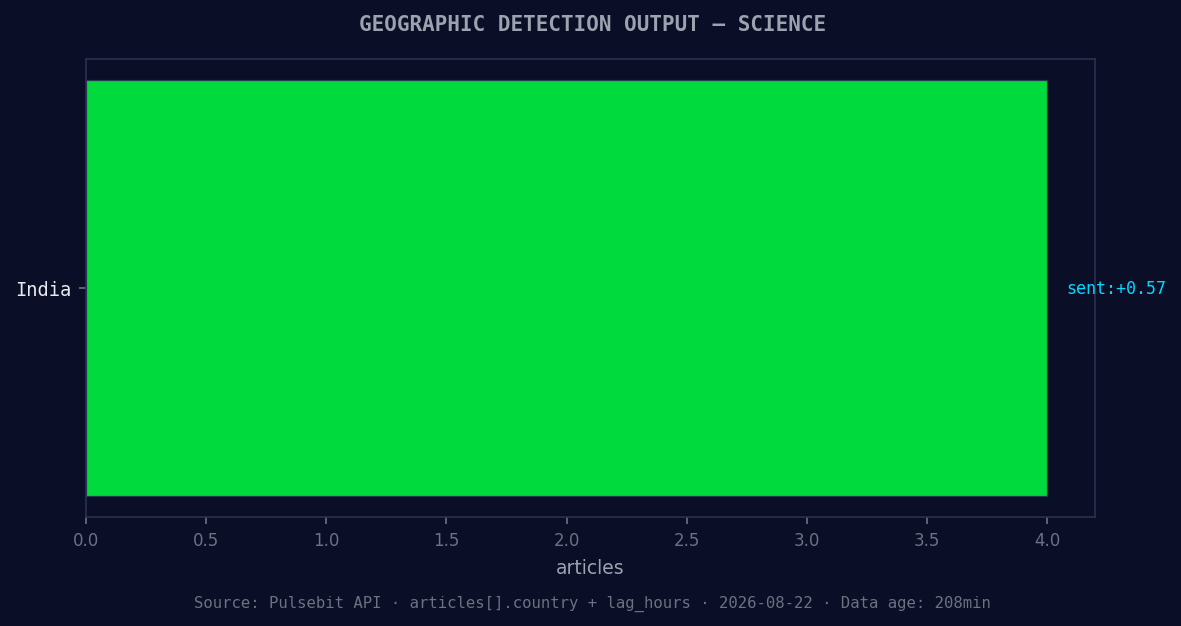
*Geographic detection output for science. India leads with 4 articles and sentiment +0.57. Source: Pulsebit /news_recent geographic fields.*
data = response.json()
print(data)
# Meta-sentiment moment
cluster_reason = "Clustered by shared themes: lewis:, science, first, politics, column."
meta_response = requests.post(
'https://api.pulsebit.lojenterprise.com/sentiment',
json={"text": cluster_reason}
)
meta_data = meta_response.json()
print(meta_data)
In this code, we first set up a query to fetch sentiment data specifically for the topic of science, ensuring we only pull English-language sources. We then run a secondary request to score the narrative surrounding our clusters. This dual approach allows us to capture both the raw sentiment and its contextual framing, which is critical for understanding the implications of the data.
Now, let’s explore three specific builds you can develop from this pattern:
Geographic Sentiment Analysis: Use the geographic origin filter to monitor sentiment changes in specific regions. For example, set a threshold where you trigger alerts for any sentiment score dropping below +0.1 in science. This would help you capture emerging negative trends before they become mainstream.
Meta-Sentiment Feedback Loop: Implement a feedback loop using the meta-sentiment moment. Whenever you detect a significant shift in sentiment, run the cluster reason string through the sentiment analysis endpoint. Define a threshold where a negative sentiment score (e.g., < 0.0) triggers further investigation into the related articles.
Forming Themes Tracker: Build an endpoint that regularly checks for forming themes. Monitor the sentiment scores for topics like science, Google, and daily news. Set a signal threshold (e.g., forming: science(+0.00)) that alerts you to potential spikes in interest or concern, allowing for proactive measures in your analysis.
By integrating these builds, you can ensure that your pipeline is not only catching sentiment shifts but also staying ahead of the curve.
To get started, check out our documentation at pulsebit.lojenterprise.com/docs. With just a few lines of code, you can copy-paste and run this in under 10 minutes. Don't let your pipeline lag behind—stay informed and agile!


Top comments (0)