

Your Pipeline Is 24.8h Behind: Catching World Sentiment Leads with Pulsebit
We just discovered a significant anomaly: a 24h momentum spike of +0.268. This finding draws our attention to an emerging narrative that could reshape your understanding of global sentiment. The leading language driving this spike is English, with a notable cluster story about Chinese humanoid robots breaking Usain Bolt’s 100m record. If your sentiment pipeline isn’t tuned to these nuances, you might miss critical developments like this one.
Imagine your model lagging behind by 24.8 hours, completely unaware of the conversation surrounding the dominance of humanoid robots in recent news. This delay could mean missing out on essential insights that affect decision-making and strategy in real-time. The leading English articles on this topic are leading the charge, while your model is stuck in an outdated framework that doesn’t account for multilingual content or emerging themes.

English coverage led by 24.8 hours. So at T+24.8h. Confidence scores: English 0.85, French 0.85, Spanish 0.85 Source: Pulsebit /sentiment_by_lang.
Let’s bridge this gap with some code. Here’s how we can catch this momentum spike, focusing on the topic “world”:
import requests
# Step 1: Geographic origin filter
url = "https://api.pulsebit.com/v1/discover"
params = {
"topic": "world",
"score": +0.032,
"confidence": 0.85,
"momentum": +0.268,
"lang": "en"
}
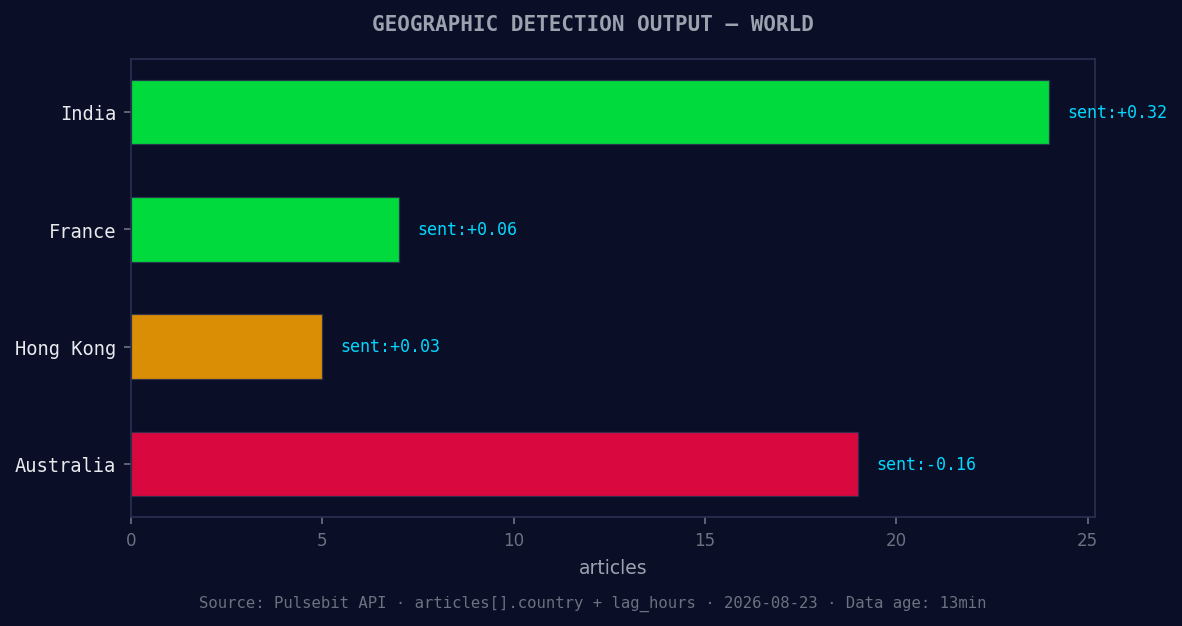
*Geographic detection output for world. India leads with 24 articles and sentiment +0.32. Source: Pulsebit /news_recent geographic fields.*
response = requests.get(url, params=params)
data = response.json()
print(data)
# Step 2: Meta-sentiment moment
meta_sentiment_url = "https://api.pulsebit.com/v1/sentiment"
cluster_reason = "Clustered by shared themes: humanoid, record, world, chinese, robots."
meta_response = requests.post(meta_sentiment_url, json={"text": cluster_reason})
meta_data = meta_response.json()
print(meta_data)
In this snippet, we first fetch data specifically targeting English articles on the topic “world” that show a positive sentiment score and significant momentum. The geographic origin filter ensures we only get the relevant stories that could shape our understanding. Then, we run the cluster reason through our sentiment analysis endpoint to see how the narrative frames itself, providing context to the findings.
Now, let’s talk about three specific builds you can implement based on this pattern:
Geographic Focus: Set up an alert system that triggers when the sentiment score for “world” in English reaches a certain threshold, say +0.05. This will catch spikes early and ensure your stakeholders are informed.
Meta-Sentiment Analysis: Build a dashboard that visualizes the sentiment trajectories of clustered narratives. Use the meta-sentiment output from the second API call to provide real-time insights into how narratives are perceived across different themes. This will help identify which narratives are gaining traction.

Left: Python GET /news_semantic call for 'world'. Right: returned JSON response structure (clusters: 3). Source: Pulsebit /news_semantic.
- Anomaly Detection: Create an anomaly detection script that flags any topic with a momentum score over +0.25, particularly when it overlaps with trending themes like “humanoid” and “record” versus mainstream narratives. This ensures you won’t miss future breakthroughs like robots surpassing human capabilities.
By leveraging this data and our API’s capabilities, you can stay ahead of the curve and ensure your models are not just reactive but proactive.
For more detailed instructions, visit our documentation at pulsebit.lojenterprise.com/docs. With just a few minutes of setup, you can integrate these insights into your workflow and start catching these critical sentiment leads.


Top comments (0)