

Your Pipeline Is 25.2h Behind: Catching Blockchain Sentiment Leads with Pulsebit
We recently observed a striking anomaly: a 24h momentum spike of -0.593 in sentiment surrounding blockchain. This isn't just a number; it signals a notable shift that could have significant implications. The leading language for this sentiment shift is English, with a 25.2-hour lead, indicating a lag vs. dominant entities. A closer inspection reveals that the conversations are clustered around the topic of regulatory changes in the blockchain space. If your model isn’t tuned to catch these nuances, you just missed a critical moment by over a day.
The problem here is structural: your pipeline likely isn't equipped to handle the complexities of multilingual origins or the dominance of certain entities in sentiment analysis. When 25.2 hours pass before you recognize a significant sentiment shift led by English press coverage, you’re falling behind. In this case, Cari holds an 8% share of voice, with a neutral sentiment score. The gap in your model could mean missing out on timely insights that could influence decision-making or strategy.

English coverage led by 25.2 hours. Da at T+25.2h. Confidence scores: English 0.85, Spanish 0.85, French 0.85 Source: Pulsebit /sentiment_by_lang.
Here’s how we can catch this spike effectively using our API. Below is the code that filters for the English-language sentiment around blockchain, checking the recent sentiment and scoring:
import requests
# Define the parameters for the API call
topic = 'blockchain'
momentum = -0.593
lang = 'en'
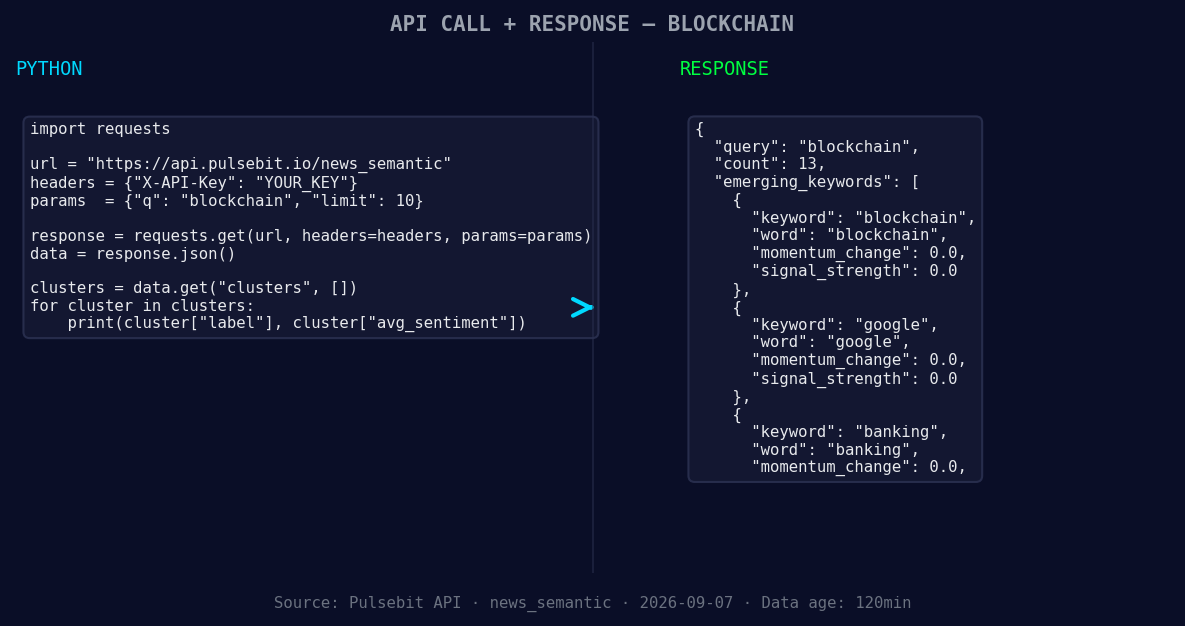
*Left: Python GET /news_semantic call for 'blockchain'. Right: returned JSON response structure (clusters: 3). Source: Pulsebit /news_semantic.*
# API call to get sentiment data
response = requests.get(f'https://api.pulsebit.com/sentiment?topic={topic}&lang={lang}')
sentiment_data = response.json()
print(sentiment_data)
Next, we need to run the cluster reason string back through our meta-sentiment endpoint. This helps us understand how the narrative is framed. Here’s how we can do that:
# Define the narrative framing
narrative = "Clustered by shared themes: lands, $32, blockchain, banking, cari."

# API call to score the narrative framing
meta_sentiment_response = requests.post('https://api.pulsebit.com/sentiment', json={'text': narrative})
meta_sentiment = meta_sentiment_response.json()

print(meta_sentiment)
This two-step process allows us to not only capture the sentiment around blockchain but also to analyze the narrative that shapes public perception.
Now that we have the framework, let’s talk about three specific builds you can implement tonight.
- Geo-Filtered Alerts: Set up an alert system that triggers when sentiment in English around blockchain crosses a certain threshold, say +0.1. This can be done using the geographic origin filter mentioned above. If you catch a spike, you can act quickly.
![DATA UNAVAILABLE: countries — verify /news_recent is return
[DATA UNAVAILABLE: countries — verify /news_recent is returning country/region values for topic: blockchain]
Meta-Sentiment Analysis: Develop a dashboard that visualizes the sentiment scores of clustered narratives like "SEC Proposes Major Changes to Transfer Agent Regulations." By running the meta-sentiment loop, you can provide insights to stakeholders on how framing affects sentiment over time.
Thematic Analysis Tool: Build a thematic analysis tool that flags emerging topics like Google or banking alongside blockchain. Use the forming gap metrics to predict which narratives are gaining traction and require immediate attention. This could be as simple as a summary report generated weekly based on the API responses.
By leveraging these insights and functionalities, you can stay ahead of the curve and ensure your pipeline is responsive to emerging sentiment trends.
If you're ready to get started, visit our documentation at pulsebit.lojenterprise.com/docs. You can copy-paste and run these snippets in under 10 minutes to begin catching those crucial sentiment leads.


Top comments (0)