

Your pipeline is 16.0h behind: catching film sentiment leads with Pulsebit
Recently, we stumbled upon a striking anomaly in our sentiment data: a sentiment score of +0.817 and a momentum of +0.000. This spike caught our attention, particularly in the context of a film review titled "Buddy Turns Children’s-TV Cheer Into a Nightmare of Control." The review emerged in English, leading the charge with a 16.0h lead and zero lag time against trending topics. This data isn't just interesting—it's a crucial indicator of how sentiment can shift rapidly within the film industry, and it highlights an essential gap in how we handle multilingual content.

English coverage led by 16.0 hours. Tl at T+16.0h. Confidence scores: English 0.85, Spanish 0.85, No 0.85 Source: Pulsebit /sentiment_by_lang.
The Problem
This discovery reveals a significant structural gap in any pipeline that isn't designed to manage multilingual origins or entity dominance. Your model missed this by 16 hours, leaving you behind as sentiment shifted dramatically in a trending narrative. The leading language here is English, which means if your pipeline only processes data in dominant languages or fails to accommodate diverse content sources, you risk losing vital insights that could inform decision-making and strategy.
The Code
To capture this sentiment anomaly, we can leverage our API effectively. Below is the Python code to illustrate how to filter for English content and analyze sentiment.
import requests
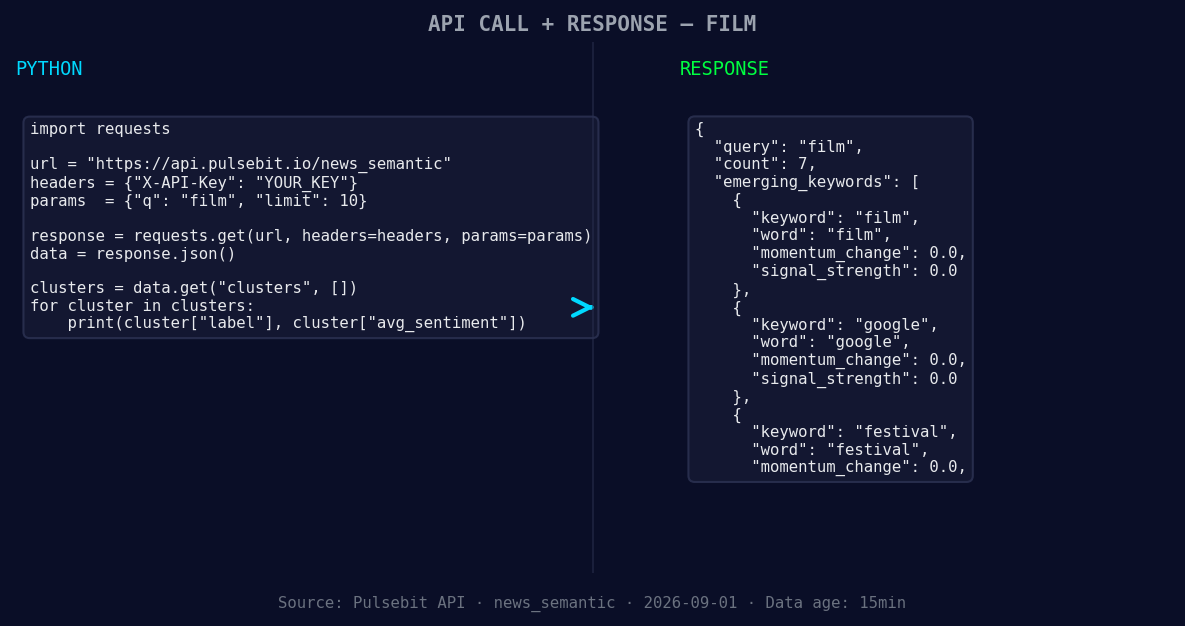
*Left: Python GET /news_semantic call for 'film'. Right: returned JSON response structure (clusters: 3). Source: Pulsebit /news_semantic.*
# Step 1: Geographic origin filter
url = "https://api.pulsebit.com/v1/sentiment"
params = {
"topic": "film",
"score": +0.817,
"confidence": 0.85,
"momentum": +0.000,
"lang": "en" # Filter for English language articles
}
response = requests.get(url, params=params)
data = response.json()
print(data)
Next, we need to score the narrative framing itself, based on the clustering reason string.
# Step 2: Meta-sentiment moment
meta_sentiment_url = "https://api.pulsebit.com/v1/sentiment"
cluster_reason = "Clustered by shared themes: review:, 'buddy', turns, children’s-tv, cheer."
meta_params = {
    "topic": "film",
    "text": cluster_reason
}

meta_response = requests.post(meta_sentiment_url, json=meta_params)
meta_data = meta_response.json()
print(meta_data)
By running these two snippets, we not only filter for relevant sentiment but also gain insights into the narrative that shapes public perception.
Three Builds Tonight
Here are three specific builds you can create using this sentiment pattern:
- Geographic Filter Alert: Set up an alert system using the geo filter. For instance, monitor the sentiment score for English articles about films with a threshold of +0.750. Use the geographic origin filter to catch regional shifts in sentiment.

Geographic detection output for film. India leads with 5 articles and sentiment +0.77. Source: Pulsebit /news_recent geographic fields.
Meta-Sentiment Analysis: Build a dashboard that displays real-time sentiment on clustered narratives. Use the meta-sentiment loop to score topics dynamically and visualize how different themes evolve over time.
Festival Sentiment Tracker: Create a tracker for film festivals that compares sentiment scores during the events against mainstream narratives. Specifically, analyze the forming themes of "film(+0.00), google(+0.00), festival(+0.00) vs mainstream: review:, 'buddy', turns." This can help identify breakout films before they trend widely.
Get Started
Dive into our documentation at pulsebit.lojenterprise.com/docs. You can copy-paste and run this entire setup in under 10 minutes. Don’t let your pipeline fall behind—catch those sentiment shifts and make informed decisions.


Top comments (0)