

Your Pipeline Is 17.0h Behind: Catching Startups Sentiment Leads with Pulsebit
We recently discovered a notable anomaly: a 24h momentum spike of -0.222. This specific data point highlights a crucial shift in sentiment around startups, with the leading language being English, where sentiment is being led by the press at 17.0 hours. While the Spanish coverage also aligns at the same timestamp, the gap reveals structural issues in sentiment pipelines that fail to account for multilingual origins or dominant entities.

English coverage led by 17.0 hours. Spanish at T+17.0h. Confidence scores: English 0.85, French 0.85, Spanish 0.85 Source: Pulsebit /sentiment_by_lang.
When you’re working with a sentiment model that doesn’t handle these factors, you risk missing critical developments. Your model missed this by a staggering 17.0 hours, leaving you blind to the nuanced shifts in the narrative surrounding startups. This isn’t just a theoretical gap; it’s a real-world disconnect that could cost you insights at a pivotal moment.
To catch this anomaly, we can leverage our API effectively. Below is the Python code that allows you to filter sentiment data by language and assess the current narrative framing.
import requests
# Define parameters for the API call
topic = 'startups'
lang = 'en'
momentum = -0.222
score = +0.533
confidence = 0.85
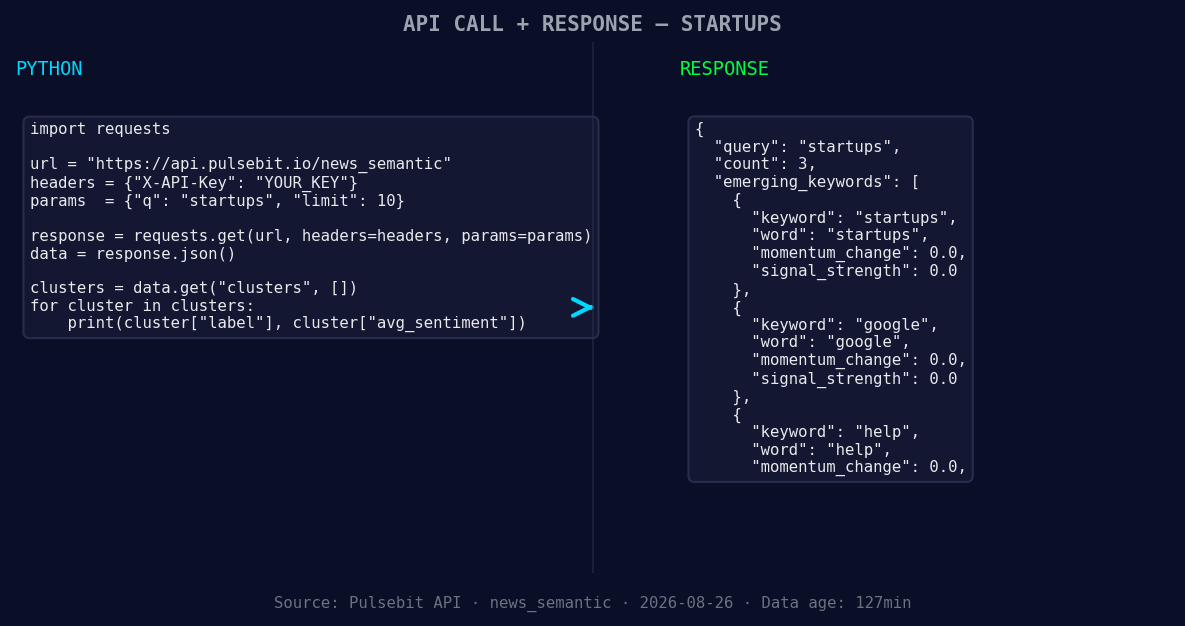
*Left: Python GET /news_semantic call for 'startups'. Right: returned JSON response structure (clusters: 3). Source: Pulsebit /news_semantic.*
# Step 1: Geographic origin filter - query by language
response = requests.get(f'https://api.pulsebit.com/sentiment?topic={topic}&lang={lang}')
data = response.json()
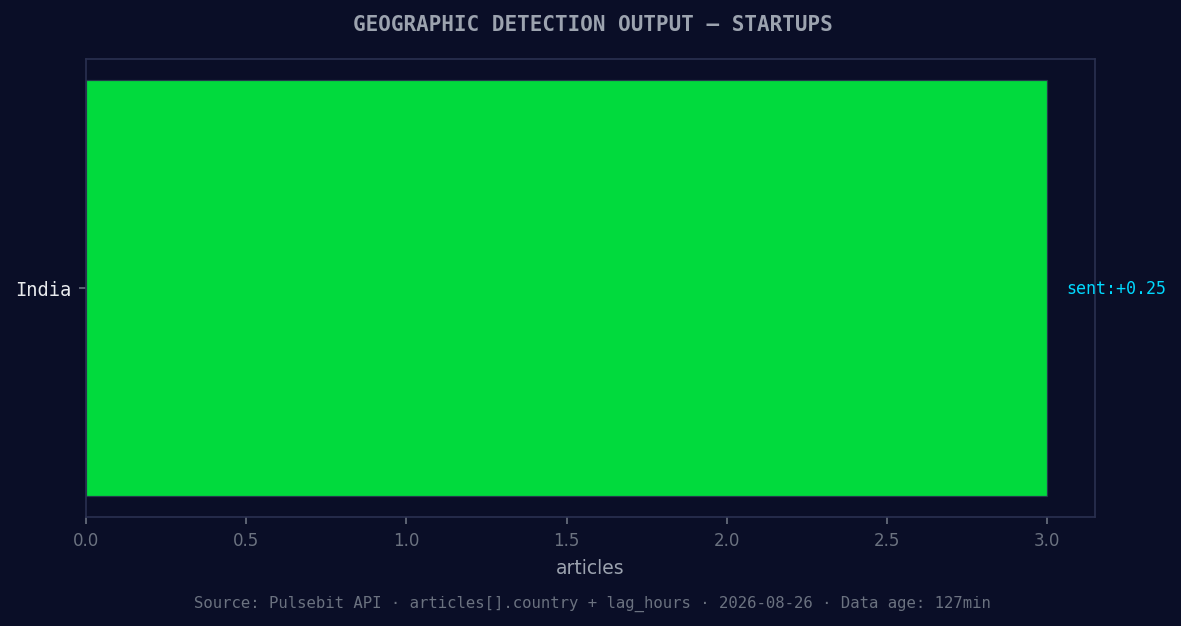
*Geographic detection output for startups. India leads with 3 articles and sentiment +0.25. Source: Pulsebit /news_recent geographic fields.*
# Output the response
print(data)
# Step 2: Meta-sentiment moment - score the narrative framing
cluster_reason = "Clustered by shared themes: big, tech, suddenly, paying, why."
meta_response = requests.post('https://api.pulsebit.com/sentiment', json={"text": cluster_reason})
meta_data = meta_response.json()
# Output the meta sentiment
print(meta_data)
In this code, we first filter by the leading language of English, querying for sentiment related to startups. The response gives us the data we need to assess the current sentiment landscape. Then, we run the cluster reason string back through our sentiment endpoint, enabling us to score the narrative framing itself.
Now, let’s talk about what you can build with this pattern. Here are three specific ideas:
Geographic Insights on Startups: Build a real-time dashboard that alerts you to sentiment changes in the startup ecosystem specifically for English-speaking regions. Set a threshold for momentum spikes below -0.2 to trigger notifications. This can help you stay ahead of emerging trends.
Dynamic Narrative Scoring: Create a system that regularly analyzes the cluster reasons surrounding topics like startups. Use the meta-sentiment loop to score new narratives every 4 hours, identifying shifts that could indicate a changing market landscape.
Clustered Theme Analysis: Develop a tool that aggregates sentiment data on forming themes, specifically focusing on startups and technology. Use the forming data points (e.g., startups(+0.00), google(+0.00), help(+0.00)) to set alerts when mainstream narratives start to shift towards these specific clusters, indicating potential investment opportunities.
With these builds, you'll be better equipped to catch sentiment shifts before they become mainstream, ensuring that your analysis remains relevant and timely.
To get started, check out our documentation at pulsebit.lojenterprise.com/docs. You can copy-paste and run the above code in under 10 minutes, setting the stage for smarter, more responsive sentiment analysis.


Top comments (0)