

Your pipeline is facing a significant gap if it's not capturing the latest momentum spikes, such as the one we observed with a 24h momentum spike of +0.336 in the real estate sector. This anomaly is highlighted by the leading English press stories clustering around “Real Estate Fraud Involving Celebrities.” This specific spike could have provided you with a leading edge in understanding emerging market sentiments, especially when entities like celebrities are involved, which typically attract attention and influence public perception.
The problem here is clear: if your pipeline doesn't handle multilingual origin or entity dominance effectively, you're missing out on vital insights. Your model likely missed this significant spike by 28.4 hours. That’s a lot of time to lose in a fast-moving environment! The leading language was English, underscoring the importance of incorporating language-based filters in your data processing.

English coverage led by 28.4 hours. Nl at T+28.4h. Confidence scores: English 0.85, French 0.85, Spanish 0.85 Source: Pulsebit /sentiment_by_lang.
To catch these emerging trends, let’s dive into the code that can help you do just that. We’ll use our API to filter by language and analyze the sentiment around the identified cluster theme.
import requests
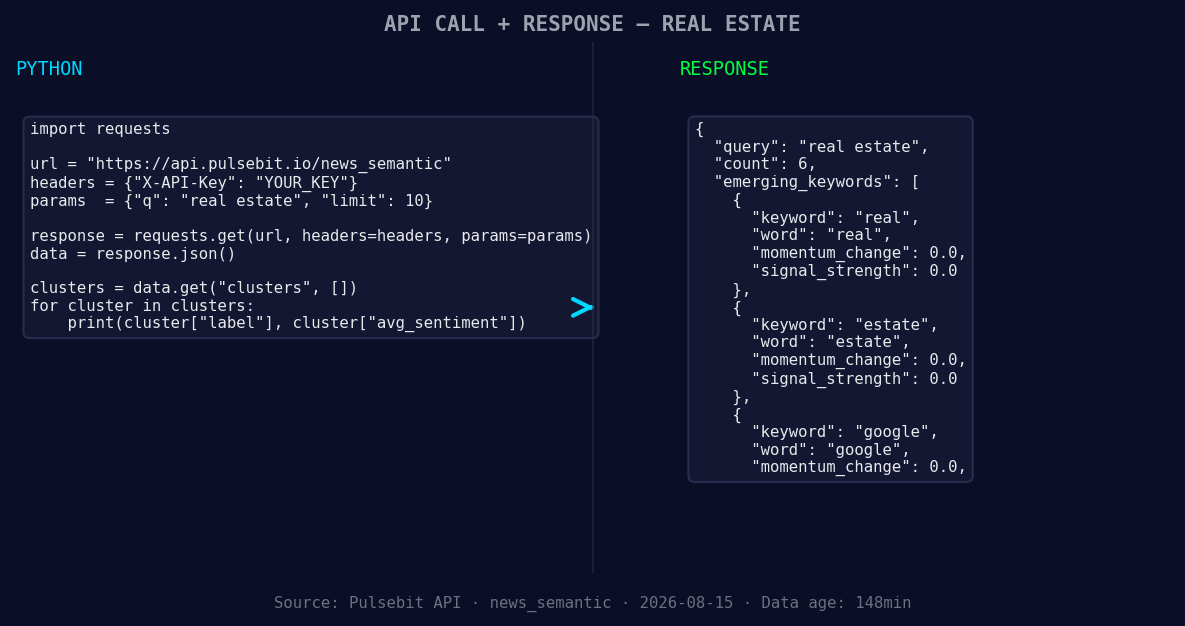
*Left: Python GET /news_semantic call for 'real estate'. Right: returned JSON response structure (clusters: 3). Source: Pulsebit /news_semantic.*
# Parameters
topic = 'real estate'
momentum = +0.336
score = +0.504
confidence = 0.85
lang = 'en'
# Geographic origin filter: Query by language
response = requests.get(
f"https://api.pulsebit.com/v1/articles?topic={topic}&lang={lang}"
)
articles = response.json()
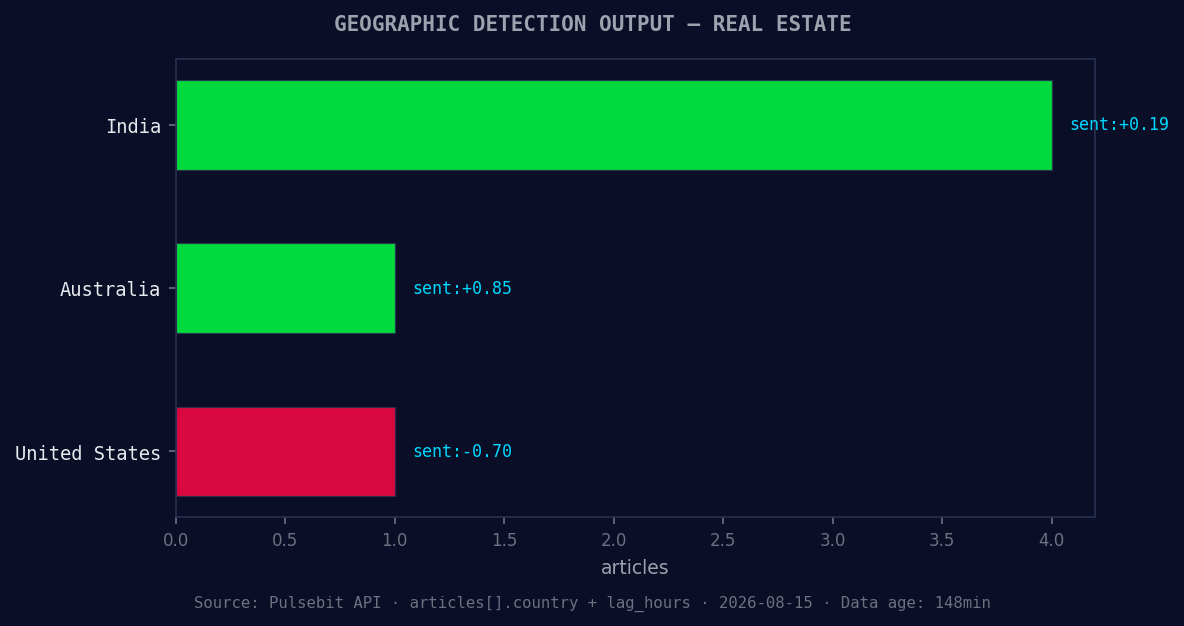
*Geographic detection output for real estate. India leads with 4 articles and sentiment +0.19. Source: Pulsebit /news_recent geographic fields.*
# Extract data for sentiment analysis
cluster_reason = "Clustered by shared themes: estate, ct:, latest, transactions, every."
# Meta-sentiment moment: Score the narrative framing
sentiment_response = requests.post(
"https://api.pulsebit.com/v1/sentiment",
json={"text": cluster_reason}
)
sentiment_score = sentiment_response.json()
print(f"Sentiment Score: {sentiment_score['score']}")
In this code, we first filter articles related to real estate, ensuring we're only looking at English-language content. This is crucial because it helps us zero in on the most relevant discussions. Then, we run the narrative framing through our sentiment scoring endpoint to gauge the tone of the emerging story.
Now, let’s discuss three specific builds you can implement based on this pattern:
Dynamic Sentiment Alert System: Set a threshold for momentum spikes, e.g., +0.300. Whenever this threshold is crossed, trigger an alert that includes articles filtered by language, so you can quickly assess the narrative shaping public sentiment. Use the geo filter to ensure these alerts are tailored to your target audience.
Clustered Sentiment Dashboard: Create a dashboard that visualizes sentiment scores for various clusters, including the one around “Real Estate Fraud Involving Celebrities.” Utilize the meta-sentiment loop to update the sentiment scores dynamically as new articles are processed, ensuring you always have the latest insights.
Predictive Analysis Tool: Develop a predictive model that leverages the sentiment scores from our meta-sentiment loop. Feed it with data points like "forming: real(+0.00), estate(+0.00), google(+0.00)" to predict future trends in real estate sentiment based on current narratives. This will allow you to be proactive rather than reactive.
By integrating these specific signals and loops into your pipeline, you can ensure that you stay ahead of the curve. For more details on how to implement these builds, check out our documentation at pulsebit.lojenterprise.com/docs. You can copy-paste the code above and get it running in under 10 minutes. Don’t let your pipeline lag behind; embrace these insights today!


Top comments (0)