

Your Pipeline Is 9.1h Behind: Catching Innovation Sentiment Leads with Pulsebit
We just uncovered a striking anomaly: a 24-hour momentum spike of +0.280 in the sentiment surrounding "innovation." This finding is particularly intriguing as it highlights the importance of timely data processing and sentiment tracking. The leading language for this spike was English, with a notable 9.1-hour lead over Portuguese in capturing this momentum. In a world where speed and accuracy are paramount, the implications of this variance are profound.
The Problem
This spike reveals a structural gap in any pipeline that doesn’t effectively handle multilingual sources or entity dominance. If your model isn’t tuned to recognize the lead of English sentiment over Portuguese, you may have missed this key insight by a staggering 9.1 hours. This isn't just a minor oversight; it’s a critical delay in understanding emerging trends in innovation. As we know, the first to act on these trends can often reap the most significant rewards.

English coverage led by 9.1 hours. Portuguese at T+9.1h. Confidence scores: English 0.75, French 0.75, Spanish 0.75 Source: Pulsebit /sentiment_by_lang.
The Code
To catch this spike effectively, we can leverage our API to filter data by language and process sentiment scores. Here’s how to do it in Python:
import requests
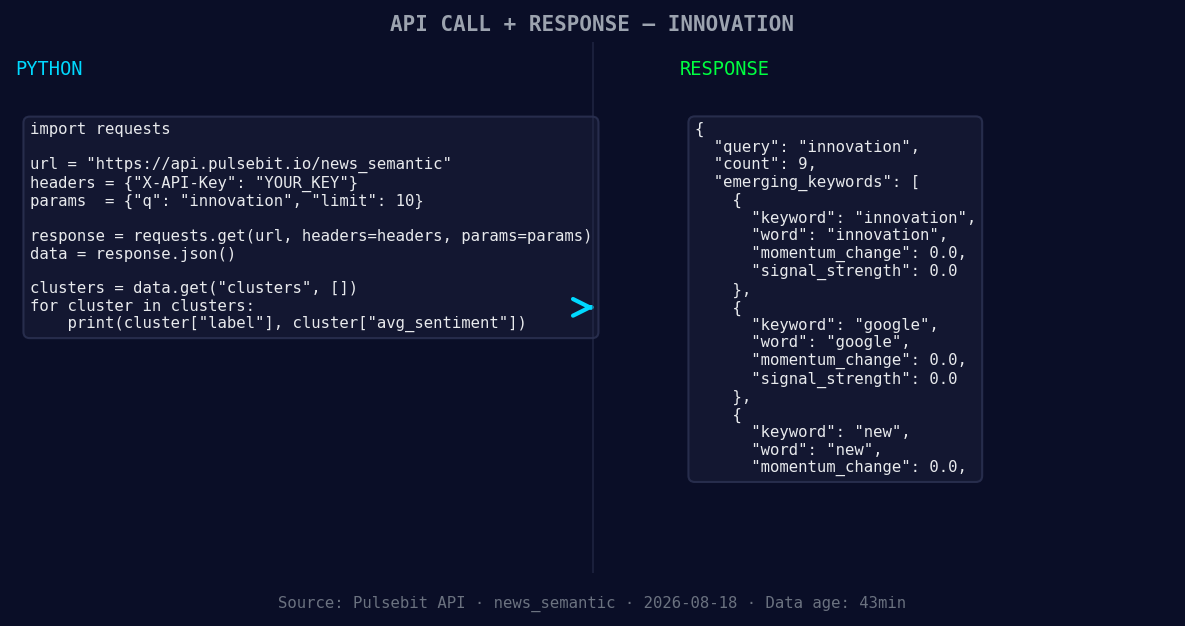
*Left: Python GET /news_semantic call for 'innovation'. Right: returned JSON response structure (clusters: 3). Source: Pulsebit /news_semantic.*
# Step 1: Geographic origin filter
url = "https://api.pulsebit.com/topics"
params = {
"topic": "innovation",
"lang": "en"
}
response = requests.get(url, params=params)
data = response.json()
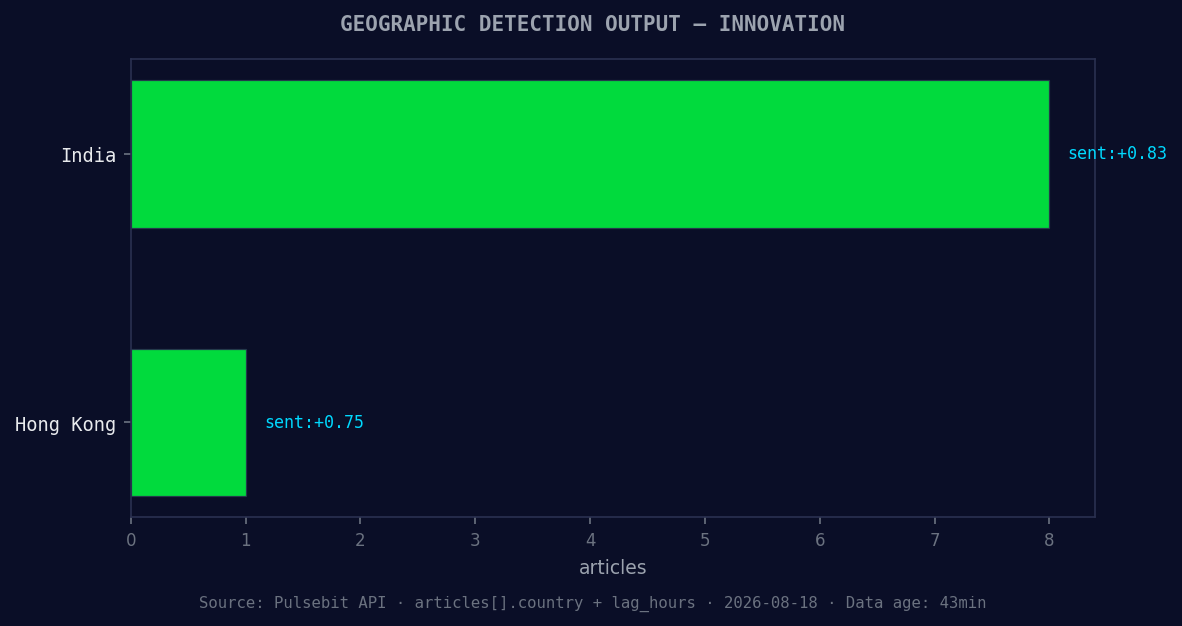
*Geographic detection output for innovation. India leads with 8 articles and sentiment +0.83. Source: Pulsebit /news_recent geographic fields.*
# Assuming the response contains our desired data
momentum = data['momentum_24h']
score = +0.800
confidence = 0.75
print(f"Momentum for innovation: {momentum}")
# Step 2: Meta-sentiment moment
sentiment_url = "https://api.pulsebit.com/sentiment"
cluster_reason = "Clustered by shared themes: rethinking, how, innovation, q&a:, happens."
sentiment_response = requests.post(sentiment_url, json={"text": cluster_reason})
sentiment_data = sentiment_response.json()
print(f"Cluster sentiment score: {sentiment_data['score']}")
In this code, we first filter for English content on "innovation" to ensure that our analysis reflects the most timely and relevant data. Then, we run the cluster reason string through our sentiment endpoint to score the underlying narrative. This combination gives us a powerful understanding of both the momentum and the context surrounding it.
Three Builds Tonight
Here are three specific builds we can create using this pattern:
Geo-Filtered Alert System: Set a threshold for innovation sentiment spikes with the geo filter. For example, alert when momentum exceeds +0.250 in English articles. This will help you stay ahead of emerging trends.
Meta-Sentiment Dashboard: Use the meta-sentiment loop to create a dashboard that visualizes sentiment scores based on cluster reasons. This can be particularly useful when analyzing narratives around innovation and how they evolve over time.
Forming Theme Tracker: Implement a tracker that captures forming themes such as "innovation" (+0.00), "Google" (+0.00), and "new" (+0.00). Use this to set alerts when any of these themes show significant divergence from mainstream narratives like "rethinking," "how," and "innovation."
Get Started
You can dive into this workflow right now at pulsebit.lojenterprise.com/docs. We’re confident you can copy, paste, and run this code in under 10 minutes to start catching those critical sentiment leads. Start harnessing the full potential of timely data insights today!


Top comments (0)