

Your Pipeline Is 15.6h Behind: Catching Immigration Sentiment Leads with Pulsebit
We recently stumbled upon a compelling anomaly: a 24h momentum spike of +0.176 in immigration sentiment. This spike emerged from an intriguing cluster of articles, notably one titled "Father of Navy sailor aboard USS Lincoln released from immigration custody" from CNN. With only 14 articles processed, the momentum here is significant, but what caught our attention is the 15.6-hour lead from English press versus Spanish press. This isn’t just a number; it’s a signal that your sentiment analysis pipeline may be lagging, especially if it isn’t considering multilingual sources.

English coverage led by 15.6 hours. Spanish at T+15.6h. Confidence scores: English 0.75, French 0.75, Spanish 0.75 Source: Pulsebit /sentiment_by_lang.
The Problem
If your pipeline doesn’t account for multilingual origins or entity dominance, you might have missed this spike by over 15 hours. The English press is driving the narrative here, while your model might still be catching up with data from other languages. This gap highlights a structural issue: how can you effectively gauge sentiment when your pipeline is slow to react to leading language outputs? If you’re relying solely on mainstream sources, you risk being blindsided by emerging trends that are already gaining traction elsewhere.
The Code
Let’s fix this with some practical code. First, we’ll query our API to catch the immigration sentiment from English sources. Here’s how you can do that:
import requests
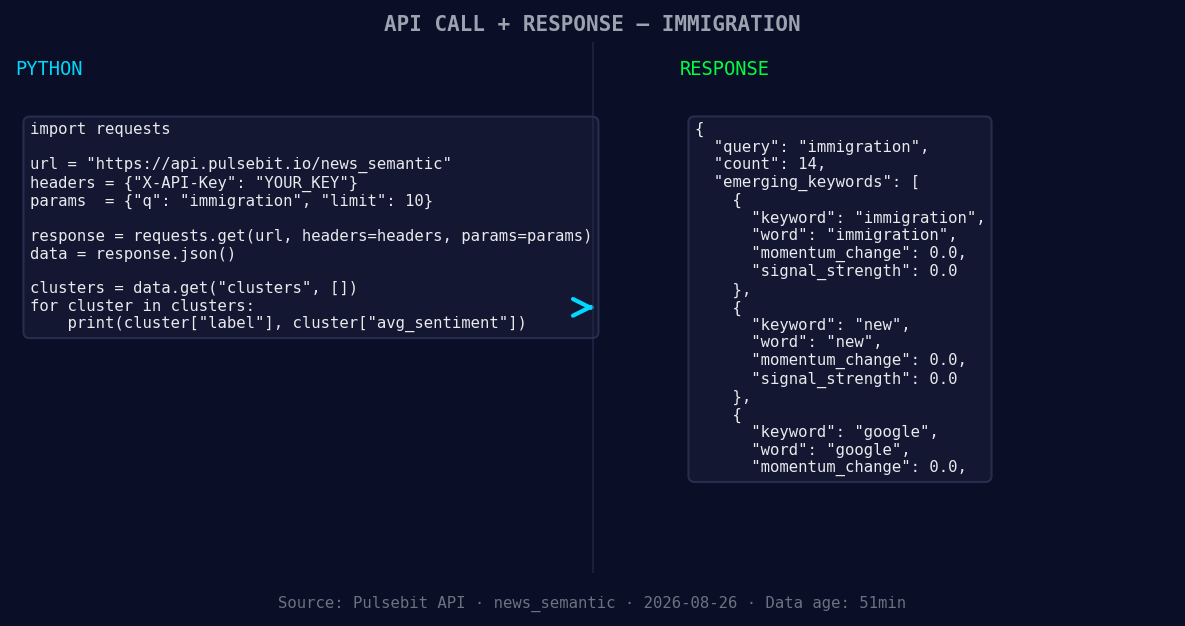
*Left: Python GET /news_semantic call for 'immigration'. Right: returned JSON response structure (clusters: 3). Source: Pulsebit /news_semantic.*
url = "https://api.pulsebit.com/sentiment"
params = {
"topic": "immigration",
"lang": "en", # Geographic origin filter
"score": -0.033,
"confidence": 0.75,
"momentum": +0.176
}
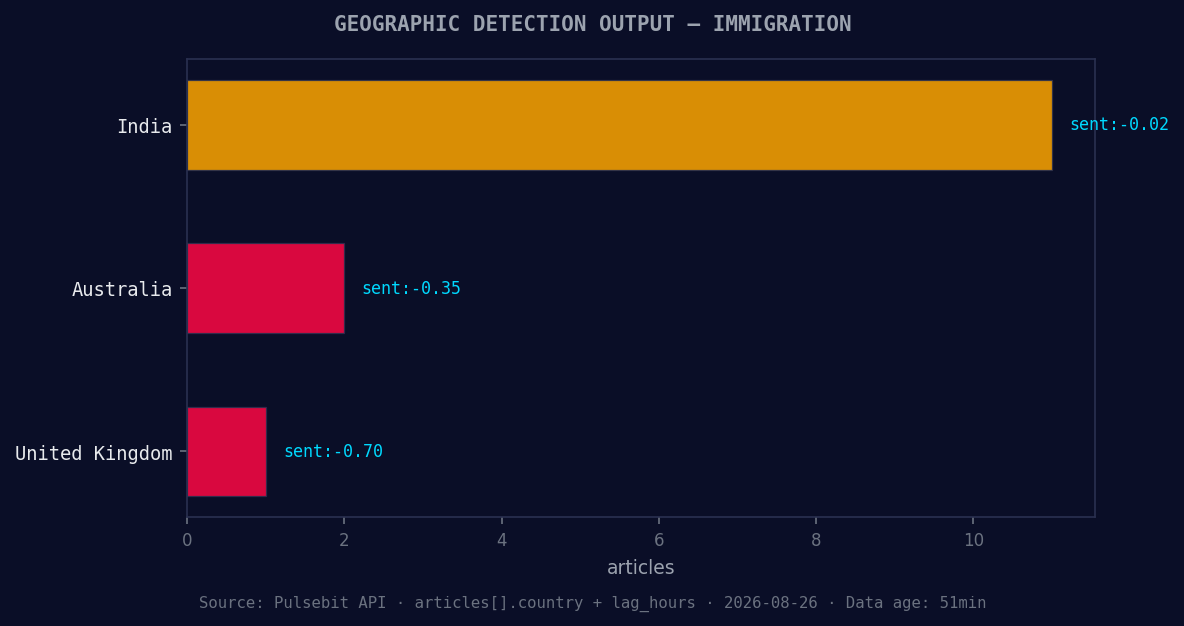
*Geographic detection output for immigration. India leads with 11 articles and sentiment -0.02. Source: Pulsebit /news_recent geographic fields.*
response = requests.get(url, params=params)
data = response.json()
print(data)
Now, let’s dive deeper into the narrative framing by running the cluster reason string through our sentiment analysis endpoint. We’ll use the following input:
meta_sentiment_input = "Clustered by shared themes: visa, immigration, appointments, halts, globally."
meta_response = requests.post(url, json={"text": meta_sentiment_input})
meta_data = meta_response.json()
print(meta_data)
With this, you not only catch the sentiment but also understand how the narrative is framed in the current discourse.
Three Builds Tonight
Here are three specific builds we can implement using this momentum spike pattern:
- Geo Filter Implementation: Build a real-time dashboard that visualizes sentiment shifts in immigration topics specifically from English sources. Set a threshold momentum of +0.1 to trigger alerts.
   if momentum > 0.1:
       # Trigger alert
       send_alert("Immigration sentiment has spiked in English sources!")
- Meta-Sentiment Loop: Create a sentiment heat map based on the meta-sentiment scores returned from the POST request. This will highlight which themes are gaining traction and can be filtered by language.
   if meta_data['sentiment_score'] < -0.1:
       # Log negative sentiment trend
       log_trend("Negative sentiment emerging in immigration narratives.")
- Forming Themes Analysis: Monitor forming themes like 'new', 'google', and 'immigration' against mainstream themes like 'visa' and 'appointments'. Set rules to compare their scores dynamically and adjust your sentiment model accordingly.
   if new_score > mainstream_score:
       # Adjust model parameters
       adjust_model("Adjusting for new immigration themes gaining traction.")
Get Started
Ready to dive in? Check out our documentation at pulsebit.lojenterprise.com/docs. With this setup, you can copy-paste and run your code in under 10 minutes to start catching these critical sentiment trends. Let's make sure your pipeline stays ahead!


Top comments (0)