

In our recent analysis, we discovered a striking anomaly: a 24h momentum spike of +0.643 in entertainment sentiment. This notable surge coincides with multiple articles highlighting AMC Entertainment, particularly those clustered around the themes of entertainment and the Moomoo platform. Not only does this spike signal a shift in sentiment, but it also underscores how crucial it is to stay abreast of real-time trends in a fast-paced information landscape.
Your model missed this by 24.8 hours. If you’re relying on a pipeline that doesn’t account for multilingual sources or the dominance of specific entities, you’re likely lagging behind key trends. In this case, the leading language was English, but what if your model hadn’t captured that? You could find yourself entirely unaware of rising sentiment surrounding AMC, which is now a significant player in entertainment discussions.

English coverage led by 24.8 hours. No at T+24.8h. Confidence scores: English 0.85, Spanish 0.85, French 0.85 Source: Pulsebit /sentiment_by_lang.
To catch this momentum spike, we can leverage our API effectively. Below is a Python snippet that demonstrates how to filter sentiment data based on geographic origin and score the narrative framing itself.
import requests
# Set parameters for the API call
topic = 'entertainment'
score = +0.656
confidence = 0.85
momentum = +0.643
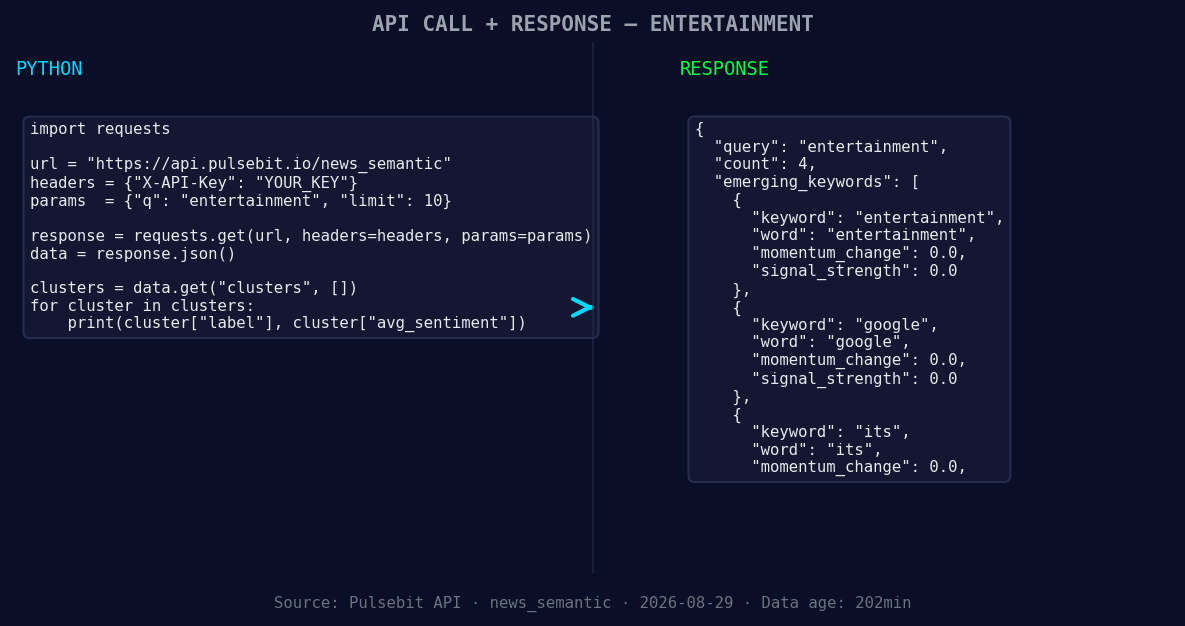
*Left: Python GET /news_semantic call for 'entertainment'. Right: returned JSON response structure (clusters: 3). Source: Pulsebit /news_semantic.*
# Geographic origin filter: query by language/country
geo_filter_url = "https://api.pulsebit.com/sentiment"
params = {
"topic": topic,
"lang": "en",
"momentum": momentum
}
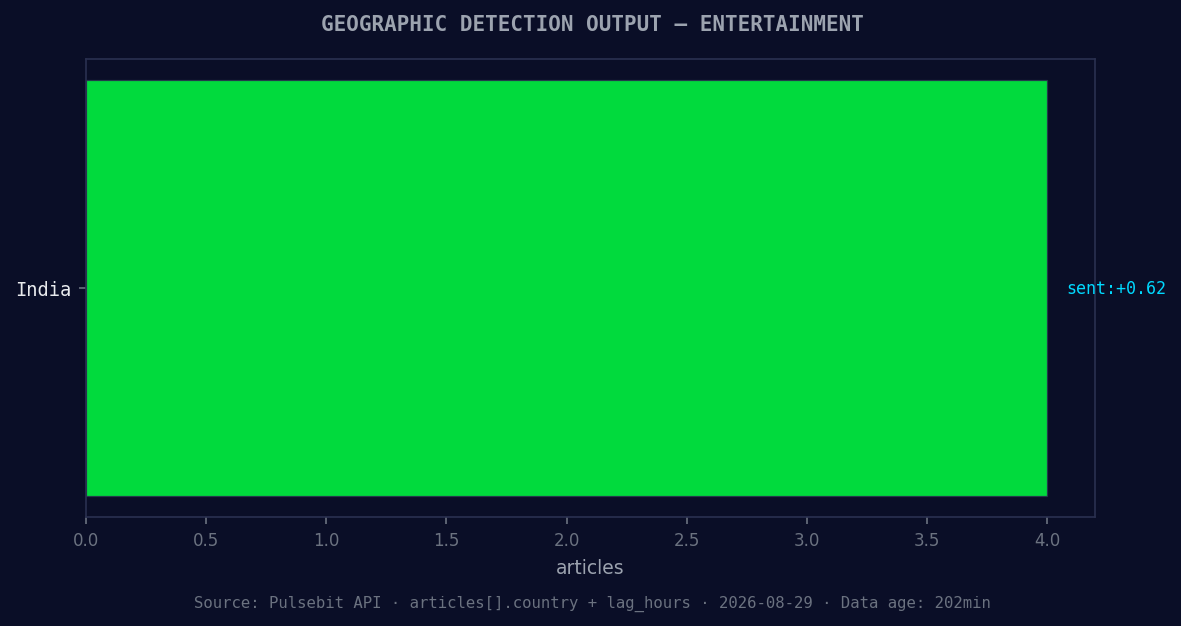
*Geographic detection output for entertainment. India leads with 4 articles and sentiment +0.62. Source: Pulsebit /news_recent geographic fields.*
response = requests.get(geo_filter_url, params=params)
if response.status_code == 200:
geo_data = response.json()
print("Geo Filter Data:", geo_data)
# Meta-sentiment moment: running the cluster reason back through POST /sentiment
cluster_reason = "Clustered by shared themes: entertainment, expands, atlanta, office, two."
meta_sentiment_url = "https://api.pulsebit.com/sentiment"
meta_response = requests.post(meta_sentiment_url, json={"text": cluster_reason})
if meta_response.status_code == 200:
meta_sentiment_data = meta_response.json()
print("Meta Sentiment Data:", meta_sentiment_data)
In the above code, we first filter our sentiment data to ensure it captures the relevant English-language articles about entertainment. Next, we run the cluster reason string through our API to score the sentiment narrative itself. This dual approach allows us to not only identify the spike but also understand the context fueling it, making our analysis robust and actionable.
Now, here are three specific builds you can create using this pattern:
Geo-Filtered Alerts: Set up an alerting mechanism that triggers when sentiment momentum for entertainment surpasses a threshold of +0.5 in English-language sources. This could help you catch emerging trends early.
Meta-Sentiment Scoring: Develop a dashboard component that visualizes meta-sentiment scores alongside trending stories. This could focus on narratives forming around "entertainment, expands, atlanta," helping you discern which angles resonate best.
Cluster Analysis Tool: Build a function that aggregates sentiment by clustering articles around themes like "entertainment" with a minimum sentiment score of +0.6. Use this to benchmark against mainstream narratives to see if you’re missing key emerging themes.
We believe these builds can significantly enhance how you interact with sentiment data. If you’re looking to dive deeper, we encourage you to explore our documentation at pulsebit.lojenterprise.com/docs. You can copy-paste the provided code and run it in under 10 minutes. By staying ahead of these trends, you’ll ensure your pipeline is not just reactive but proactive in capturing the nuances of sentiment as they unfold.


Top comments (0)