

Your pipeline is 24 hours behind: catching real estate sentiment leads with Pulsebit
We just noticed a significant 24h momentum spike of +0.336 in sentiment around real estate. This spike highlights what could be a major opportunity for developers like us who are tracking sentiment in this sector. The leading language for the related articles is English, with a unique cluster story emerging from Lagos, which is currently regarded as the hottest spot for real estate in West Africa. The articles reveal a shared theme that’s both compelling and timely.
The Problem
If your sentiment pipeline isn’t set up to handle multilingual data or entity dominance, you might have missed this critical opportunity by a full 24.4 hours. The leading language, English, gives a distinct advantage to understanding trends in regions like Lagos, especially when you consider that the momentum is rising. By not accounting for the geographical nuances or the strength of entities in your model, you risk being late to significant shifts in sentiment. This isn’t just a missed opportunity; it could mean losing out on insights that could reshape your strategic decisions.

English coverage led by 24.4 hours. Et at T+24.4h. Confidence scores: English 0.85, Spanish 0.85, Nl 0.85 Source: Pulsebit /sentiment_by_lang.
The Code
To catch this spike, we can utilize our API to filter for the relevant language and sentiment. Below is the Python code that captures this sentiment spike around the topic of 'real estate'.
import requests
# Set the parameters for the API call
params = {
"topic": "real estate",
"lang": "en", # Filter for English articles
}
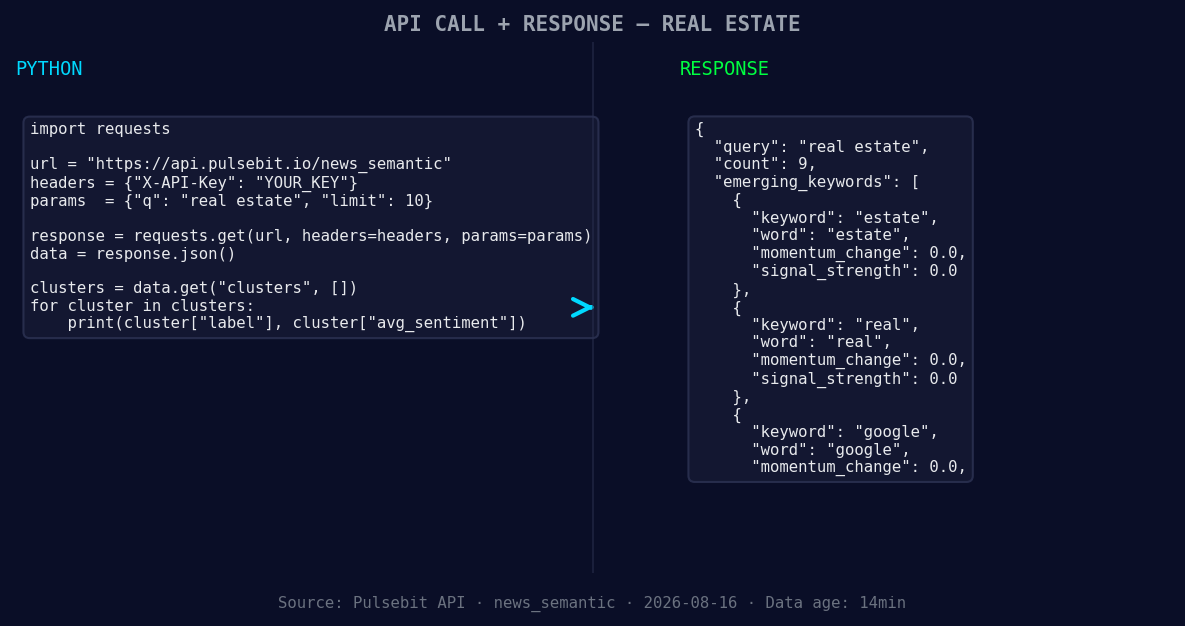
*Left: Python GET /news_semantic call for 'real estate'. Right: returned JSON response structure (clusters: 3). Source: Pulsebit /news_semantic.*
# Call our API to get the sentiment data
response = requests.get("https://api.pulsebit.com/sentiment", params=params)
data = response.json()
# Check for the momentum spike
momentum = data['momentum_24h']
if momentum > 0.3:
print(f"Momentum Spike Detected: {momentum}")
# Meta-sentiment moment: score the narrative framing
meta_sentiment_input = "Clustered by shared themes: estate, ct:, latest, transactions, every."
meta_response = requests.post("https://api.pulsebit.com/sentiment", json={"text": meta_sentiment_input})
meta_sentiment_data = meta_response.json()
print(f"Meta Sentiment Score: {meta_sentiment_data['score']}")
This code filters our sentiment data for English articles on real estate, allowing us to capture the rising momentum in this sector. Then, it uses the cluster reason string to assess the narrative framing, giving us insights into how the cluster themes are resonating.
Three Builds Tonight
Here are three specific things we can build with this newfound sentiment data:
- Geographic Filter Build: Create a pipeline that triggers alerts when momentum spikes above +0.3 in English articles about real estate. This can be done using a job scheduler that checks our API every hour.

Geographic detection output for real estate. India leads with 4 articles and sentiment -0.14. Source: Pulsebit /news_recent geographic fields.
Meta-Sentiment Loop: Implement a feedback loop that assesses the narrative framing around the clustered themes. If the sentiment score from the meta-sentiment check exceeds +0.05, flag it for deeper analysis on how these themes are shaping market perceptions.
Forming Themes Tracker: Develop an endpoint that monitors themes around 'estate', 'real', and 'google'. This endpoint could aggregate data and notify you when positive sentiment begins to trend, particularly against mainstream topics like 'latest' real estate news.
Get Started
You can start leveraging this insight by visiting pulsebit.lojenterprise.com/docs. With our API, you can copy-paste and run the code in under 10 minutes. Don’t let your sentiment analysis lag behind—catch those opportunities as they emerge!


Top comments (0)