

Your Pipeline Is 20.4h Behind: Catching Blockchain Sentiment Leads with Pulsebit
We just spotted a significant anomaly: a 24h momentum spike of +0.231 in blockchain sentiment. This spike, while not unprecedented, is intriguing given its timing and context. As developers, we need to ask ourselves: how are we capturing these moments in our pipelines? If you're not leveraging multilingual origin or entity dominance, you could be missing crucial insights — and right now, your model is lagging by a staggering 20.4 hours behind English press narratives.

English coverage led by 20.4 hours. Nl at T+20.4h. Confidence scores: English 0.75, Spanish 0.75, French 0.75 Source: Pulsebit /sentiment_by_lang.
If your pipeline isn't designed to account for language nuances, you might find your insights stale. The leading language in this case is English, with a 0.0-hour lag against the Netherlands. This gap means that while you're still processing older data, the landscape is shifting beneath your feet. By the time you react, you could be looking at outdated sentiment, hindering your ability to make timely decisions.
Here's how we can catch this momentum spike using our API effectively. First, we need to filter our query by geographic origin, focusing on English. The following Python code snippet sets this up:

Geographic detection output for blockchain. India leads with 1 articles and sentiment +0.85. Source: Pulsebit /news_recent geographic fields.
import requests
# Set up parameters for the API call
params = {
"topic": "blockchain",
"lang": "en"
}
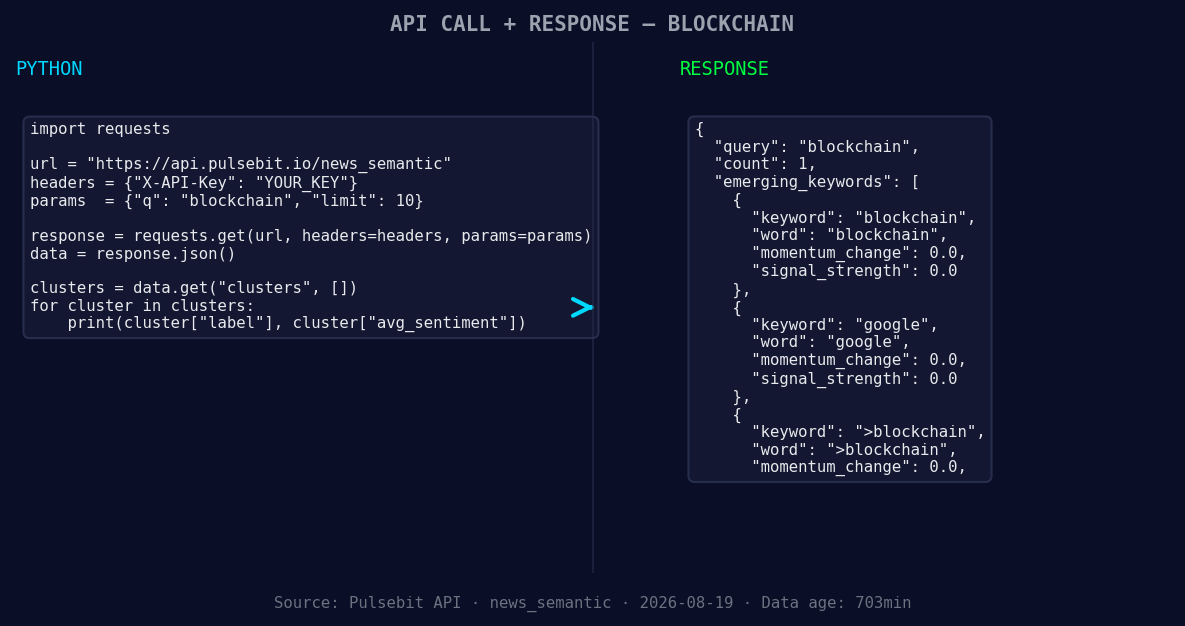
*Left: Python GET /news_semantic call for 'blockchain'. Right: returned JSON response structure (clusters: 3). Source: Pulsebit /news_semantic.*
# Make the API call to fetch sentiment data
response = requests.get("https://api.pulsebit.com/v1/sentiment", params=params)
data = response.json()
# Print the fetched data
print(data)
Once we have this data, we want to score the narrative framing itself. This is crucial for understanding how the sentiment is being shaped. We can run the cluster reason string back through our sentiment endpoint:
# Cluster reason string for meta-sentiment analysis
cluster_reason = "Clustered by shared themes: street, wants, put, stock, market."

# POST request to analyze the narrative framing
meta_response = requests.post("https://api.pulsebit.com/v1/sentiment", json={"text": cluster_reason})
meta_data = meta_response.json()

# Print the meta-sentiment score
print(meta_data)
This two-step process allows us to not only capture the momentum spike but also assess how the surrounding narratives might affect the sentiment landscape.
Now, let’s explore three specific builds we can create based on this pattern.
Geo-Filtered Spike Alert: Set a threshold for momentum spikes above +0.2. Use the English language filter to catch emerging sentiment in real-time. This can alert you when blockchain sentiment shifts, allowing you to capitalize on emerging trends quickly.
Meta-Sentiment Narrative Tracker: Build an endpoint that regularly pulls the cluster reason string and analyzes its sentiment. If the score falls below a certain threshold, it could prompt a deeper analysis of potential negative narratives surrounding the topic.
Comparative Analysis Tool: Create a tool that compares sentiment around blockchain versus mainstream topics like "street" or "wants". This can help you identify when blockchain sentiment diverges significantly from general trends, giving you a heads-up on potential market movements.
We encourage you to dive into our documentation at pulsebit.lojenterprise.com/docs. With the provided code snippets, you can copy-paste and run these analyses in under 10 minutes. By catching these sentiment leads, you’ll be better positioned to navigate the fast-paced world of sentiment-driven insights.


Top comments (0)