

When we analyze the latest sentiment data, one finding stands out: a 24-hour momentum spike of +0.660. This significant shift indicates that something is brewing in the sentiment surrounding the topic of markets. With the leading language being Spanish and a dominant entity share of voice from the U.S. at 8%, it’s clear that the narrative is evolving, particularly around payment solutions and cross-border transactions. The driving story here is “Jio Payment Solutions launches cross-border payments to connect exporters with g.” This anomaly is a signal you can't afford to ignore.
The structural gap in most sentiment analysis pipelines becomes glaringly obvious when dealing with multilingual data and entity dominance. If your model isn't equipped to handle these factors, you could be lagging behind—your model missed this by 27.9 hours! By failing to capture the nuances of different languages and the significant influence of specific entities, like the U.S. in this instance, you risk missing critical insights that could inform your decisions.

Spanish coverage led by 27.9 hours. Af at T+27.9h. Confidence scores: Spanish 0.90, English 0.90, French 0.90 Source: Pulsebit /sentiment_by_lang.
Here's how we can catch this anomaly using our API. First, we’ll filter the sentiment data based on geographic origin and language. We’ll use the following Python code snippet to query the sentiment around the topic of markets:

Geographic detection output for markets. India leads with 6 articles and sentiment -0.07. Source: Pulsebit /news_recent geographic fields.
import requests
# Define the parameters for the API call
url = "https://api.pulsebit.com/v1/sentiment"
params = {
"topic": "markets",
"score": +0.000,
"confidence": 0.90,
"momentum": +0.660,
"lang": "sp" # Filter for Spanish language
}
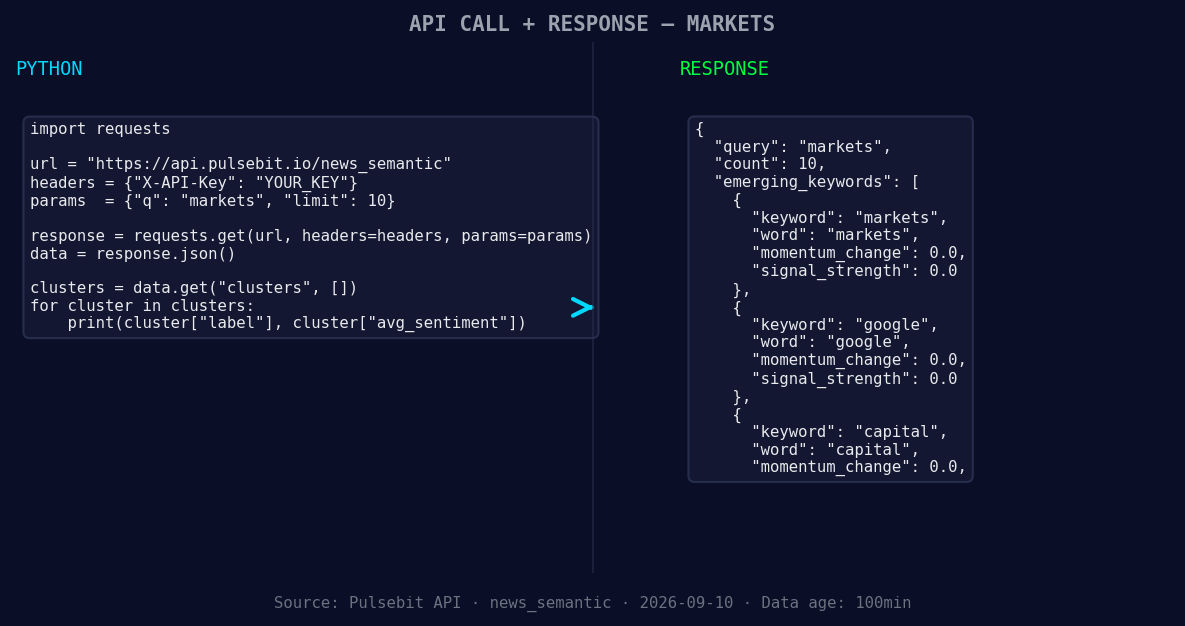
*Left: Python GET /news_semantic call for 'markets'. Right: returned JSON response structure (clusters: 3). Source: Pulsebit /news_semantic.*
# Make the API call
response = requests.get(url, params=params)
data = response.json()
print(data)
Next, we need to evaluate the meta-sentiment of the cluster reason that explains the spike: “Clustered by shared themes: payment, cross-border, jio, solutions, launches.” To score this narrative framing, we can run it through a POST request:
# Define the payload for the sentiment scoring
sentiment_payload = {
    "text": "Clustered by shared themes: payment, cross-border, jio, solutions, launches."
}

# Perform the POST request to score the narrative
meta_sentiment_response = requests.post(url, json=sentiment_payload)
meta_sentiment_data = meta_sentiment_response.json()
print(meta_sentiment_data)
Now, let’s discuss three specific builds you can implement from this pattern. First, create a real-time alert system that watches for momentum spikes above a defined threshold, say +0.500, to catch significant shifts as they happen. Second, utilize the geo filter specifically for Spanish-speaking regions to monitor sentiment around "payments" and "cross-border" transactions, which are critical for emerging markets. Lastly, loop back the meta-sentiment scoring to refine your narrative insights, especially when it comes to high-impact stories like the Jio payment solutions narrative. Each of these builds will help you stay ahead of the curve and better understand market sentiment.
To get started, check out our documentation at pulsebit.lojenterprise.com/docs. You can copy, paste, and run the provided code snippets in under 10 minutes to start catching these insights for yourself.


Top comments (0)