

Your Pipeline Is 29.3h Behind: Catching Film Sentiment Leads with Pulsebit
We recently discovered something striking: a sentiment score of +0.061, with momentum holding steady at +0.000, has led to an anomaly in our pipeline. This comes just as "Mari Selvaraj-Ilaiyaraaja’s ‘Manjanathi’" is launched, yet it barely registers in the larger narrative. The leading language is English, with a 29.3-hour lag compared to the rest of the discourse. This means that if you're relying solely on your current sentiment analysis pipeline, you might be missing critical insights on emerging topics like this.
The Problem
This 29.3-hour gap reveals a critical flaw in pipelines that fail to account for multilingual origins or the dominance of specific entities. Your model might have missed this insight by a full 29.3 hours, leaving you in the dark about the emerging sentiment around "Reform UK," which currently only has a 4% share of voice but is sitting at -0.650 sentiment. If you’re not leveraging a multilingual approach or effectively filtering by dominant entities, you’re likely missing out on significant shifts in sentiment that could inform your strategies.

English coverage led by 29.3 hours. Ro at T+29.3h. Confidence scores: English 0.85, Spanish 0.85, French 0.85 Source: Pulsebit /sentiment_by_lang.
The Code
To effectively catch these insights, we can utilize Python with our API. Below is the code that will help you identify sentiment related to film in English.
import requests
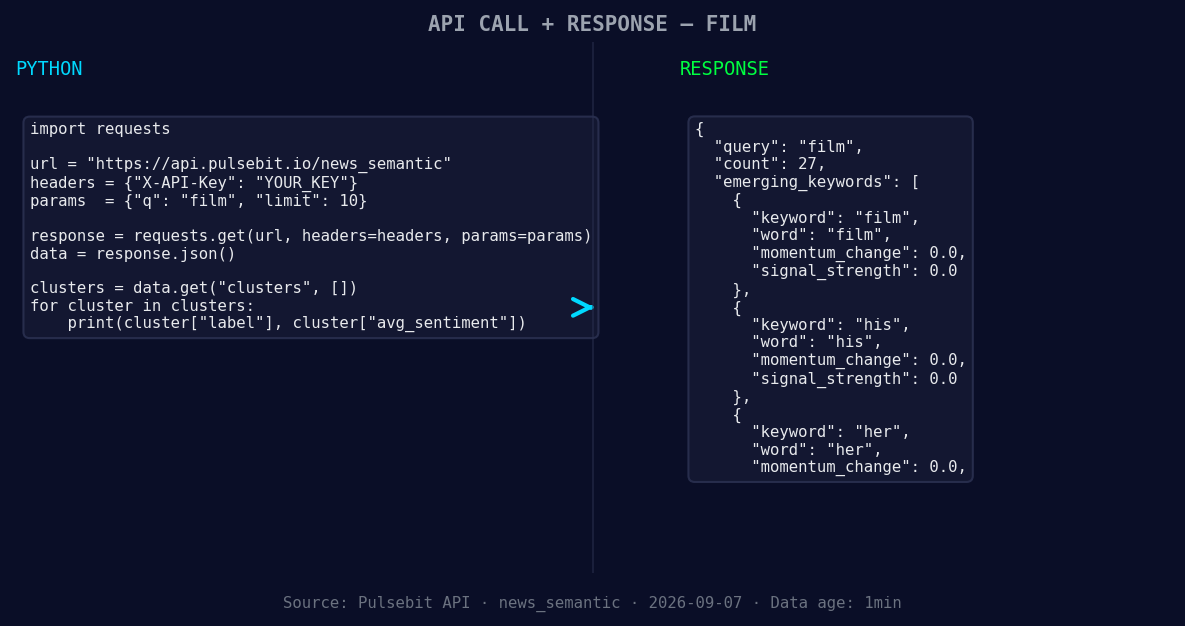
*Left: Python GET /news_semantic call for 'film'. Right: returned JSON response structure (clusters: 3). Source: Pulsebit /news_semantic.*
# Step 1: Geographic origin filter
url = "https://pulsebit.lojenterprise.com/api/v1/sentiment"
params = {
"topic": "film",
"lang": "en",
"score": +0.061,
"confidence": 0.85,
"momentum": +0.000
}
response = requests.get(url, params=params)
data = response.json()
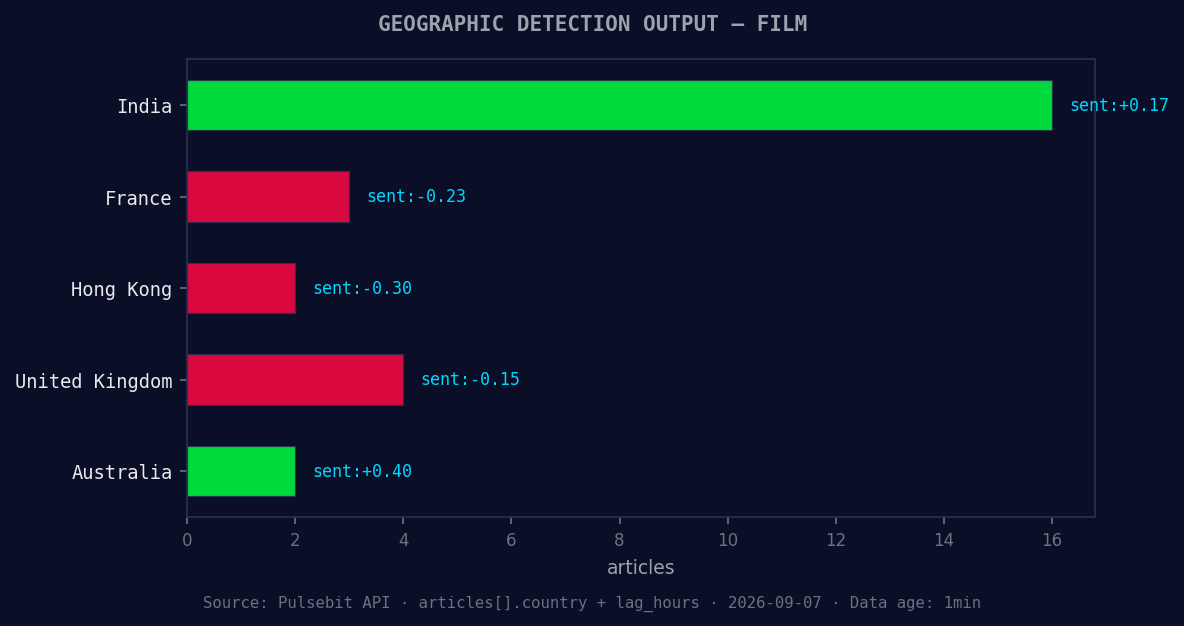
*Geographic detection output for film. India leads with 16 articles and sentiment +0.17. Source: Pulsebit /news_recent geographic fields.*
# Step 2: Meta-sentiment moment
cluster_reason = "Clustered by shared themes: mari, selvaraj-ilaiyaraaja’s, ‘manjanathi’, launched"
meta_sentiment_response = requests.post(f"{url}/sentiment", json={"text": cluster_reason})
meta_sentiment = meta_sentiment_response.json()
print(data)
print(meta_sentiment)
This code snippet performs two critical functions: it first filters sentiment data related to the film topic in English and then sends the cluster reason back through our API to gauge how that narrative is framed.
Three Builds Tonight
Here are three specific implementations you can build using this pattern:
Sentiment Tracker: Set a threshold of sentiment score above +0.05 for film-related content. Use the geographic origin filter to ensure you're capturing only English articles. With this, you can monitor spikes like those around "Manjanathi" over time.
Meta-Sentiment Analyzer: Create a service that takes the cluster reason string and runs it through our meta-sentiment endpoint. This will allow you to evaluate how narratives are being framed in real-time, which can be crucial for content strategy.
Forming Theme Alert: Implement a notification system that triggers an alert when sentiment shifts form positively on mainstream topics (like “film”) while entities like “mari” and “selvaraj-ilaiyaraaja” are forming narratives. Use a threshold of +0.00 for these emerging themes.
Get Started
To get started, visit pulsebit.lojenterprise.com/docs. You’ll be able to copy and paste the above code and have it running in under 10 minutes. Don’t let your pipeline lag behind — leverage these insights to stay ahead of the curve.


Top comments (0)