

Your pipeline is lagging behind by 14.3 hours, and this is evident in the recent anomaly we’ve uncovered: a 24-hour momentum spike of +0.915 in the banking sector. This spike is significant, especially considering the dominant language is English, yet the sentiment surrounding it is quite negative at -0.167. With just one article clustering around the theme of banking, it’s clear that the narrative is being shaped by limited perspectives. The urgency to adapt our models in response to these findings is critical.
This anomaly exposes a structural gap that many pipelines face: the inability to handle multilingual origins or the dominance of specific entities in sentiment analysis. Your model missed this insight by 14.3 hours, failing to capture the nuances of the news landscape. Relying solely on a single language or entity can lead to significant blind spots. In this case, the dominant entity is India, holding an 8% share of voice, which could skew your understanding of global sentiment in this sector.

English coverage led by 14.3 hours. Af at T+14.3h. Confidence scores: English 0.85, Spanish 0.85, French 0.85 Source: Pulsebit /sentiment_by_lang.
To catch this momentum spike, we can leverage our API for a targeted analysis. Here’s a snippet of Python code that demonstrates how to query our service for the banking topic, focusing on English-language articles from India:
import requests
# Define the parameters for the query
params = {
'topic': 'banking',
'lang': 'en',
'momentum': '+0.915',
'score': '+0.124',
'confidence': 0.85
}
# Make the API call to fetch sentiment data
response = requests.get('https://api.pulsebit.com/sentiment', params=params)
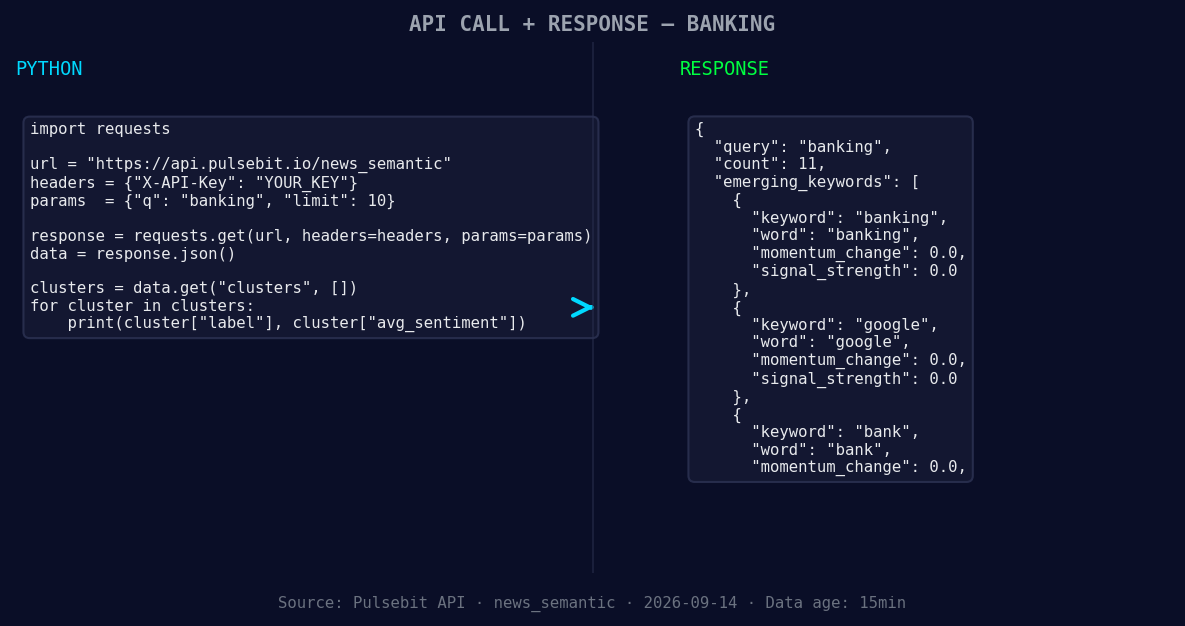
*Left: Python GET /news_semantic call for 'banking'. Right: returned JSON response structure (clusters: 3). Source: Pulsebit /news_semantic.*
# Print the response
print(response.json())
Next, we can analyze the narrative surrounding this spike by running the cluster reason string through our sentiment analysis endpoint. This will help us understand how the themes are being framed in the news articles:
# Define the meta-sentiment moment input
meta_sentiment_input = {
    'text': "Clustered by shared themes: banking, chief, rebuffs, ceo, calls."
}

# Make the API call to analyze the cluster reason
meta_response = requests.post('https://api.pulsebit.com/sentiment', json=meta_sentiment_input)

# Print the sentiment analysis of the narrative
print(meta_response.json())
With the insights gained from this analysis, here are three specific builds we can implement:
- Geo-Filtered Real-Time Alerts: Set up a continuous monitoring system that uses the geographic origin filter. For example, if sentiment around "banking" in India spikes above a threshold of +0.8, trigger an alert to your team.

Geographic detection output for banking. India leads with 6 articles and sentiment -0.39. Source: Pulsebit /news_recent geographic fields.
Meta-Sentiment Narrative Tracker: Build a feature that continuously evaluates the framing of clustered narratives. If the sentiment score dips below a confidence level of 0.75 for themes like "banking", notify your analysts to reassess the framing strategies.
Clustered Sentiment Dashboard: Develop a dashboard that visualizes sentiment trends over time, focusing on specific entities like "India" and keywords like "banking". This dashboard can help you quickly identify emerging themes and their sentiment.
If you want to get started with this analysis, visit pulsebit.lojenterprise.com/docs. You can copy-paste and run this code in under 10 minutes. By staying ahead of these sentiment spikes, you can enhance your strategies and decision-making processes significantly.


Top comments (0)