

Your Pipeline Is 26.8h Behind: Catching Banking Sentiment Leads with Pulsebit
We discovered a notable anomaly in the recent data: a 24h momentum spike of +0.279 in the banking sector. This spike suggests a significant shift in sentiment that you can’t afford to overlook. Specifically, the leading language for articles during this spike is English, with a dominant entity from Kenya holding an 8% share of voice and a positive sentiment score of +0.700. This information is critical for any model focusing on sentiment analysis, especially when it comes to nuanced topics like banking.
Your model missed this by 26.8 hours, revealing a structural gap in any pipeline that doesn’t adequately account for multilingual sources or the dominance of specific entities in the narrative. In this case, the English press is leading the conversation, and the Kenyan entity is shaping sentiment around banking. If your pipeline isn’t tracking these shifts in real-time, you’re effectively working with outdated information, which can lead to missed opportunities or misinformed strategies.

English coverage led by 26.8 hours. Af at T+26.8h. Confidence scores: English 0.90, French 0.90, Spanish 0.90 Source: Pulsebit /sentiment_by_lang.
Here’s how we can catch this data using our API. We’ll use Python to set up a query for the banking topic, focusing on English language articles from Kenya.
import requests
# Define parameters
topic = 'banking'
momentum = +0.279
score = +0.493
confidence = 0.90
# API call to fetch articles
response = requests.get(
'https://api.pulsebit.com/articles',
params={
'topic': topic,
'lang': 'en',
'momentum': momentum
}
)
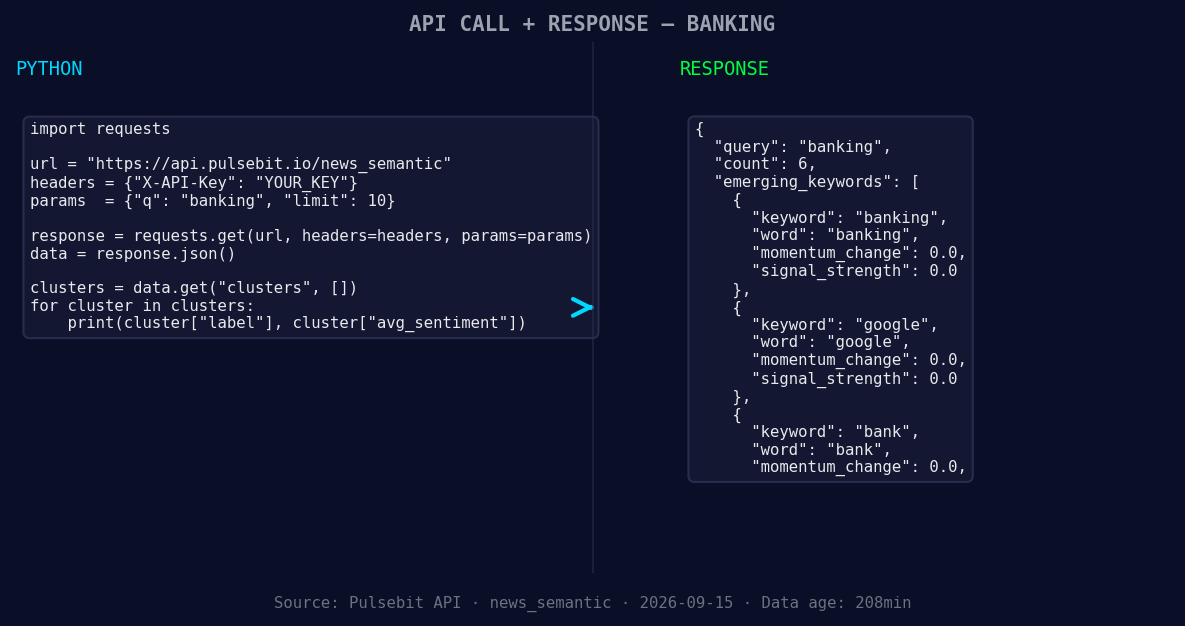
*Left: Python GET /news_semantic call for 'banking'. Right: returned JSON response structure (clusters: 3). Source: Pulsebit /news_semantic.*
articles = response.json()
print(articles)
Next, we need to perform a meta-sentiment analysis on the clustered reason string we have: "Clustered by shared themes: banking, chief, rebuffs, ceo, calls." This is where we can score the narrative framing itself.
# Meta-sentiment analysis
cluster_reason = "Clustered by shared themes: banking, chief, rebuffs, ceo, calls."

sentiment_response = requests.post(
    'https://api.pulsebit.com/sentiment',
    json={'text': cluster_reason}
)

sentiment_score = sentiment_response.json()
print(sentiment_score)
By executing these two blocks of code, you can quickly identify sentiment shifts and narrative framing in your target area.
Now that we have this data, here are three specific builds you can implement using this pattern:
- Geographic Filter Build: Create a real-time alert system that triggers when sentiment momentum for the banking topic exceeds a threshold (e.g., +0.250) specifically for articles in English from Kenya. Leverage the geographic origin filter to ensure you're only capturing relevant data.

Geographic detection output for banking. India leads with 6 articles and sentiment -0.39. Source: Pulsebit /news_recent geographic fields.
Meta-Sentiment Loop: Build a dashboard that visualizes sentiment scores of clustered narratives over time. Set a threshold for narrative sentiment (e.g., sentiment score > +0.500) to highlight significant shifts in public perception.
Forming Themes Tracker: Develop a tracker that monitors forming themes like "banking," "google," and "bank" versus mainstream terms. Set up alerts for any significant deviations in sentiment (e.g., any of these forming themes showing a sentiment score of +0.300) to catch emerging stories before they gain traction.
If you’re ready to dive deeper, check out our documentation at pulsebit.lojenterprise.com/docs. You can copy-paste this code and run it in under 10 minutes to start leveraging these insights for your own projects. Don’t let your pipeline lag behind!


Top comments (0)