

Your Pipeline Is 16.3h Behind: Catching Energy Sentiment Leads with Pulsebit
We just uncovered a significant anomaly in our data: a 24-hour momentum spike of +1.350 in the energy sector. This uptick reveals a rapidly shifting sentiment landscape, particularly around the discourse surrounding energy reliability in Africa, with recent articles hinting at a critical transition from mere connectivity to sustainable power sources. The urgency of this conversation is underscored by a leading language of English press, which is currently leading by 16.3 hours. If you’re not tracking this, you might be missing out on crucial insights that can inform your trading or investment decisions.
The Problem
This 16.3-hour lag exemplifies a structural gap in any pipeline that doesn’t account for multilingual origins or the dominance of specific entities in sentiment analysis. If your model isn’t designed to handle the nuances of language or the prominence of entities like Iran—holding a 12% share of voice with a negative sentiment score of -0.105—you’re already behind the curve. Your model missed this by 16.3 hours, and in the fast-paced world of sentiment-driven trading, that’s a significant disadvantage.

English coverage led by 16.3 hours. Da at T+16.3h. Confidence scores: English 0.90, French 0.90, Spanish 0.90 Source: Pulsebit /sentiment_by_lang.
The Code
To catch this momentum spike, we’ll need to leverage our API effectively. Here’s how you can do that in Python:
import requests
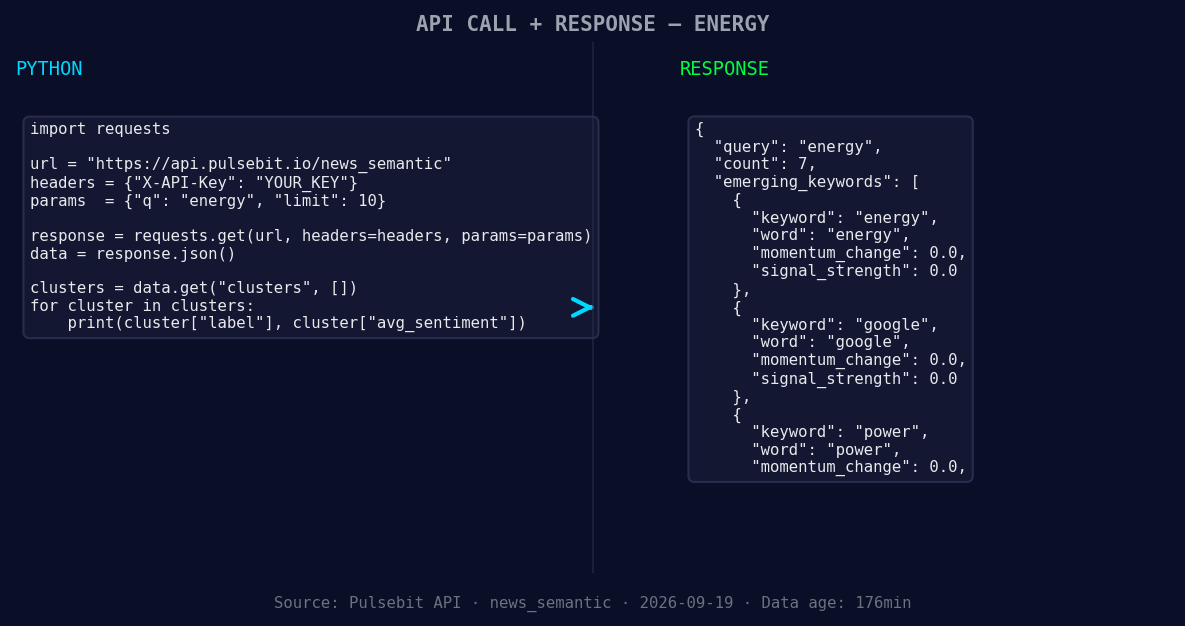
*Left: Python GET /news_semantic call for 'energy'. Right: returned JSON response structure (clusters: 3). Source: Pulsebit /news_semantic.*
# 1. Geographic origin filter by language
url = "https://api.pulsebit.com/v1/sentiment"
params = {
"topic": "energy",
"score": +0.615,
"confidence": 0.90,
"momentum": +1.350,
"lang": "en" # Filter for English articles
}
response = requests.get(url, params=params)
data = response.json()
print(data) # Inspect the response for insights
Now, let’s run the cluster reason string back through our API to assess the narrative framing:
# 2. Meta-sentiment moment
meta_sentiment_url = "https://api.pulsebit.com/v1/sentiment"
meta_params = {
    "text": "Clustered by shared themes: africa’s, energy, push, shifts, connections."
}

meta_response = requests.post(meta_sentiment_url, json=meta_params)
meta_data = meta_response.json()

print(meta_data)  # Get sentiment score on the narrative itself
This dual approach not only filters relevant data but also assesses the framing of the narrative. This is vital for understanding the context surrounding the momentum spike.
Three Builds Tonight
Here are three specific things you can build using this momentum spike:
- Geographic Filter Alert: Set up a threshold alert for any energy-related sentiment that spikes above +1.350, specifically pulling data from English-language articles. You can use the geo filter in your query to ensure you’re only receiving relevant insights from dominant regions.

Geographic detection output for energy. India leads with 3 articles and sentiment +0.27. Source: Pulsebit /news_recent geographic fields.
Meta-Sentiment Analysis Pipeline: Create a pipeline that evaluates the sentiment of clustered narratives. For instance, whenever you detect a new article with a sentiment score above +0.615, run its themes through the meta-sentiment loop for additional context and framing.
Forming Gap Insight Generator: Build a feature that identifies forming gaps in sentiment, such as “forming: energy(+0.00), google(+0.00), power(+0.00)” against mainstream narratives. This will help you spot emerging trends before they become mainstream.
Get Started
Ready to dive in? Check out our documentation at pulsebit.lojenterprise.com/docs. You can copy-paste the provided code and run it in under 10 minutes. Let’s catch those leads before they turn into missed opportunities!


Top comments (0)