

Your Pipeline Is 26.2h Behind: Catching Music Sentiment Leads with Pulsebit
We recently uncovered an interesting anomaly: a 24-hour momentum spike of +0.447 in music sentiment, with the leading language being English press, which has a timing lag of 26.2 hours. This tells us something crucial about how sentiment can shift rapidly in the media landscape, particularly when it comes to cultural events. The spike was notably driven by the sentiment surrounding Dolly Parton's posthumous acceptance of a lifetime achievement award. With the right tools, we can catch these critical moments before they become mainstream.
The Problem
If your pipeline isn't set up to handle multilingual data sources or factor in entity dominance, you might have missed this sentiment shift by over 26 hours. The leading English articles were generating significant buzz, while other languages and entities like "yuvan," "shankar," and "raja" were lagging behind. This creates a structural gap: your model can't fully capitalize on emerging trends if it isn’t aware of what’s happening across various languages and regions.

English coverage led by 26.2 hours. Da at T+26.2h. Confidence scores: English 0.90, French 0.90, Spanish 0.90 Source: Pulsebit /sentiment_by_lang.
The Code
To catch these sentiment spikes effectively, we can interact with our API. Below is the Python code that filters results based on language and then scores the narrative framing to get deeper insights.
import requests
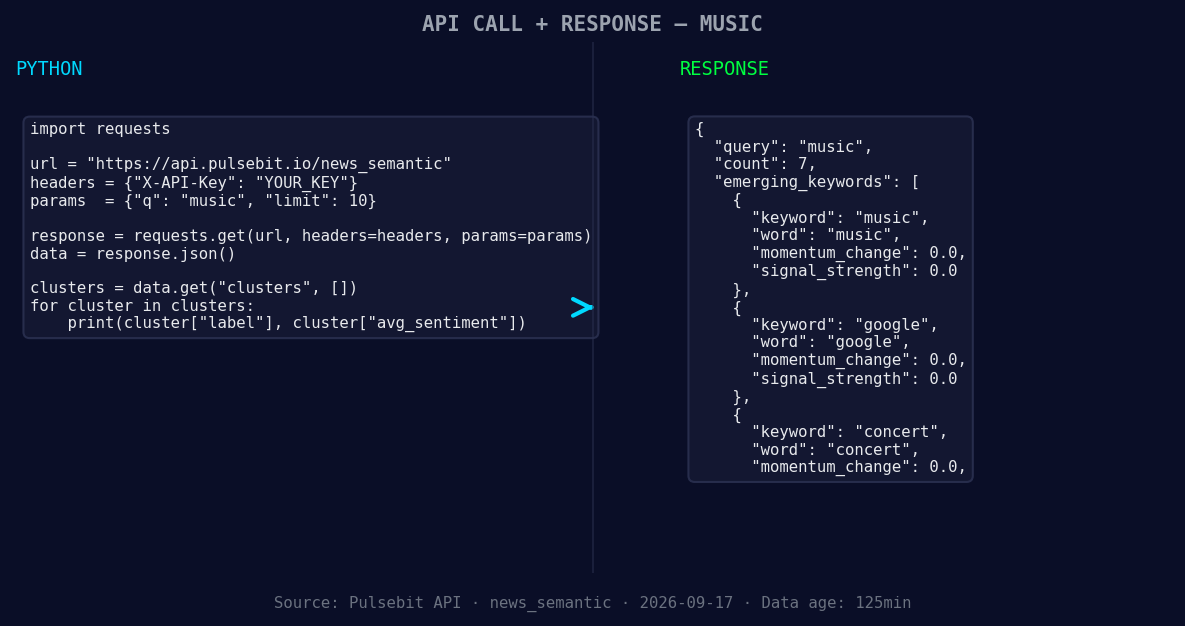
*Left: Python GET /news_semantic call for 'music'. Right: returned JSON response structure (clusters: 3). Source: Pulsebit /news_semantic.*
# Define parameters
topic = 'music'
score = +0.490
confidence = 0.90
momentum = +0.447
lang = "en"
# Geographic origin filter
response = requests.get(f'https://api.pulsebit.com/sentiment?topic={topic}&lang={lang}')
data = response.json()
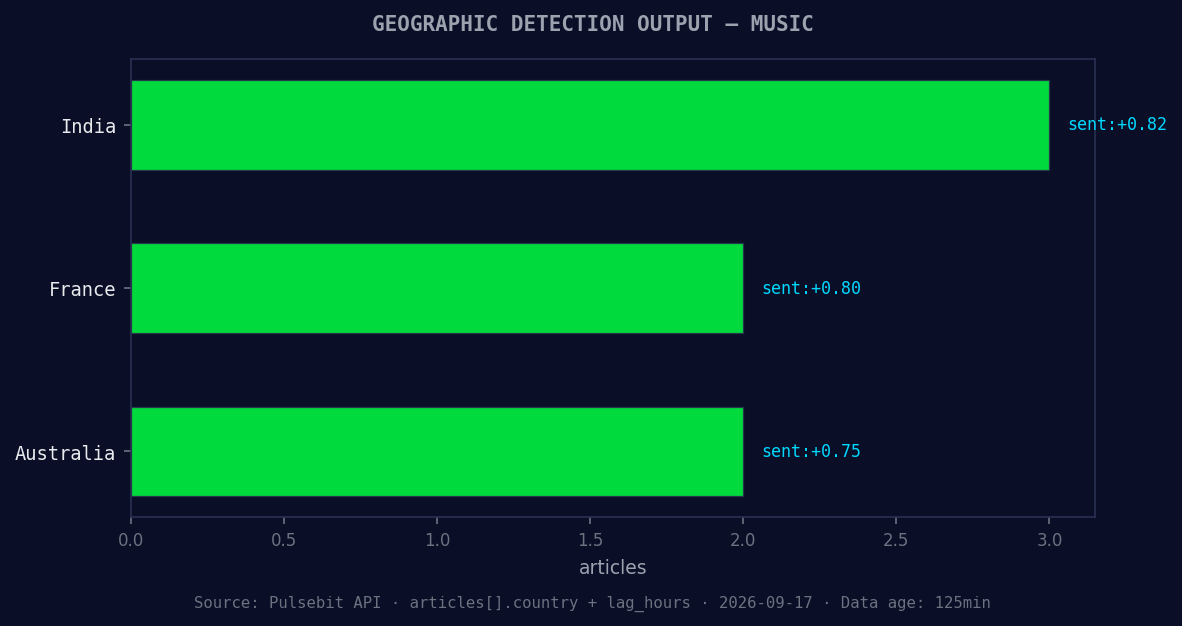
*Geographic detection output for music. India leads with 3 articles and sentiment +0.82. Source: Pulsebit /news_recent geographic fields.*
# Print the response from the API
print(data)
# Meta-sentiment moment
cluster_reason = "Clustered by shared themes: yuvan, shankar, raja, his, first."
meta_response = requests.post('https://api.pulsebit.com/sentiment', json={"text": cluster_reason})
meta_data = meta_response.json()
# Print the sentiment score of the narrative
print(meta_data)
This code first queries our API for music-related sentiment filtered by the English language. Then, it checks the sentiment of the narrative framing based on the clustered themes. This kind of analysis can provide a clearer picture of what themes are resonating and how they might be influencing broader trends.
Three Builds Tonight
Geo-Filtered Alert System: Set up a real-time alert system that triggers whenever sentiment for "music" exceeds a score of +0.490 in English. This will help you catch the rising trends before they hit a critical mass.
Narrative Framing Analyzer: Use the meta-sentiment loop to score narratives that include specific artists or themes. For example, if you see a spike in sentiment around "Dolly Parton," run the cluster string through the sentiment scoring endpoint to understand public perception.
Forming Gap Tracker: Build a dashboard that tracks forming gaps between mainstream entities (like "yuvan," "shankar," and "raja") and their sentiment scores. This will help you visualize how emerging themes in music are interacting with established narratives.
Get Started
You can start building your own sentiment analysis tools with our API by visiting pulsebit.lojenterprise.com/docs. With the provided code, you can copy, paste, and run this in under 10 minutes. Don't let your pipeline lag behind.


Top comments (0)