

Your pipeline has just missed a critical insight: a 24h momentum spike of +0.300 around immigration sentiment. This anomaly is particularly striking because it highlights a shift in public discourse, led predominantly by English-language press coverage with a remarkable 25.2-hour lag compared to German sources. The dominant narrative involves Trump, who claims a 9% share of voice, yet sentiment around him is notably negative at -0.650. This combination of factors signals an urgent need to recalibrate your models to capture emerging trends in real time.
If your pipeline isn’t equipped to handle multilingual origin or the dominance of specific entities, you might have missed this critical shift by over 25 hours. The lag highlights a gap in your ability to process sentiment across different languages, which can lead to significant blind spots in understanding how key figures and events are perceived globally. In this case, the English-language press is shaping the narrative, but without the right tools, you could easily be left with outdated or incomplete data.

English coverage led by 25.2 hours. German at T+25.2h. Confidence scores: English 0.80, French 0.80, Spanish 0.80 Source: Pulsebit /sentiment_by_lang.
To catch this momentum spike, we can leverage our API effectively with Python. Here’s how you can query for the relevant sentiment data:
import requests
# Define the parameters for our query
params = {
"topic": "immigration",
"score": +0.219,
"confidence": 0.80,
"momentum": +0.300,
"lang": "en" # Geographic origin filter
}
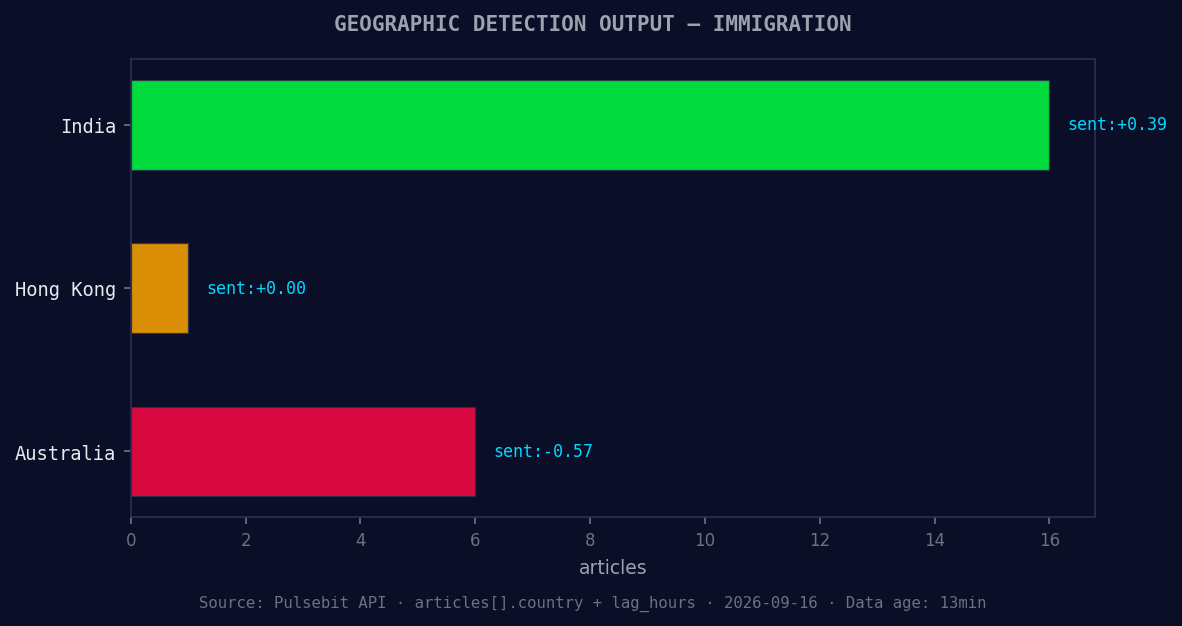
*Geographic detection output for immigration. India leads with 16 articles and sentiment +0.39. Source: Pulsebit /news_recent geographic fields.*
# Make the API call to retrieve relevant articles
response = requests.get("https://api.pulsebit.com/v1/articles", params=params)
articles = response.json()
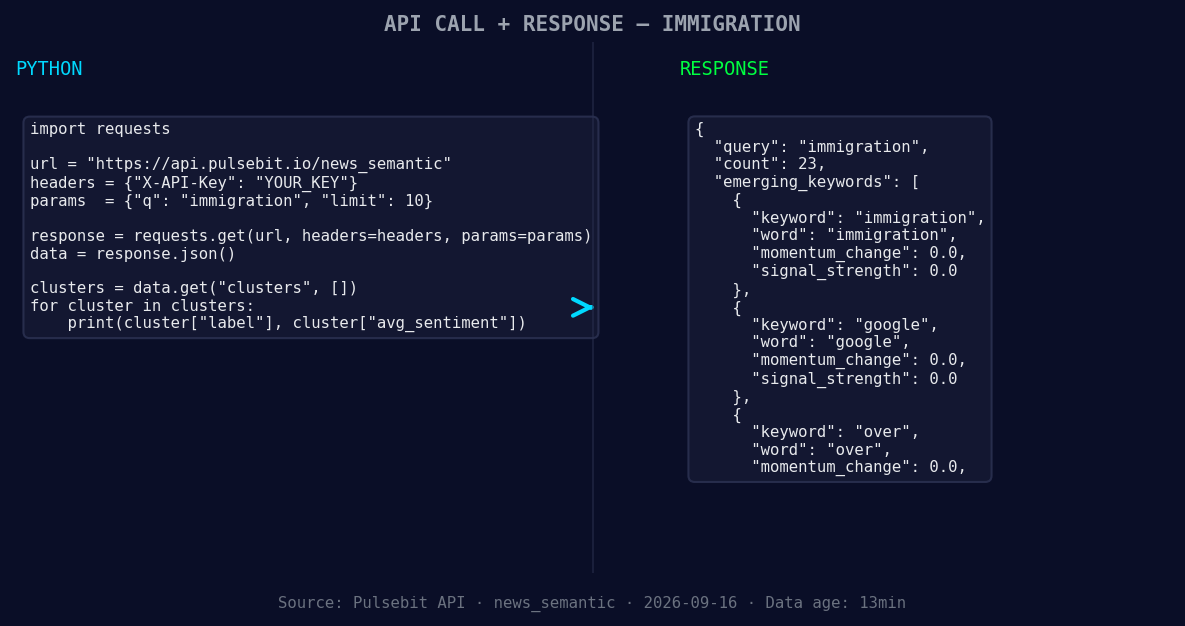
*Left: Python GET /news_semantic call for 'immigration'. Right: returned JSON response structure (clusters: 3). Source: Pulsebit /news_semantic.*
# Print the articles related to immigration
print(articles)
Next, we need to analyze the sentiment framing of the cluster narrative. We’ll pull the reason for the cluster and run it through our sentiment analysis endpoint to score it accordingly.
# Define the cluster reason string
cluster_reason = "Clustered by shared themes: family, students, visas, foreign, targeted."

# Call the sentiment endpoint
sentiment_response = requests.post("https://api.pulsebit.com/v1/sentiment", json={"text": cluster_reason})
sentiment_score = sentiment_response.json()

# Print the sentiment score
print(sentiment_score)
This approach not only helps us catch the positive momentum in the immigration topic but also gives us insight into the underlying sentiment of the narrative themes we’re observing.
Here are three specific builds you can implement using this pattern:
Geographic Origin Filter: Use the geo filter to track sentiment spikes across different languages. Set a threshold for momentum spikes (e.g., +0.200) and filter by
lang: "en"to focus on English-speaking audiences. This can help you catch narratives before they trend.Meta-Sentiment Analysis: Create a routine to run the cluster reasons through the sentiment endpoint at regular intervals. If sentiment dips below a specific score (e.g., -0.500), flag it for further analysis. This approach allows you to monitor how narratives evolve around sensitive topics like immigration.
Forming Themes Dashboard: Build a dashboard that aggregates sentiment and momentum data comparing forming themes (like immigration, Google) against mainstream sentiment (family, students, visas). This can provide a quick visual reference for where shifts in public discourse are occurring.
Getting started with this is straightforward. Visit pulsebit.lojenterprise.com/docs for our complete documentation. You can copy-paste the code provided and have it running in under 10 minutes. It’s time to leverage these insights to enhance your models and catch emerging trends before they become mainstream.


Top comments (0)