

Your Pipeline Is 28.5h Behind: Catching Renewable Energy Sentiment Leads with Pulsebit
We recently uncovered a striking anomaly: a 24h momentum spike of +0.201 in the realm of renewable energy sentiment. This spike is particularly noteworthy as it reflects a significant shift in public discourse surrounding renewable energy initiatives, specifically tied to Rwanda’s emerging position in this sector. As developers, we know that capturing these moments can be pivotal for our models and strategies.
However, if your pipeline doesn't account for multilingual origins or entity dominance, you could be missing critical insights. Imagine your model missing this momentum shift by 28.5 hours—that’s how long the leading English press has been discussing this topic without your system catching it. With Rwanda commanding a 13% share of voice and a positive sentiment score of +0.750, it's clear that a gap exists in how your pipeline processes diverse linguistic and regional inputs.

English coverage led by 28.5 hours. Af at T+28.5h. Confidence scores: English 0.80, Spanish 0.80, Id 0.80 Source: Pulsebit /sentiment_by_lang.
Let’s get into the code that can help you address this. Below is how we can filter for this specific topic using our API.
import requests
# Set parameters for the API call
topic = 'renewable energy'
score = +0.469
confidence = 0.80
momentum = +0.201
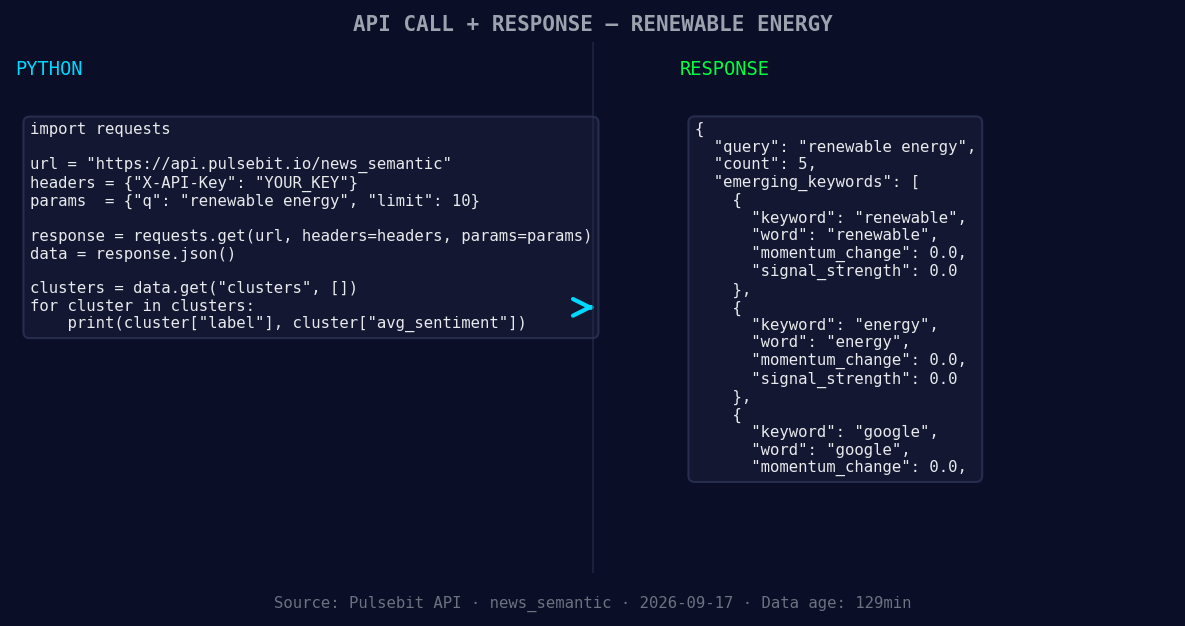
*Left: Python GET /news_semantic call for 'renewable energy'. Right: returned JSON response structure (clusters: 3). Source: Pulsebit /news_semantic.*
# Geographic origin filter: querying by language/country
api_url = "https://api.pulsebit.lojenterprise.com/sentiment"
params = {
"topic": topic,
"lang": "en",
"score": score,
"confidence": confidence,
"momentum": momentum
}
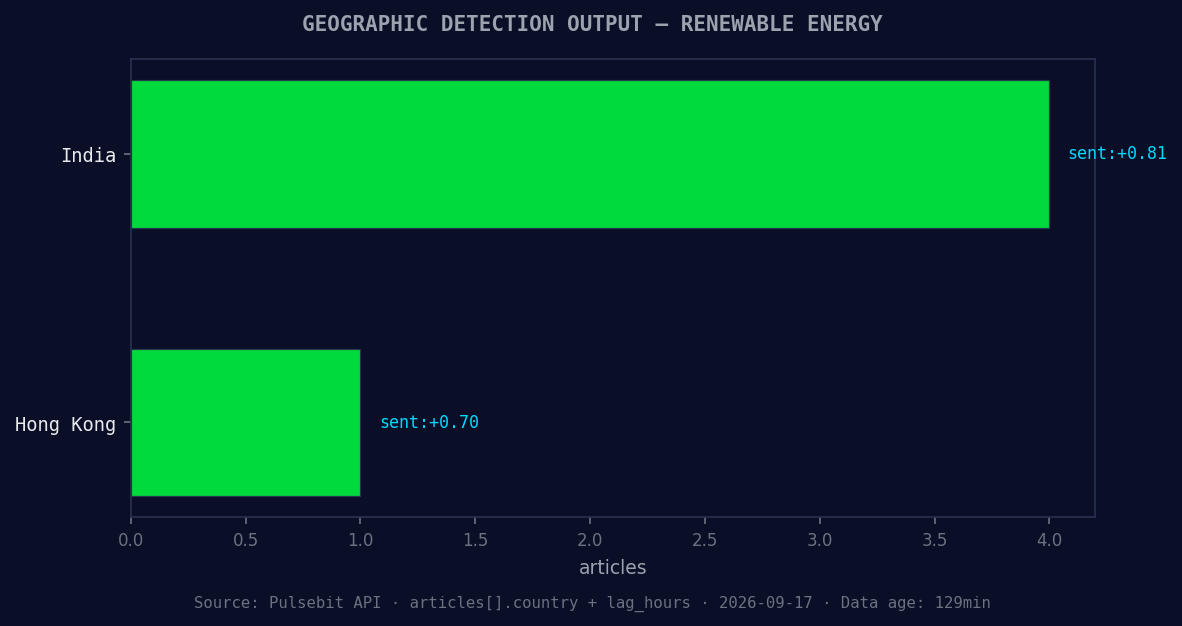
*Geographic detection output for renewable energy. India leads with 4 articles and sentiment +0.81. Source: Pulsebit /news_recent geographic fields.*
response = requests.get(api_url, params=params)
data = response.json()
print(data)
Next, we need to assess the narrative framing itself. By running the cluster reason string through our sentiment scoring endpoint, we can gauge the overall sentiment of the discourse surrounding this momentum spike.
# Meta-sentiment moment: scoring the narrative framing
cluster_reason = "Clustered by shared themes: state, 000, renewable, energy, 2030."
sentiment_response = requests.post(api_url, json={"text": cluster_reason})
sentiment_data = sentiment_response.json()
print(sentiment_data)
This dual approach allows you to not only capture the sentiment spike but also understand the context behind it. You can see how the themes of renewable and energy are forming, while mainstream discussions are lagging behind.
Now, what can you build with this pattern? Here are three specific ideas:
Geo-Focused Alerts: Create a real-time alert system that triggers whenever the sentiment momentum for renewable energy exceeds a threshold of +0.200 in a specific region, such as Rwanda. This will help you stay ahead of localized discussions.
Meta-Sentiment Analysis Dashboard: Build a dashboard that visualizes meta-sentiment scores for various cluster reasons. Incorporate a filter that highlights any narrative shifts surrounding renewable and energy themes to catch emerging trends early.
Comparative Analysis Tool: Develop a tool that compares sentiment momentum across different regions. For example, analyze how the momentum in Rwanda stacks up against mainstream narratives in the context of renewable energy discussions.
By leveraging these insights and tools, you can ensure that your model not only catches momentum but also provides actionable insights that matter.
If you're ready to dive in, check out our documentation at pulsebit.lojenterprise.com/docs. You can copy-paste and run these code snippets in under 10 minutes, making it easy to get started with capturing and analyzing sentiment data effectively.


Top comments (0)