

Your Pipeline Is 27.5h Behind: Catching Markets Sentiment Leads with Pulsebit
We recently stumbled upon a striking anomaly: a 24h momentum spike of +0.866 in sentiment regarding markets. This spike reveals an interesting narrative twist, particularly as it correlates with a positive sentiment score of +0.189. It’s a clear signal that something significant is happening, especially when you consider that this momentum is driven by a leading narrative around support for markets from Turkey amidst a liquidity crunch.
However, if you’re relying on conventional sentiment pipelines, you might find your model is lagging by 27.5 hours, missing critical insights that could inform your trading decisions. The dominant language in this case is English, with China contributing a notable 10% share of voice and a positive sentiment score of +0.369. If your system isn’t designed to handle multilingual origin or entity dominance effectively, you risk missing out on opportunities like this one.

English coverage led by 27.5 hours. No at T+27.5h. Confidence scores: English 0.80, French 0.80, Da 0.80 Source: Pulsebit /sentiment_by_lang.
To catch this momentum spike, we can leverage our API effectively. Here’s how you can set up a simple Python script to get started.
import requests
# Define the parameters for the API call
topic = 'markets'
score = +0.189
confidence = 0.80
momentum = +0.866
lang = 'en'
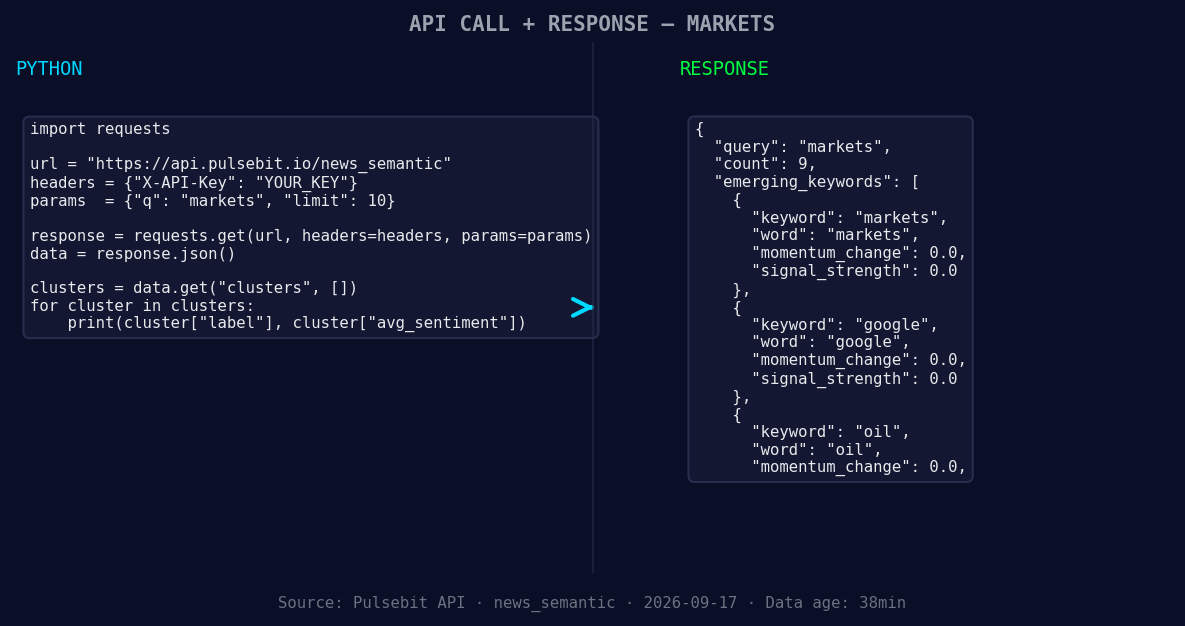
*Left: Python GET /news_semantic call for 'markets'. Right: returned JSON response structure (clusters: 3). Source: Pulsebit /news_semantic.*
# Geographic origin filter: Query by language
response = requests.get(
f"https://api.pulsebit.com/sentiment?topic={topic}&lang={lang}&momentum={momentum}&score={score}&confidence={confidence}"
)
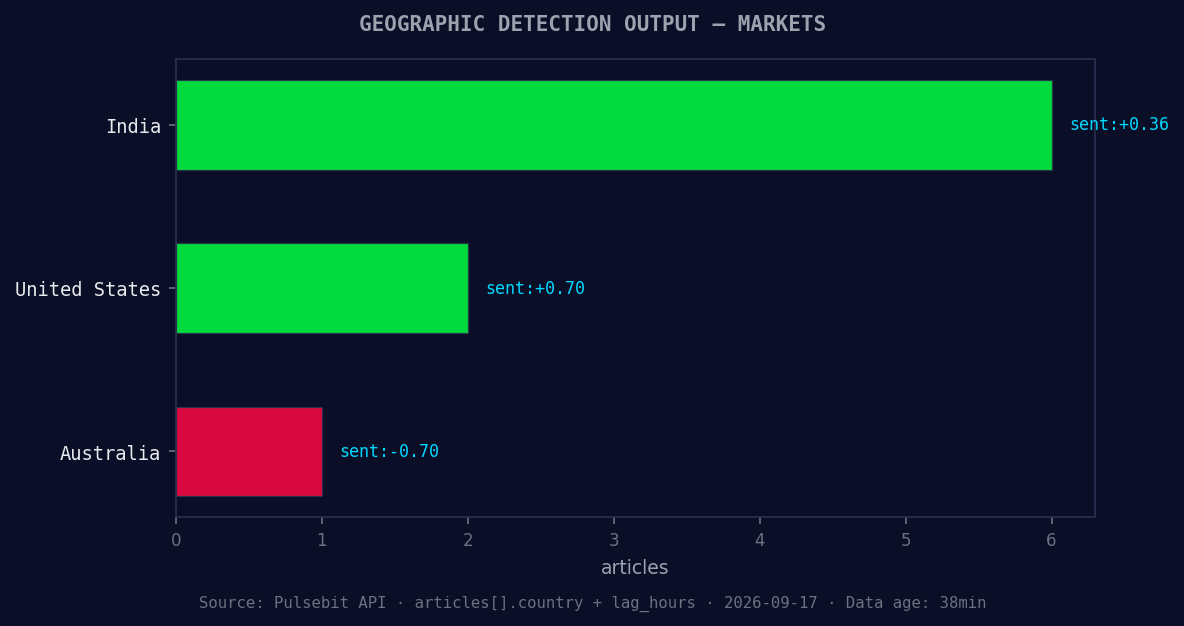
*Geographic detection output for markets. India leads with 6 articles and sentiment +0.36. Source: Pulsebit /news_recent geographic fields.*
data = response.json()
print(data) # Check the response for debugging
# Meta-sentiment moment: Score the narrative framing
cluster_reason = "Clustered by shared themes: steps, support, markets, after, fund."
sentiment_response = requests.post(
"https://api.pulsebit.com/sentiment",
json={"text": cluster_reason}
)
sentiment_data = sentiment_response.json()
print(sentiment_data) # Check the response for debugging
This script does two essential things. First, it filters the sentiment data by the dominant language ('en'), ensuring you focus on the most relevant narratives. Second, it runs the cluster reason string through a sentiment analysis endpoint, scoring the narrative itself. This dual approach allows you to better understand not just the data, but the context behind it.
Now that we’ve captured this momentum spike effectively, let’s consider three specific builds you can implement tonight:
Geo Filter for Market Sentiment: Set a threshold to trigger alerts when sentiment for 'markets' exceeds a score of +0.200 in English. This will help you react promptly to emerging trends in market sentiment.
Meta-Sentiment Loop: Implement a feedback loop where each new cluster reason is analyzed for sentiment. For example, if you see a growing narrative around 'oil', run it through the sentiment scoring to ensure you’re capturing the emotional weight behind the words.
Cross-Reference Key Entities: Create a function that checks the sentiment of related entities (e.g., China, Fed, Wall Street) every time a significant sentiment spike occurs. If sentiment for 'China' spikes alongside 'markets', that’s a crucial signal to monitor closely.
We’ve seen that our API can help you catch and act on sentiment shifts that your pipeline might otherwise miss. Dive into our documentation at pulsebit.lojenterprise.com/docs and start experimenting. You can copy-paste this script and run it in under 10 minutes. Let’s get started!


Top comments (0)