

Your Pipeline Is 24.6h Behind: Catching Culture Sentiment Leads with Pulsebit
We recently uncovered an intriguing anomaly: a 24h momentum spike of +0.297 in sentiment surrounding the topic of culture. This spike points to a significant surge in positive sentiment, led primarily by English press coverage, which is trailing Italian coverage by approximately 24.6 hours. This is not just a random data point; it highlights a critical gap in our understanding of cultural narratives that could influence decision-making processes.
Your model missed this by over a day. The leading entity in this spike is the U.S. Department of Agriculture, which has a 4% share of voice and a positive sentiment score of +0.788. By not handling multilingual origin or entity dominance effectively, your pipeline risks overlooking vital information that can shape market strategies and perceptions.

English coverage led by 24.6 hours. Italian at T+24.6h. Confidence scores: English 0.90, French 0.90, Spanish 0.90 Source: Pulsebit /sentiment_by_lang.
To catch this anomaly in real-time, we can leverage our API effectively. Below is a Python snippet that demonstrates how to filter sentiment data using geographic origin and the specifics of our anomaly.
import requests
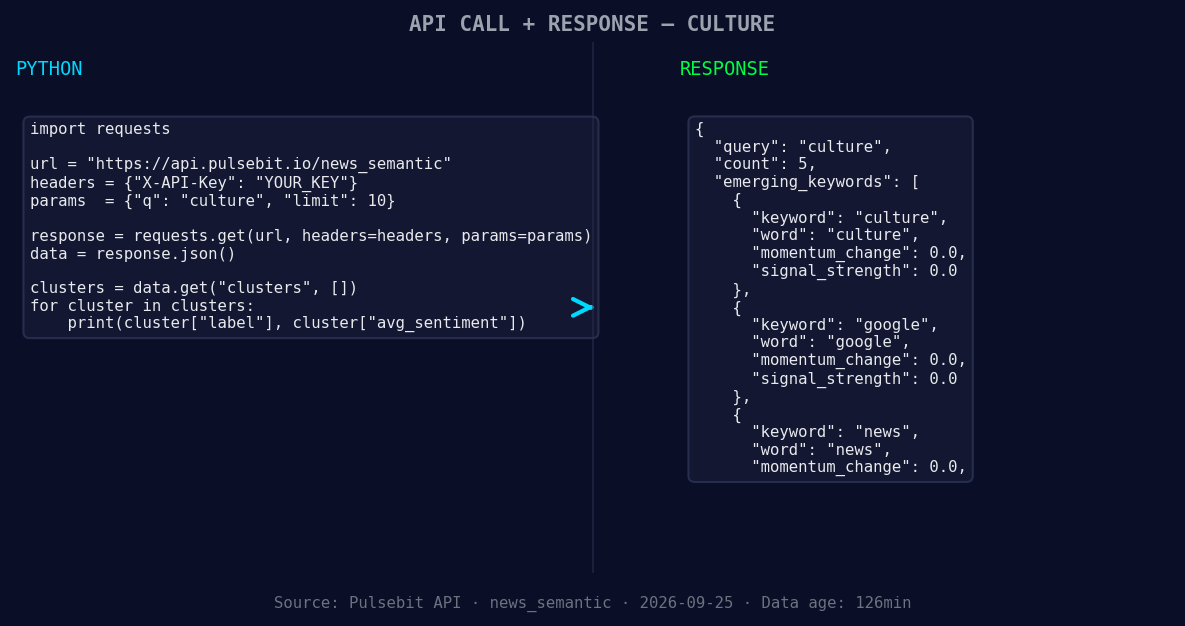
*Left: Python GET /news_semantic call for 'culture'. Right: returned JSON response structure (clusters: 3). Source: Pulsebit /news_semantic.*
# Define parameters for the API request
api_url = "https://api.pulsebit.com/v1/sentiment"
headers = {
"Authorization": "Bearer YOUR_API_KEY",
"Content-Type": "application/json"
}
# Geographic origin filter: query by language/country
params = {
"topic": "culture",
"lang": "en",
"momentum": 0.297,
"confidence": 0.90
}
response = requests.get(api_url, headers=headers, params=params)
data = response.json()
# Meta-sentiment moment: run the cluster reason string through the sentiment endpoint
cluster_reason = "Clustered by shared themes: buyers, experiential, tourism, foreign, impressed."
sentiment_response = requests.post(api_url, headers=headers, json={"text": cluster_reason})
sentiment_data = sentiment_response.json()
print(data)
print(sentiment_data)
In this snippet, we first filter our sentiment data for the topic "culture" using the language parameter set to English. This helps us hone in on the relevant narratives that are currently trending. Next, we run the cluster reason string through our sentiment endpoint to assess the narrative framing itself. This dual approach allows us to not only capture the spike but also understand the context behind it.
Now that we've outlined how to catch this anomaly, let's discuss three builds you can implement to capitalize on this insight:
- Geo-targeted Alert System: Set a threshold at +0.297 momentum for sentiment spikes related to "culture" specifically from English sources. Use the geographic filter to trigger alerts for regions with foreign buying interest, ensuring you're always aware of shifts in sentiment that could affect tourism or trade.

Geographic detection output for culture. India leads with 4 articles and sentiment +0.11. Source: Pulsebit /news_recent geographic fields.
Meta-Sentiment Analysis Tool: Build a function that automatically submits cluster reason strings to our sentiment endpoint whenever specific keywords like "buyers," "experiential," or "tourism" are detected. Set a confidence threshold of 0.90 to ensure you're only acting on the most reliable insights.
Cultural Trend Dashboard: Create a dashboard that visualizes sentiment trends over time for "culture," comparing English and Italian sources. Incorporate real-time updates using the geographic filter for sentiment spikes, allowing for quick pivots in strategy based on emerging narratives.
To dive deeper into this powerful functionality, visit our documentation at pulsebit.lojenterprise.com/docs. With just a few adjustments to your existing workflow, you can copy-paste this code and run it in under 10 minutes to start catching these critical insights.


Top comments (0)