

Your Pipeline Is 17.1h Behind: Catching Economy Sentiment Leads with Pulsebit
We recently uncovered a striking anomaly: a 24-hour momentum spike of +0.487 in sentiment related to the economy. This spike represents a significant shift, particularly centered in English press coverage, which has been leading the conversation with a 17.1-hour head start. The dominant entity in this discussion is Africa, holding a 17% share of voice and a positive sentiment score of +0.821. This finding showcases the need for a more agile approach to sentiment analysis in today’s fast-paced environment.
In traditional pipelines, especially those not equipped to handle multilingual inputs or the dominance of specific entities, you could easily miss this momentum shift by over 17 hours. The leading English language articles have a lag of zero hours compared to a non-English counterpart, which can drastically skew your insights. If your model isn't set up to account for these nuances, you're going to be left behind, chasing trends instead of capitalizing on them.

English coverage led by 17.1 hours. Nl at T+17.1h. Confidence scores: English 0.80, French 0.80, Spanish 0.80 Source: Pulsebit /sentiment_by_lang.
To catch these insights, we can leverage our API effectively. Here's a Python snippet that highlights how to detect such a sentiment spike:
import requests
# Define parameters for the API call
topic = 'economy'
score = -0.300
confidence = 0.80
momentum = +0.487
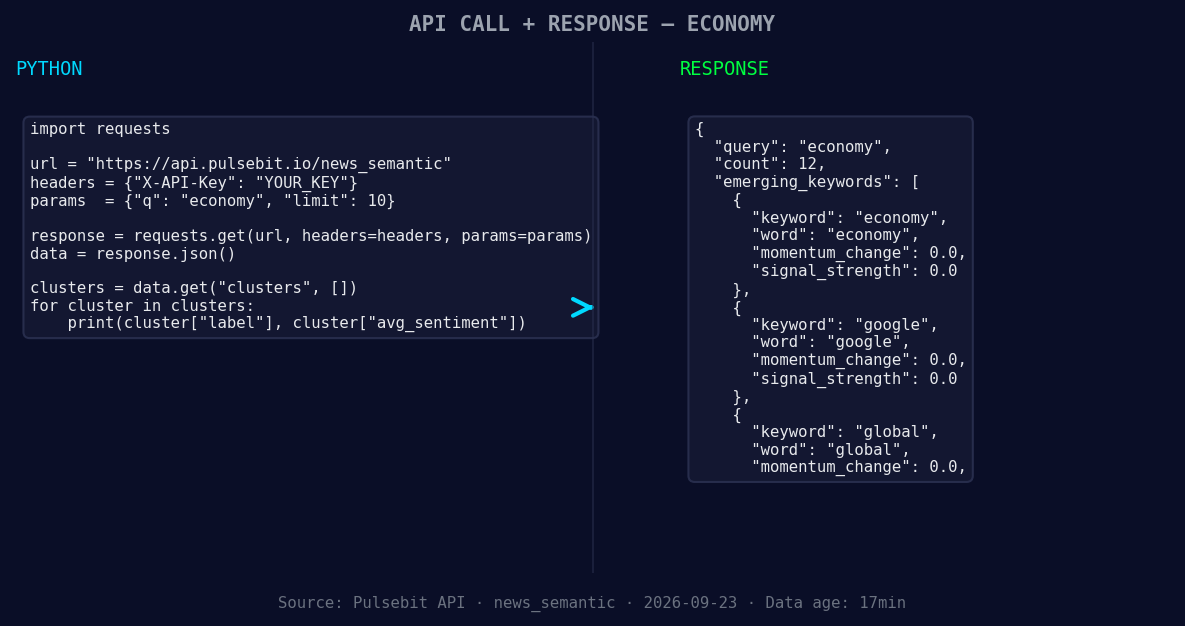
*Left: Python GET /news_semantic call for 'economy'. Right: returned JSON response structure (clusters: 3). Source: Pulsebit /news_semantic.*
# Step 1: Geographic origin filter
response = requests.get(
'https://api.pulsebit.com/sentiment',
params={
'topic': topic,
'lang': 'en', # Filter by English language
'momentum': momentum,
'score': score,
'confidence': confidence
}
)
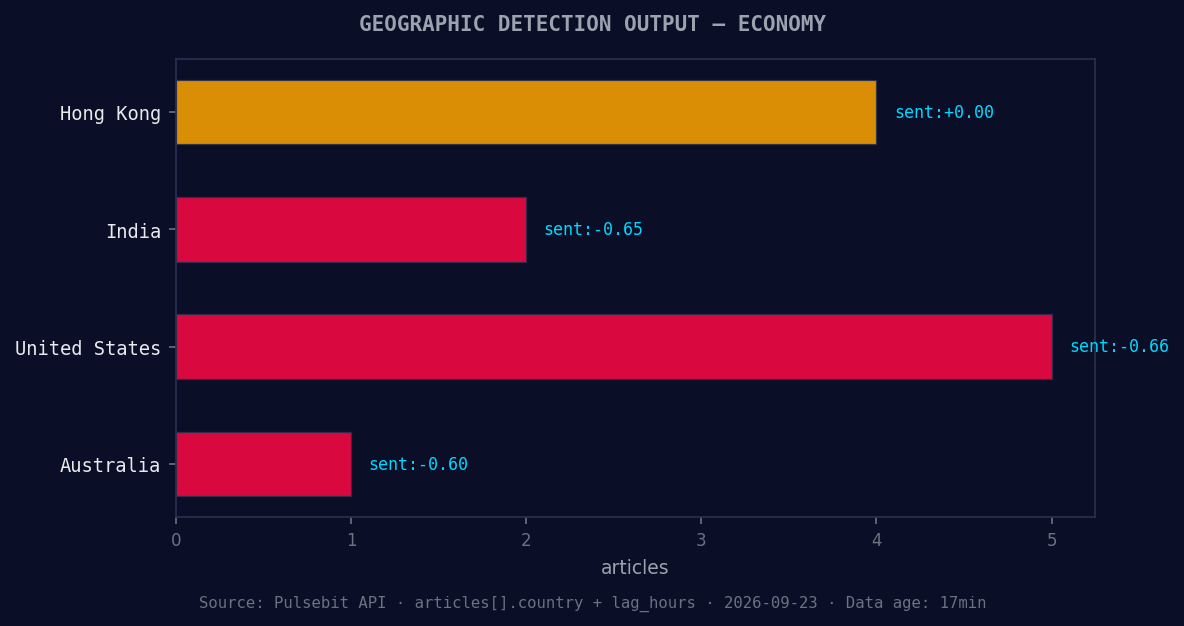
*Geographic detection output for economy. Hong Kong leads with 4 articles and sentiment +0.00. Source: Pulsebit /news_recent geographic fields.*
# Check response
if response.status_code == 200:
data = response.json()
print("Data Retrieved: ", data)
else:
print("Error: ", response.status_code)
# Step 2: Meta-sentiment moment
cluster_reason = "Clustered by shared themes: china’s, gig, economy."
meta_response = requests.post(
'https://api.pulsebit.com/sentiment',
json={'text': cluster_reason}
)
if meta_response.status_code == 200:
meta_data = meta_response.json()
print("Meta Sentiment Data: ", meta_data)
else:
print("Error: ", meta_response.status_code)
In the code above, we start by filtering sentiment data for the topic 'economy' in English. This allows us to capture the latest sentiment trends without the interference of language barriers. Then, we run the clustered theme string through the sentiment endpoint to assess the framing of the narrative itself. This is crucial as it gives us insights into how these themes are being discussed across different contexts, which can further inform our strategies.
Now, let's think about three specific builds we can implement using this pattern:
Momentum Alert System: Set a signal threshold for momentum spikes at +0.487. Trigger alerts when sentiment around the economy surpasses this threshold, enabling you to act quickly.
Geo-Targeted Content Strategy: Incorporate the geographic origin filter to tailor content specifically to English-speaking audiences in Africa. Track sentiment shifts over time to adjust your messaging dynamically.
Meta-Sentiment Analysis: Utilize the meta-sentiment loop to create a dashboard that visualizes how narratives around the economy are evolving. Focus on forming themes like economy(+0.00), google(+0.00), and global(+0.00) versus the mainstream narrative of china’s gig economy.
This approach will not only keep your insights fresh but will also align your strategy with the current dynamics shaping the economy.
For more information on how to implement these strategies, check out our documentation at pulsebit.lojenterprise.com/docs. With just a little effort, you can copy-paste this code and get started in under 10 minutes. Don’t let your pipeline fall behind—adapt and thrive with real-time sentiment insights!


Top comments (0)