

Your model might have missed a critical 24-hour momentum spike of -0.356, a significant anomaly that could have major implications for your investment strategies. This spike indicates a notable shift in sentiment surrounding the topic of "investing," and it's crucial to understand why this occurred. With the leading language being English and a dominant entity like Investing.com commanding a 23% share of voice, it’s clear that there's a concentrated flow of information that our models need to catch up with.
If your pipeline doesn’t account for multilingual origins or entity dominance, you run the risk of being 12.8 hours behind in recognizing sentiment shifts. This delay can lead to missed opportunities or, worse, poor decision-making based on outdated information. The leading language and entity in this case highlight the importance of having a responsive and adaptive system in place. Your model missed this pivotal moment because it was not tuned to detect shifts in sentiment as they happen across different languages and platforms.

English coverage led by 12.8 hours. Id at T+12.8h. Confidence scores: English 0.85, Spanish 0.85, French 0.85 Source: Pulsebit /sentiment_by_lang.
To help you catch up, here’s some Python code that utilizes our API to detect this sentiment shift in real-time. First, we’ll filter the articles by language to ensure we’re capturing the right sentiment data.
import requests
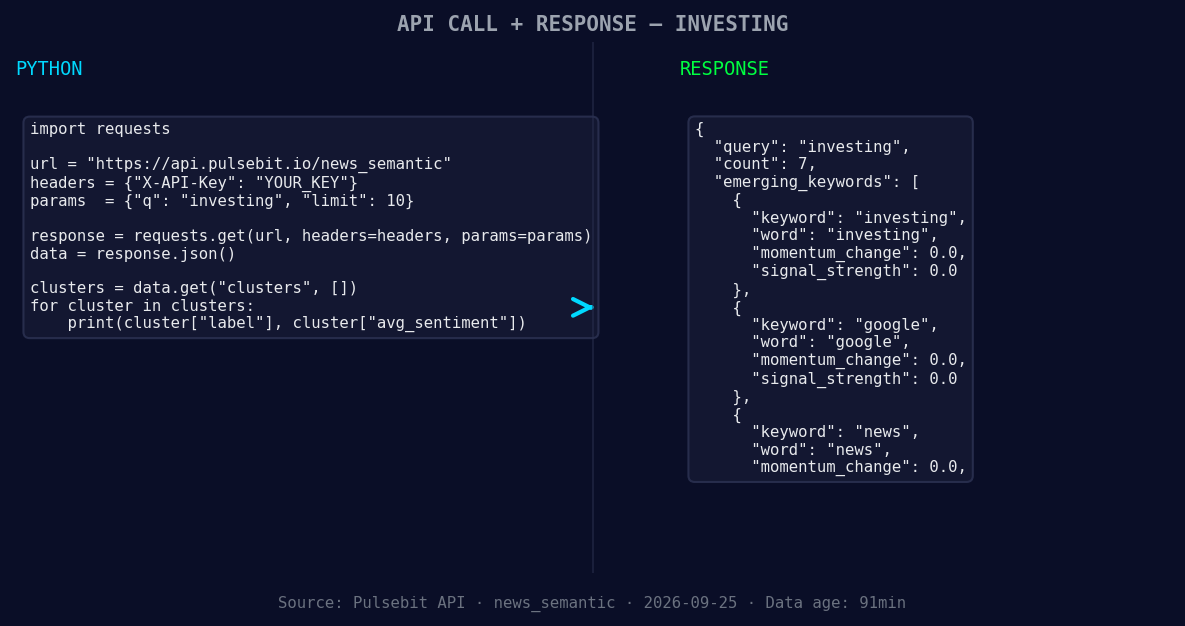
*Left: Python GET /news_semantic call for 'investing'. Right: returned JSON response structure (clusters: 3). Source: Pulsebit /news_semantic.*
topic = 'investing'
score = +0.800
confidence = 0.85
momentum = -0.356
# Geographic origin filter
response = requests.get("https://api.pulsebit.lojenterprise.com/v1/sentiment",
params={"topic": topic, "lang": "en", "momentum": momentum})
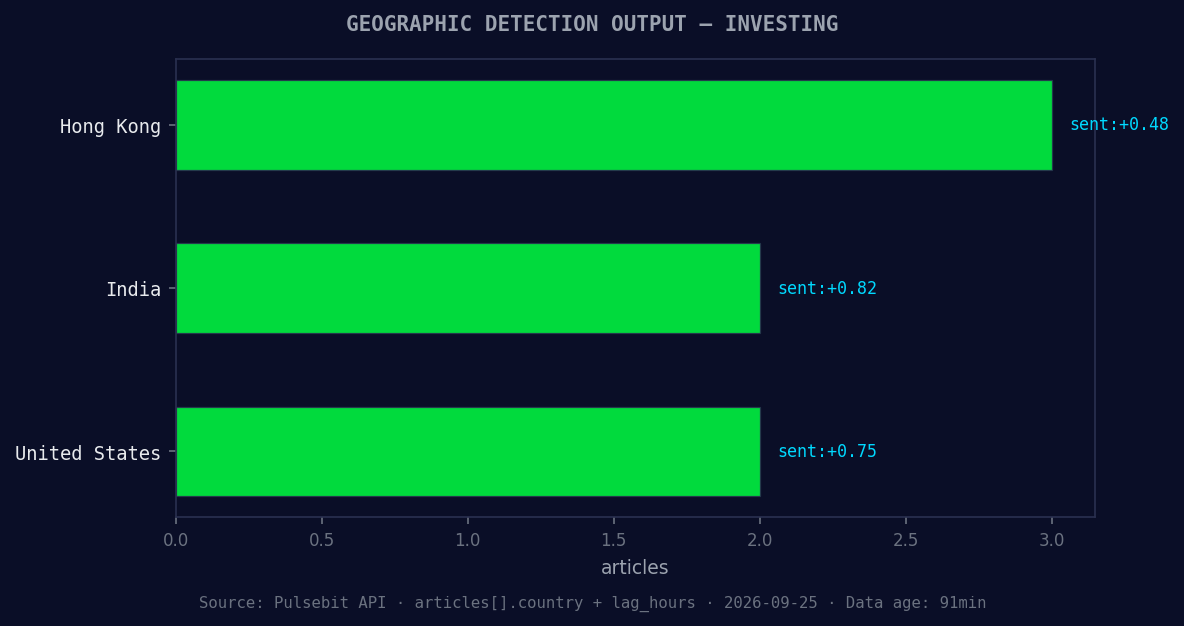
*Geographic detection output for investing. Hong Kong leads with 3 articles and sentiment +0.48. Source: Pulsebit /news_recent geographic fields.*
data = response.json()
print(data)
Now that we have the data, we need to run the cluster reason string back through our sentiment analysis to score the narrative framing itself. This helps us understand the context around the spike.
# Meta-sentiment moment
cluster_reason = "Clustered by shared themes: investinglive, americas, market, news, wrap:."
meta_response = requests.post("https://api.pulsebit.lojenterprise.com/v1/sentiment",
                               json={"text": cluster_reason})

meta_data = meta_response.json()
print(meta_data)
With these two pieces of code, we can effectively catch sentiment shifts and analyze the context around them.
Now, here are three specific builds you can implement using this pattern:
Geo Filter Build: Create a monitoring script that alerts you whenever there’s a negative momentum spike (like -0.356) in the English language articles about investing. You can set a threshold of momentum less than -0.250 to trigger alerts.
Meta-Sentiment Analysis: Design a dashboard that visualizes the sentiment scores generated from the meta-sentiment loop. You might want to create a threshold for sentiment scores below +0.500, which would indicate a potential shift in market sentiment.
Forming Themes Tracker: Build a clustering mechanism that tracks forming themes, specifically around "investing," "google," and "news." This should pull in data that shows zero movement compared to mainstream topics like "investinglive" or "americas," helping you identify potential emerging narratives before they gain traction.
By implementing these strategies, you can stay ahead of the curve and ensure that your models are always in sync with the latest sentiment trends.
Get started with our API at pulsebit.lojenterprise.com/docs. You can copy-paste the code above and run it in under 10 minutes. Don’t let your pipeline fall behind!


Top comments (0)