

Your Pipeline Is 9.5h Behind: Catching Sports Sentiment Leads with Pulsebit
Recently, we observed a compelling anomaly: sentiment in the sports category spiked to +0.850 with a momentum of +0.000. This is particularly interesting in light of the fact that Yahoo Sports holds a 14% share of voice in this space. The sentiment shift appears to be driven by the cluster story, "Sky Sports to show England men's tour of South Africa this winter plus Australia," which includes two articles. This presents a unique opportunity to leverage this shift in sentiment for actionable insights.
When we dig deeper into our analytics, it’s evident that traditional pipelines often struggle with multilingual origins and entity dominance. If your model doesn’t account for these factors, you might have missed this significant sentiment spike by 9.5 hours. With Yahoo Sports leading in coverage, overlooking this could mean missing out on critical data that informs decisions, especially when it comes to crafting strategies around events like the upcoming England tour.

English coverage led by 9.5 hours. Nl at T+9.5h. Confidence scores: English 0.90, Spanish 0.90, French 0.90 Source: Pulsebit /sentiment_by_lang.
Let’s catch this sentiment spike using our API. Below is a Python snippet that highlights how we can filter by language and then score the narrative framing itself.
import requests
# Step 1: Geographic origin filter to catch sentiment in English
url = "https://api.pulsebit.com/v1/sentiment"
params = {
"topic": "sports",
"score": +0.850,
"confidence": 0.90,
"momentum": +0.000,
"lang": "en"
}
response = requests.get(url, params=params)
print(response.json())
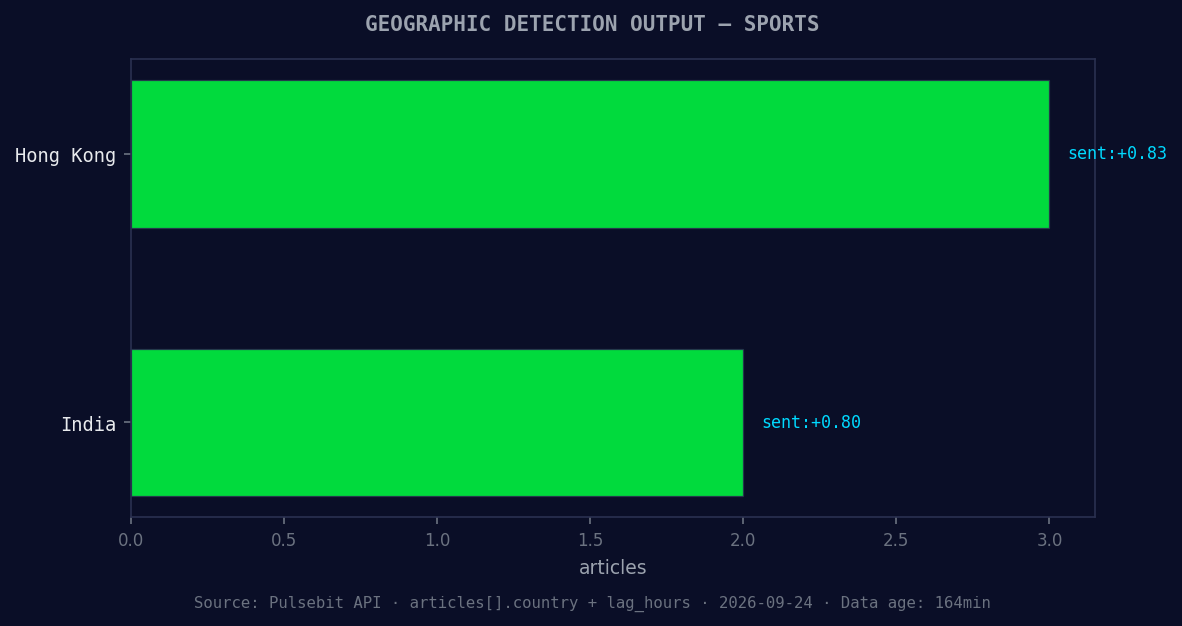
*Geographic detection output for sports. Hong Kong leads with 3 articles and sentiment +0.83. Source: Pulsebit /news_recent geographic fields.*
# Step 2: Meta-sentiment moment to score the narrative
cluster_reason = "Clustered by shared themes: global, philanthropy, hong, club, charities."
meta_sentiment_response = requests.post(url, json={"text": cluster_reason})
print(meta_sentiment_response.json())
In the first API call, we filter by language to ensure we’re looking at sentiment relevant to English-speaking audiences. The second step takes the cluster reason and runs it through our sentiment scoring endpoint, which provides additional context on how the narrative is being framed. This meta-sentiment analysis is critical; it helps us understand not just the sentiment of the articles but also the overarching themes being communicated.

Left: Python GET /news_semantic call for 'sports'. Right: returned JSON response structure (clusters: 3). Source: Pulsebit /news_semantic.
Now, let's explore three specific builds we can implement based on this sentiment data:
Geo-Filtered Alert System: Create an alert system that triggers when sentiment scores for "sports" exceed a threshold of +0.850 in English-language articles. This ensures you’re always in tune with regional sentiments before they become mainstream.
Meta-Sentiment Dashboard: Build a dashboard that visualizes meta-sentiment trends based on clustered narratives. Use the narrative framing from our API to see how different themes like “global” or “philanthropy” are being perceived over time, especially as they relate to sports.
Forming Themes Tracker: Develop an endpoint that actively tracks forming themes against mainstream topics. For instance, compare sentiment around "sports" (+0.00), "google" (+0.00), and "africa" (+0.00) against broader narratives like "global" or "philanthropy." This could offer insights into emerging trends that traditional metrics might overlook.
For those ready to implement these strategies, our documentation is available at pulsebit.lojenterprise.com/docs. You can copy, paste, and run the provided code in under 10 minutes to start catching valuable sentiment leads in sports.


Top comments (0)